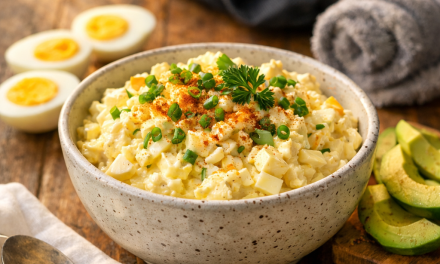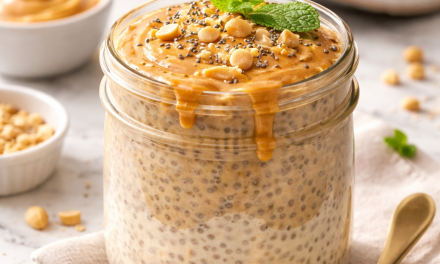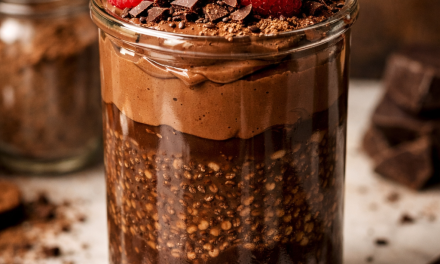
Eggs are a popular breakfast choice for getting protein, but they’re not the only option. You might skip eggs because of allergies, dietary choices, or simply wanting more variety in your meals. The good news is that many other foods can give you the protein you need to start your day.
There are plenty of delicious high-protein breakfast recipes that don’t use eggs at all. You can make meals with Greek yogurt, cottage cheese, tofu, chickpeas, quinoa, and plant-based protein powders. These options work well whether you follow a vegan diet, have egg allergies, or just want to try something different.
A good breakfast should include protein, healthy fats, and fiber to keep you full and energized. This combination helps you avoid hunger and cravings later in the day. The recipes ahead show you how to build satisfying morning meals without reaching for an egg.
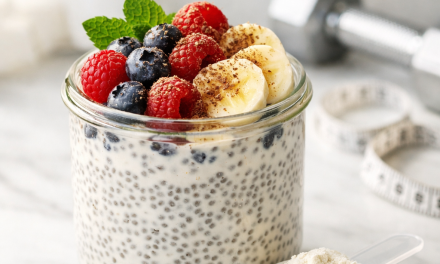
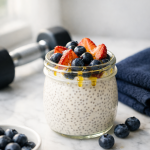
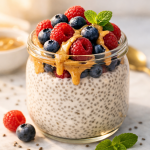
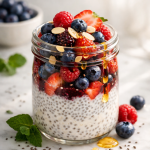
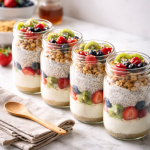
1) Greek Yogurt with Berries and Chia Seeds
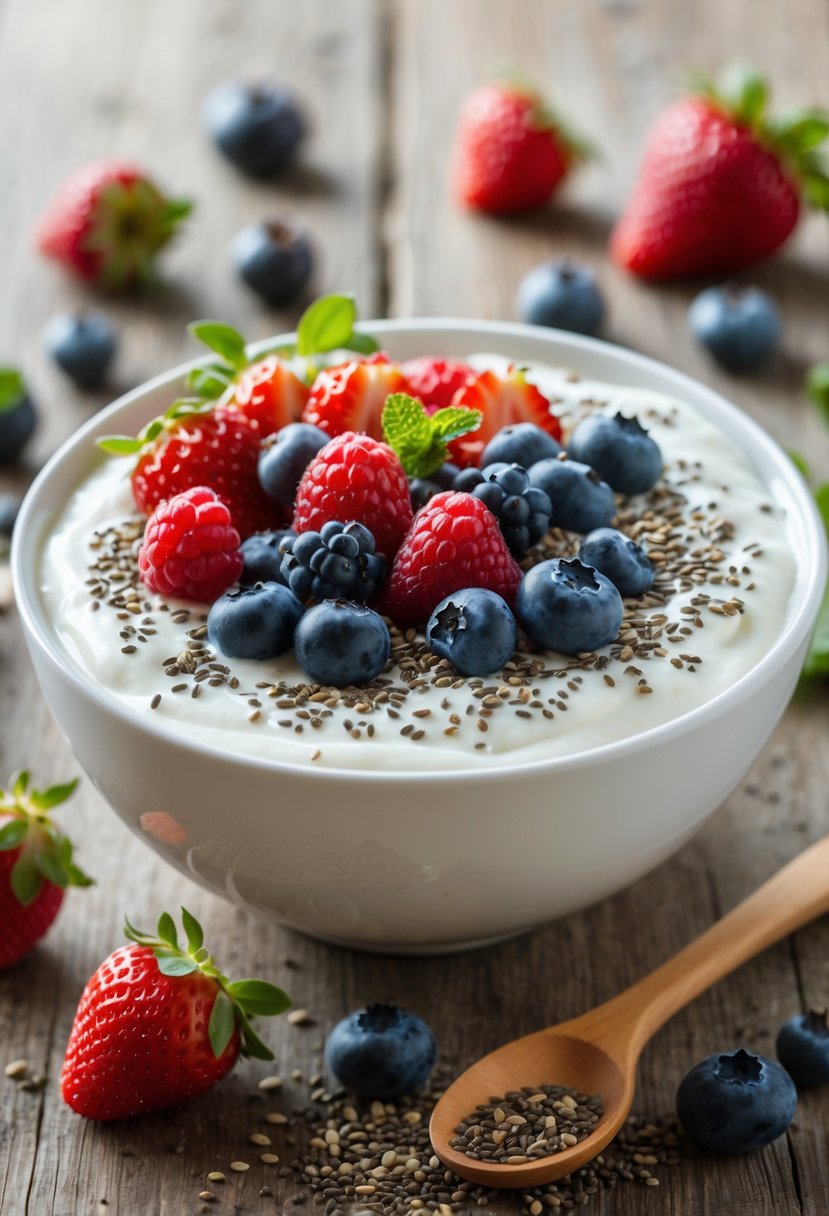
Greek yogurt with berries and chia seeds delivers a quick breakfast that packs serious protein without any eggs. This simple combination gives you around 20-25 grams of protein per serving while keeping prep time under five minutes.
The Greek yogurt provides the protein base, typically offering 15-20 grams per cup. Chia seeds add extra protein along with fiber and omega-3 fatty acids. Fresh or frozen berries bring natural sweetness and antioxidants to balance the tangy yogurt.
This recipe works well as a grab-and-go breakfast or post-workout snack. You can prepare it the night before and store it in the refrigerator. The chia seeds will absorb some liquid and create a thicker texture.
Ingredients
- 1 cup plain Greek yogurt (choose high-protein, low-fat variety)
- 1 tablespoon chia seeds
- 1/2 cup mixed berries (blueberries, strawberries, or raspberries)
- 1 tablespoon almond butter or peanut butter (optional)
- 1 teaspoon honey or maple syrup (optional)
- 1/2 teaspoon cinnamon (optional)
Step By Step Instructions
Start by spooning the Greek yogurt into your bowl. Sprinkle the chia seeds over the yogurt and give it a quick stir to distribute them evenly.
Add your berries on top. You can use fresh berries or thaw frozen ones overnight in the refrigerator.
If you want extra protein and healthy fats, add a spoonful of nut butter. Drizzle honey or maple syrup if you prefer more sweetness. Sprinkle cinnamon on top for added flavor.
Let the bowl sit for 2-3 minutes before eating. This gives the chia seeds time to soften slightly. If you make this the night before, the chia seeds will gel and create a pudding-like texture.
2) Protein Smoothie with Pea Protein and Spinach
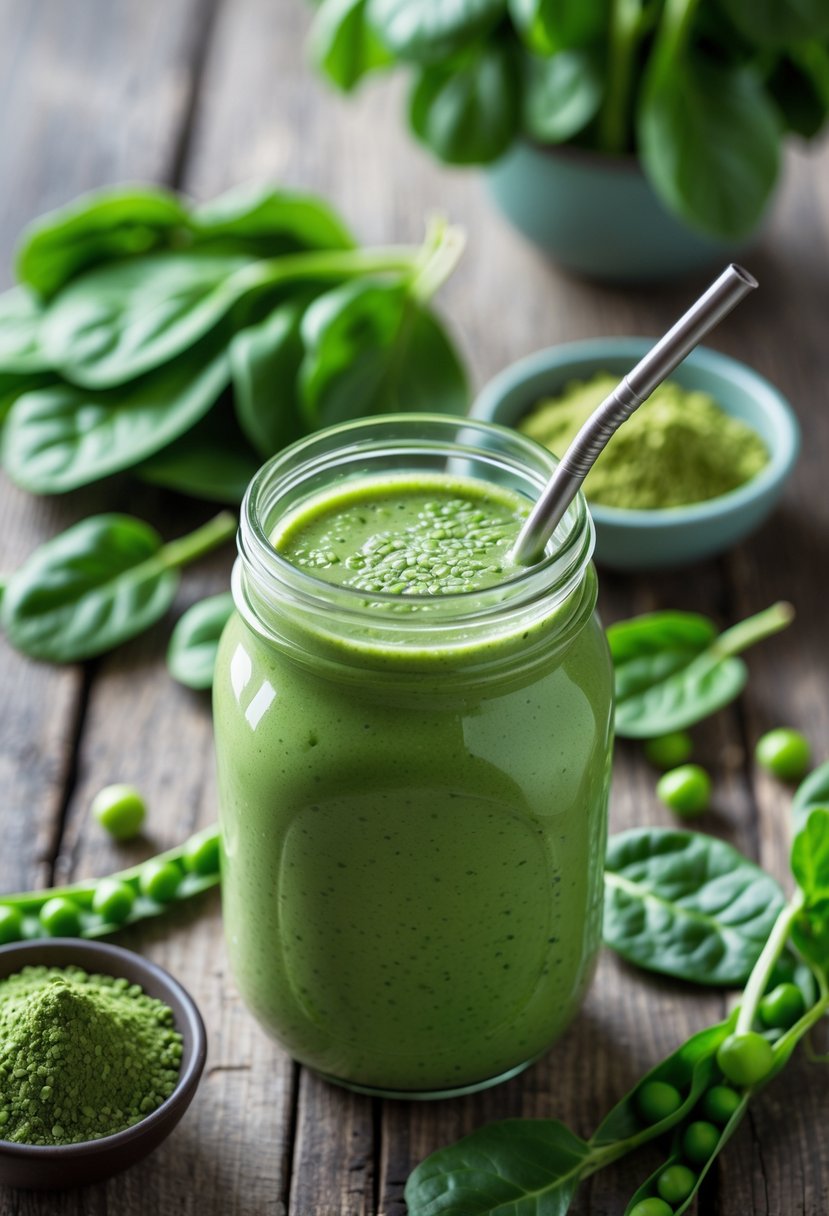
A protein smoothie with pea protein and spinach gives you a quick way to reach your daily protein goals. This drink works well for breakfast or as a snack after you exercise.
Pea protein powder is plant-based and easy to digest. It mixes well with spinach without creating a strong veggie taste. You can make this smoothie in less than five minutes.
The spinach adds vitamins and minerals to your drink. When you blend it with fruit, you won’t taste the greens much. This makes it good if you want more vegetables in your diet.
Ingredients
- 1 scoop pea protein powder (unflavored or vanilla)
- 1 cup fresh spinach
- 1 banana
- 1/2 cup frozen mango chunks
- 1 cup unsweetened almond milk
- 1/2 cup water
- Ice cubes (optional)
Step By Step Instructions
Add the almond milk and water to your blender first. This prevents the other ingredients from sticking to the bottom.
Put the spinach in next, followed by the banana and mango. Add your pea protein powder on top.
Blend everything on high speed for 30 to 45 seconds. Stop when the mixture looks smooth and no chunks remain.
Check the thickness of your smoothie. Add more liquid if it’s too thick or more ice if you want it colder.
Pour the smoothie into a glass right away. You can drink it immediately or store it in the fridge for up to 24 hours.
This recipe gives you about 20 to 25 grams of protein per serving. The exact amount depends on your protein powder brand. You can adjust the fruit based on what you have available or what tastes good to you.
3) Overnight Oats with Almond Butter and Hemp Hearts
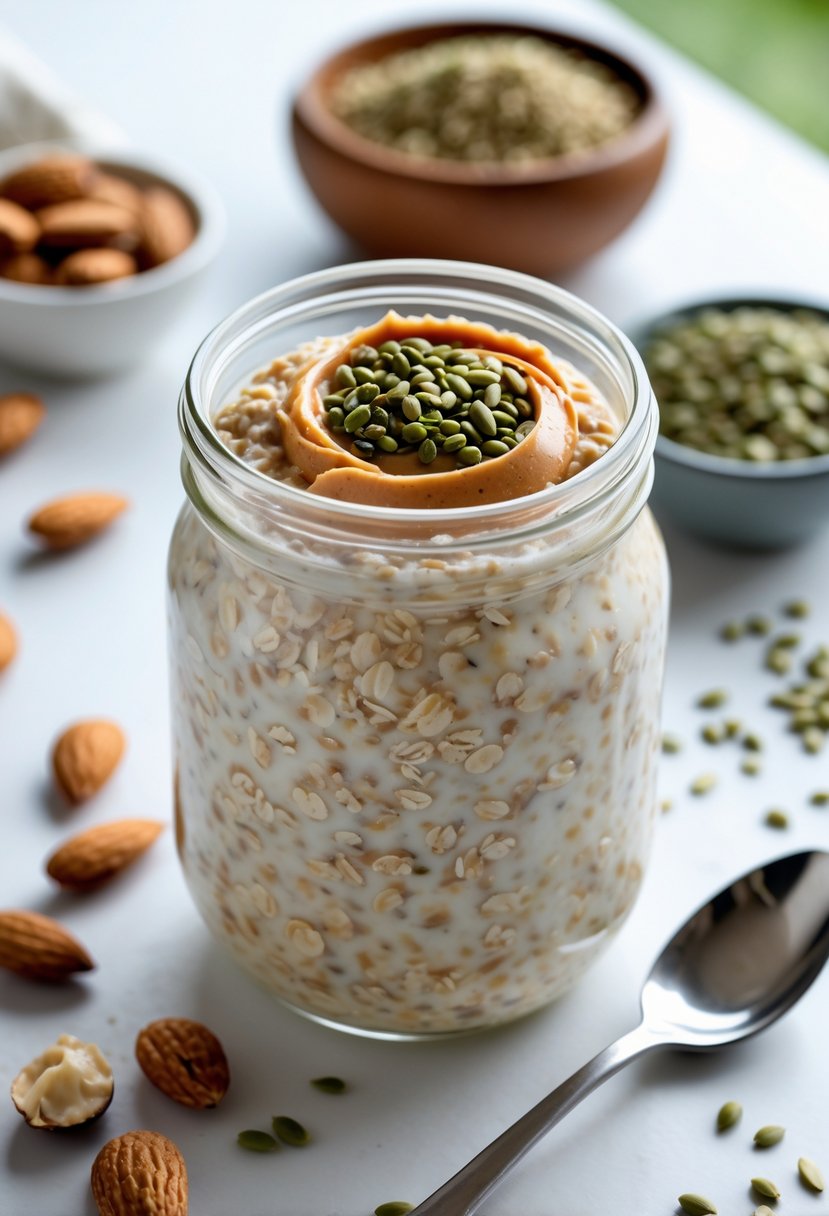
Overnight oats give you a simple way to start your day with protein. This recipe combines almond butter and hemp hearts to create a filling breakfast you can make ahead.
Hemp hearts add about 6 grams of protein per 2 tablespoons. Almond butter gives you another 4 grams per tablespoon. When you add these to rolled oats and your choice of milk, you get a balanced meal that keeps you full through the morning.
You can prepare this breakfast in just five minutes the night before. The oats soften while they sit in your refrigerator overnight. In the morning, you grab the jar and eat it cold or warm it up.
Ingredients
- 1/2 cup rolled oats
- 3/4 cup milk of your choice
- 1 tablespoon almond butter
- 2 tablespoons hemp hearts
- 1 tablespoon chia seeds
- 1 teaspoon maple syrup or honey
- Pinch of salt
- Optional toppings: fresh berries, sliced banana, or extra hemp hearts
Step By Step Instructions
Start by adding the rolled oats to a jar or container with a lid. Pour in your milk and stir to combine.
Add the almond butter to the mixture. Stir it well so the almond butter blends throughout the oats. Some small chunks are fine and will mix better as it sits.
Mix in the hemp hearts and chia seeds. The chia seeds will absorb liquid and make your oats thicker and creamier.
Add your sweetener and a pinch of salt. Stir everything together one more time.
Put the lid on your container and place it in the refrigerator. Let it sit for at least 4 hours or overnight. The oats will absorb the liquid and soften completely.
When you’re ready to eat, take the container out of the fridge. You can eat it cold or heat it in the microwave for 30 to 60 seconds. Add your favorite toppings before serving.
4) Cottage Cheese with Pineapple and Flaxseeds
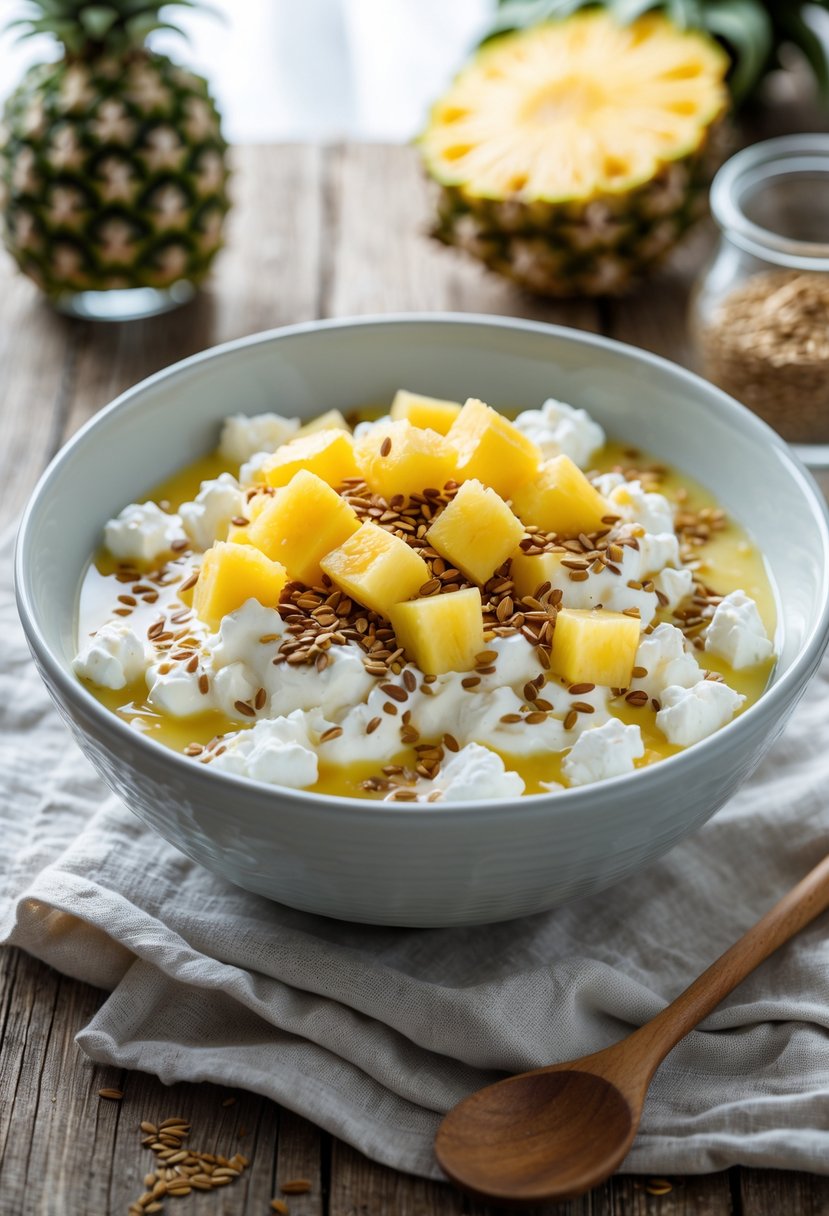
Cottage cheese delivers around 14 grams of protein per half cup, making it one of the most protein-dense dairy options you can find. When you pair it with pineapple and flaxseeds, you create a balanced meal that takes just five minutes to prepare.
This combination works well for breakfast, a post-workout snack, or even a light lunch. The cottage cheese provides the protein your body needs, while pineapple adds natural sweetness and vitamin C. Flaxseeds bring healthy fats and fiber to keep you full longer.
You’ll get about 17 to 28 grams of protein per serving, depending on how much cottage cheese you use. The pineapple contains an enzyme called bromelain that may help with digestion. Flaxseeds add omega-3 fatty acids and give the dish a slightly nutty taste.
This recipe requires no cooking and minimal cleanup. You simply combine the ingredients in a bowl and eat. The creamy texture of cottage cheese balances perfectly with the juicy sweetness of pineapple chunks.
Ingredients
- 1 cup low-fat cottage cheese
- ½ cup fresh or canned pineapple chunks (drained if canned)
- 1 tablespoon ground flaxseeds
- Optional: a drizzle of honey or a handful of blueberries
Step By Step Instructions
Start by scooping one cup of cottage cheese into a bowl. You can use any fat percentage, but low-fat or 2% cottage cheese works best for this recipe.
Add the pineapple chunks on top of the cottage cheese. Fresh pineapple tastes great, but canned works fine if you drain the juice first.
Sprinkle the ground flaxseeds over everything. Ground flaxseeds are better than whole ones because your body can absorb their nutrients more easily.
Mix everything together if you prefer, or eat it layered. Some people like to add a small drizzle of honey for extra sweetness or toss in some blueberries for more antioxidants.
You can prepare this the night before and store it in the fridge. The flaxseeds will soften slightly, which some people prefer. Just keep in mind that the pineapple may release some juice as it sits.
5) Quinoa Breakfast Bowl with Nuts and Berries
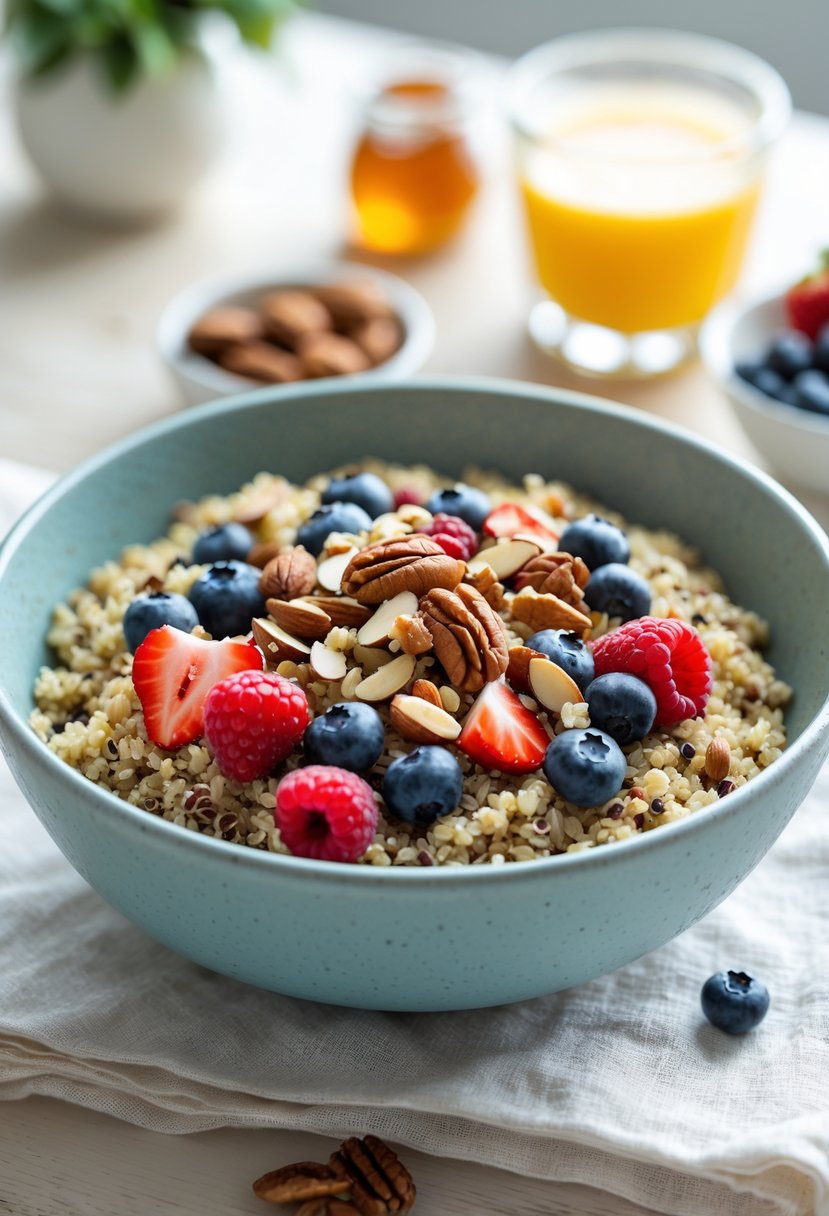
Quinoa makes an excellent high-protein breakfast option when you want something different from eggs. This tiny grain contains all nine essential amino acids, which makes it a complete protein source. One cup of cooked quinoa provides about 8 grams of protein.
This breakfast bowl combines quinoa with nuts and berries to create a filling meal that keeps you satisfied throughout the morning. The nuts add extra protein and healthy fats, while the berries provide vitamins and natural sweetness. You can prepare the quinoa ahead of time and store it in your fridge for quick morning assembly.
The dish works well whether you prefer it warm or cold. You can customize it with your favorite toppings and adjust the sweetness to match your taste preferences.
Ingredients
- 1 cup cooked quinoa
- 1/2 cup mixed berries (blueberries, strawberries, raspberries)
- 1/4 cup mixed nuts (almonds, walnuts, or pecans)
- 1/2 cup Greek yogurt or milk of choice
- 1 tablespoon honey or maple syrup
- 1 teaspoon chia seeds
- Pinch of cinnamon
Step By Step Instructions
Cook your quinoa according to package directions, using a 2:1 ratio of water to quinoa. Most quinoa takes about 15 minutes to cook. Let it cool slightly if you prefer a warm bowl, or refrigerate it for a cold version.
Place the cooked quinoa in your bowl as the base. Add the Greek yogurt or pour your choice of milk over the quinoa. The yogurt adds extra protein and makes the bowl creamier.
Top the quinoa with your mixed berries. You can use fresh or frozen berries depending on what you have available. Frozen berries work just as well and are often more affordable.
Sprinkle the mixed nuts over the top. You can chop them into smaller pieces or leave them whole. Add the chia seeds for extra fiber and omega-3 fatty acids.
Drizzle the honey or maple syrup over everything. Finish with a light sprinkle of cinnamon for added flavor. You can eat it right away or let it sit for a few minutes to allow the flavors to blend together.
6) Chickpea Flour Pancakes with Avocado
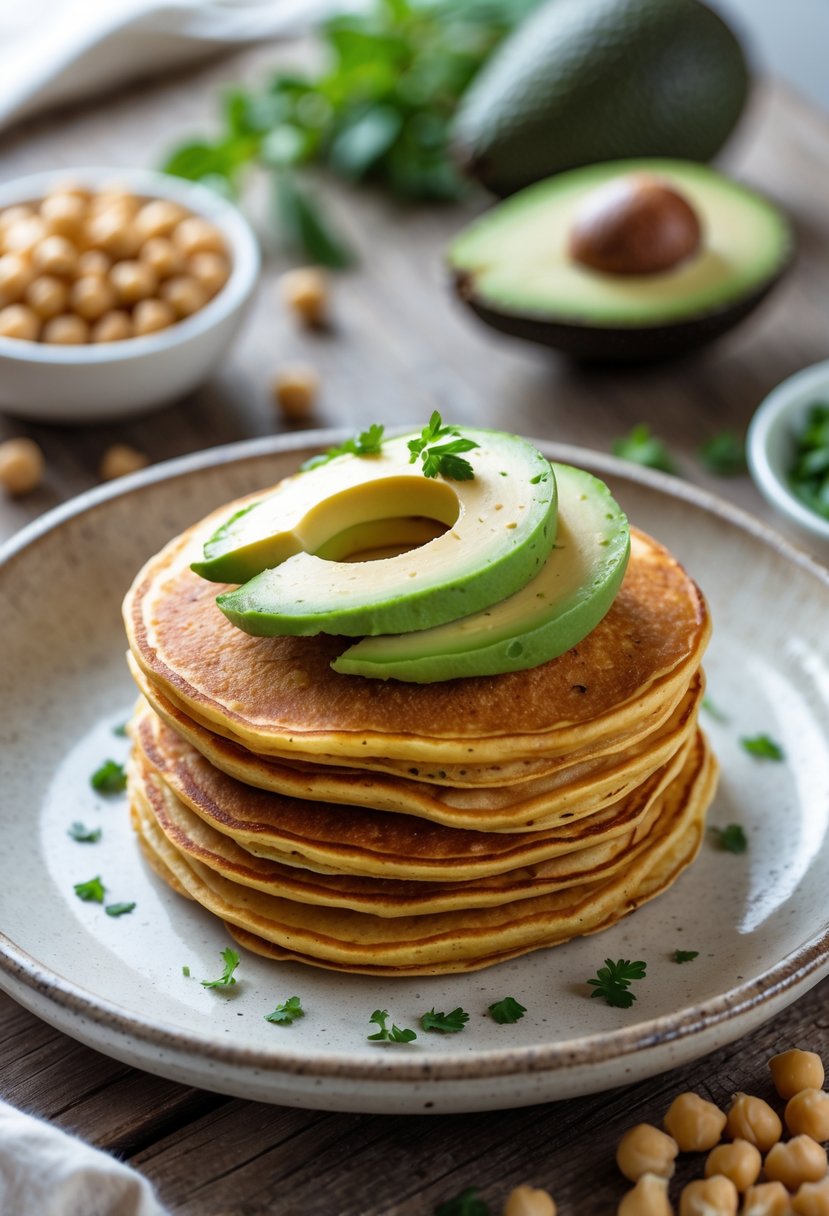
Chickpea flour pancakes give you a protein-packed breakfast that keeps you full for hours. Each serving delivers around 7 grams of protein per quarter cup of flour, plus 3 grams of fiber. These pancakes are naturally gluten-free and require no eggs or dairy.
The batter comes together in minutes with just a few basic ingredients. You can make these pancakes savory or sweet depending on what you add to them. The chickpea flour creates a slightly nutty flavor that pairs perfectly with creamy avocado.
These pancakes work well for breakfast, lunch, or even dinner. They’re crispy on the outside and tender on the inside when cooked properly.
Ingredients
You’ll need 1 cup of chickpea flour and 1 cup of water for the base. Add 1/4 teaspoon of salt and 1/4 teaspoon of baking powder.
For savory pancakes, mix in 1/4 teaspoon of garlic powder and black pepper to taste. You can also add chopped vegetables like diced bell peppers, onions, or spinach directly to the batter.
Top your pancakes with 1 ripe avocado, sliced or mashed. Add fresh tomatoes, a squeeze of lemon juice, and a pinch of salt.
Step By Step Instructions
Whisk the chickpea flour, water, salt, and baking powder together in a bowl until smooth. Let the batter rest for 5 minutes to thicken slightly. This helps the pancakes hold together better when you cook them.
Heat a non-stick pan over medium heat and lightly oil it if needed. Pour 1/4 cup of batter into the pan for each pancake. Cook for 2-3 minutes until bubbles form on the surface and the edges look set.
Flip the pancake carefully and cook for another 2 minutes until golden brown. The second side usually cooks faster than the first.
Stack your finished pancakes on a plate and top them with sliced avocado. Add any other toppings you want like fresh herbs, hot sauce, or a drizzle of tahini. Serve them warm right away for the best texture and taste.
7) Tofu Scramble with Vegetables
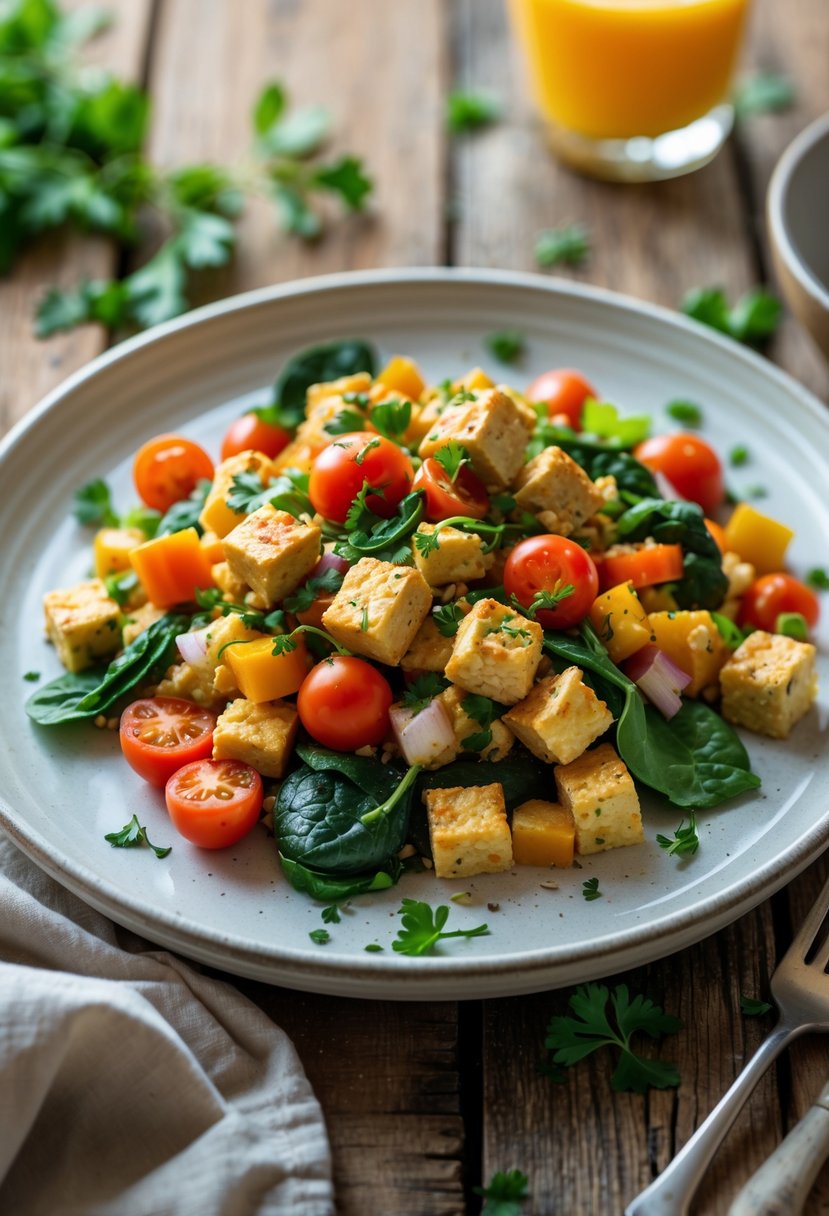
Tofu scramble gives you a protein-packed breakfast that works just as well for dinner. You get about 15 grams of protein per serving, making it a solid choice when you need fuel for your day.
The base is firm tofu that you crumble into bite-sized pieces. When you cook it with the right spices, it takes on a savory flavor that satisfies your breakfast cravings. You can make this meal in under 20 minutes from start to finish.
Adding vegetables boosts the nutrition and makes each bite more interesting. Spinach, tomatoes, bell peppers, and onions are common choices. You can use whatever vegetables you have on hand.
Ingredients
- 14 oz firm tofu, drained and pressed
- 1 tablespoon olive oil
- 1/2 onion, diced
- 1 cup cherry tomatoes, halved
- 2 cups fresh spinach
- 1/2 teaspoon turmeric
- 1/2 teaspoon garlic powder
- 1/4 teaspoon black salt (or regular salt)
- 1/4 teaspoon black pepper
- 1/4 teaspoon paprika
Step By Step Instructions
Press your tofu to remove excess water. You can use a tofu press or wrap it in a clean towel and place something heavy on top for 10-15 minutes.
Crumble the pressed tofu into small, uneven pieces with your hands. The irregular shapes will give you better texture when cooked.
Heat olive oil in a large skillet over medium heat. Add the diced onion and cook for 2-3 minutes until it softens.
Add the crumbled tofu to the pan. Sprinkle in the turmeric, garlic powder, black salt, pepper, and paprika. Stir everything together so the spices coat the tofu evenly.
Cook the tofu for 5-7 minutes, stirring occasionally. The turmeric will give it a yellow color similar to scrambled eggs.
Add the cherry tomatoes and cook for another 2 minutes until they start to soften. Toss in the spinach and stir until it wilts down, which takes about 1 minute.
Taste and adjust the seasonings if needed. Serve your tofu scramble warm with toast, avocado, or your favorite breakfast sides.
8) Peanut Butter and Banana Toast on Whole Grain Bread
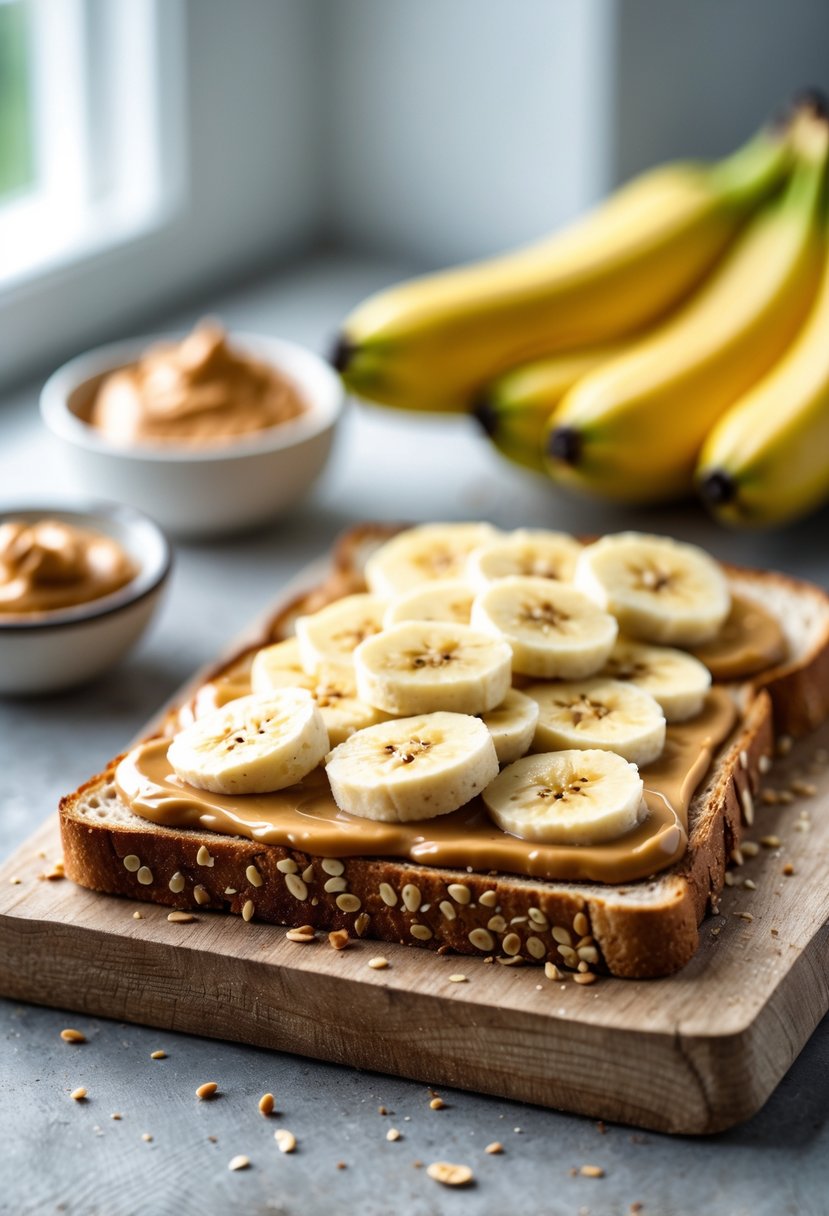
This simple breakfast combines three basic ingredients into a meal that keeps you full for hours. You get protein from peanut butter, natural sugars from banana, and fiber from whole grain bread.
The recipe takes about five minutes to make. You don’t need any cooking skills or special equipment.
Peanut butter provides healthy fats and protein that help stabilize your blood sugar. The banana adds potassium and natural sweetness. Whole grain bread offers complex carbohydrates that give you steady energy throughout the morning.
This meal works well before or after a workout. It also makes a good snack when you need something filling.
Ingredients
You need two slices of whole grain bread. Pick a brand that lists whole grains as the first ingredient.
Use two tablespoons of peanut butter. Natural peanut butter works best, but regular peanut butter is fine too.
Get one ripe banana. Ripe bananas are sweeter and easier to slice.
Step By Step Instructions
Toast your bread until it reaches your preferred level of crispness. Let it cool for about 30 seconds so the peanut butter spreads easily.
Spread one tablespoon of peanut butter on each slice of toast. Make sure you cover the bread evenly from edge to edge.
Slice the banana into thin rounds. Arrange the slices on top of the peanut butter in a single layer.
You can eat it right away or add optional toppings. Some people like a drizzle of honey or a sprinkle of chia seeds for extra protein.
If you want more protein, serve this toast with a hard-boiled egg on the side. You can also use almond butter instead of peanut butter for a different flavor.
9) Vegan Protein Muffins with Oats and Pumpkin Seeds
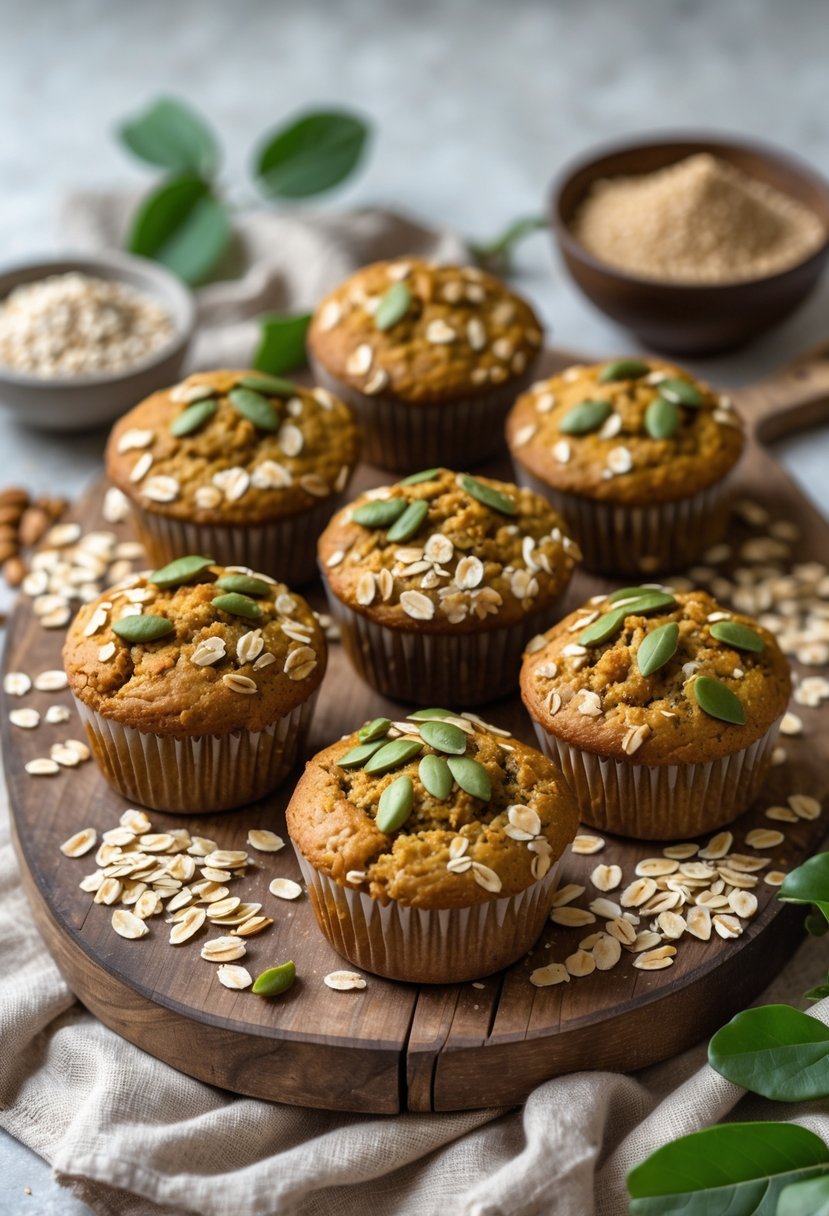
These vegan protein muffins give you around 8-10 grams of protein per serving without any animal products. They use oat flour and plant-based protein powder as the main protein sources.
The recipe takes about 30 minutes from start to finish. You can make a batch and store them in your freezer for quick breakfasts throughout the week.
Pumpkin seeds add extra protein and a nice crunch to the top of each muffin. The oats provide fiber that helps keep you full until your next meal.
Ingredients
You will need 2 cups of oat flour for the base. Add 1 scoop of vanilla or plain plant-based protein powder.
Mix in 1 cup of pumpkin puree (not pumpkin pie filling). Use 1/3 cup of maple syrup or another liquid sweetener.
Add 2 flax eggs made from 2 tablespoons ground flaxseed mixed with 6 tablespoons water. Include 1/4 cup of almond butter or another nut butter.
Use 1 teaspoon of baking powder and 1/2 teaspoon of baking soda. Add 1 tablespoon of pumpkin pie spice or cinnamon.
You will need 1/4 cup of non-dairy milk and 1/4 cup of pumpkin seeds for topping.
Step By Step Instructions
Set your oven to 350°F and line a 12-cup muffin tin with paper liners. Make your flax eggs by mixing the ground flaxseed with water and let them sit for 5 minutes.
Combine the oat flour, protein powder, baking powder, baking soda, and spices in a large bowl. Mix these dry ingredients together.
In another bowl, whisk together the pumpkin puree, maple syrup, almond butter, flax eggs, and non-dairy milk. Stir until the mixture is smooth.
Pour the wet ingredients into the dry ingredients. Fold them together until just combined, being careful not to overmix.
Divide the batter evenly among the 12 muffin cups. Sprinkle pumpkin seeds on top of each muffin.
Bake for 20-25 minutes until a toothpick inserted in the center comes out clean. Let the muffins cool in the pan for 5 minutes before moving them to a wire rack.
Store your muffins in an airtight container at room temperature for up to 3 days. You can also freeze them for up to 3 months.
10) Lentil and Sweet Potato Hash
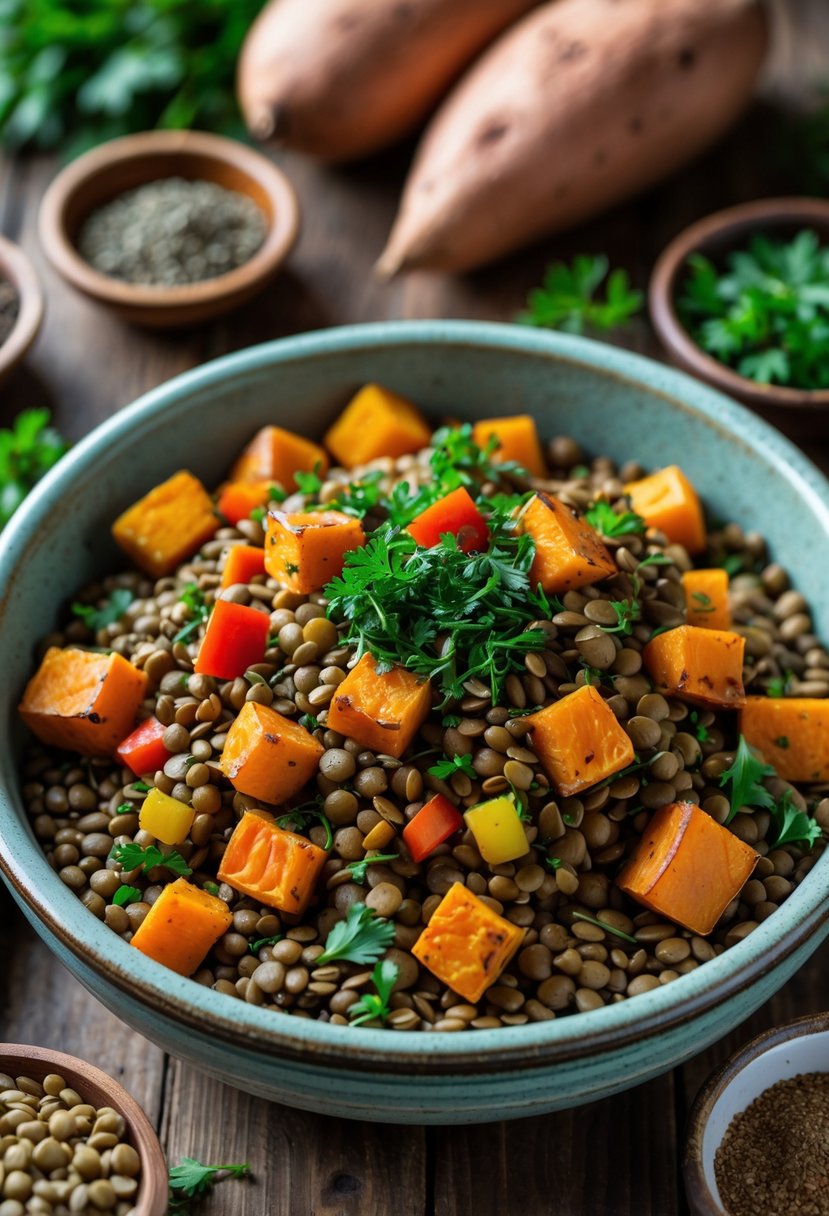
Lentil and sweet potato hash offers a filling breakfast option that delivers protein without relying on eggs. This dish combines the earthy flavor of lentils with the natural sweetness of sweet potatoes to create a balanced meal.
The lentils provide the protein foundation for this recipe. A single cup of cooked lentils contains about 18 grams of protein, which helps keep you full throughout the morning.
Sweet potatoes add complex carbohydrates and fiber to support your energy levels. They also bring vitamins and minerals like beta-carotene to the dish.
You can prepare this hash in one pan, which makes cleanup simple. The combination works well for breakfast, but you can also serve it for lunch or dinner.
Ingredients
You’ll need one cup of cooked lentils for this recipe. Brown or green lentils work best because they hold their shape when cooked.
Use one large sweet potato, diced into small cubes. Smaller pieces cook faster and distribute evenly throughout the hash.
Add one diced onion and two cloves of minced garlic for flavor. You can include bell peppers if you want extra vegetables.
Use two tablespoons of olive oil for cooking. Season with salt, pepper, and your choice of spices like cumin or paprika.
Optional additions include fresh spinach or kale. A handful of greens adds nutrients and color to your hash.
Step By Step Instructions
Start by cooking your lentils if you haven’t already. Rinse one cup of dried lentils and simmer them in water for 20-25 minutes until tender.
Heat two tablespoons of olive oil in a large skillet over medium heat. Add your diced sweet potato and cook for 8-10 minutes, stirring occasionally.
The sweet potato should start to soften and brown slightly. Add the diced onion and cook for another 3-4 minutes until it becomes translucent.
Stir in the minced garlic and cook for one minute. Add your cooked lentils to the pan and mix everything together.
Season with salt, pepper, and any spices you’re using. Cook for 5-7 minutes, allowing the flavors to blend and the sweet potato to finish cooking.
If you’re adding greens, stir them in during the last two minutes of cooking. They should wilt but maintain some texture.
Taste and adjust your seasonings as needed. Serve the hash warm on its own or with a side of toast.
Nutritional Benefits Of High Protein Meals
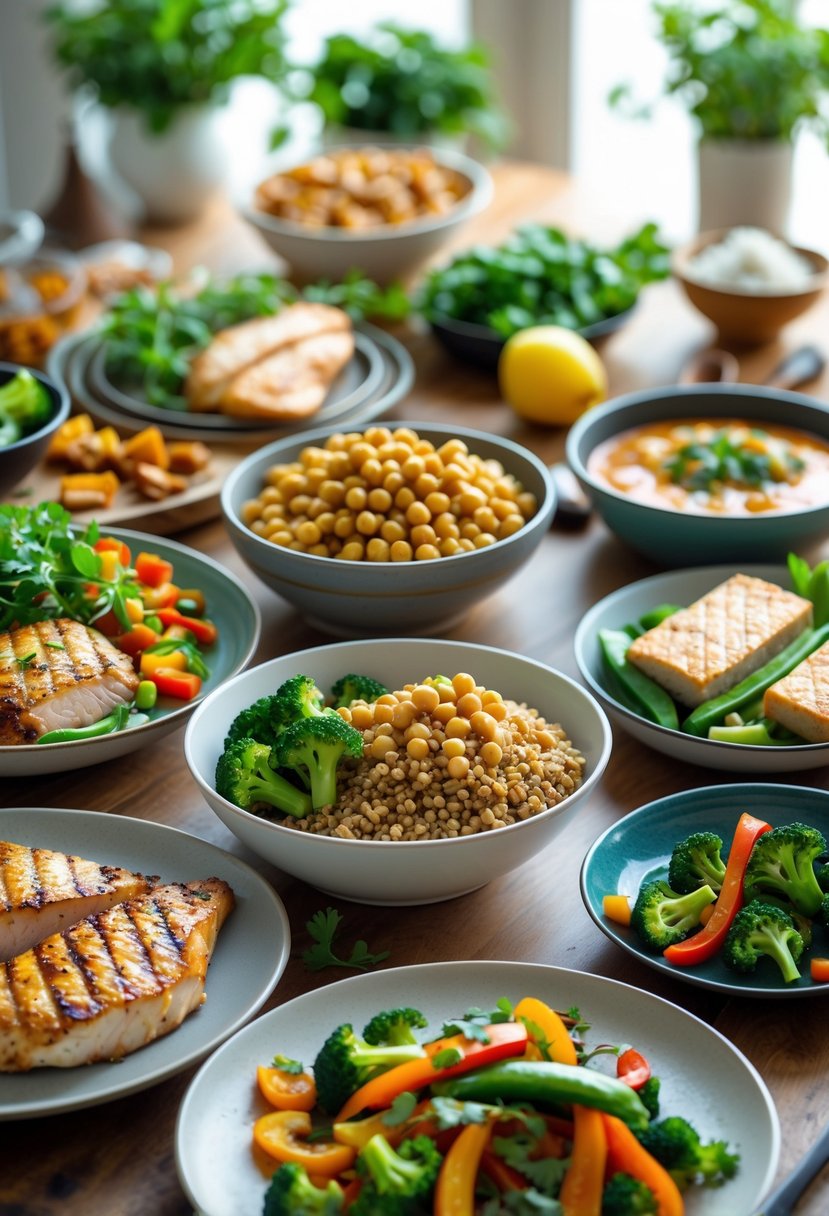
Protein delivers essential support for your body’s daily functions, from building tissue to keeping you satisfied between meals. Your metabolism, muscle health, and appetite control all depend on getting enough protein throughout the day.
Muscle Maintenance and Growth
Your muscles need protein to repair and grow stronger after daily activities and exercise. When you eat protein, your body breaks it down into amino acids that rebuild muscle fibers. This process happens whether you’re lifting weights at the gym or just going about your normal routine.
Adults need about 0.8 grams of protein per kilogram of body weight each day for basic maintenance. If you’re active or trying to build muscle, you might need 1.2 to 2.0 grams per kilogram. Without enough protein, your body starts breaking down existing muscle tissue to get the amino acids it needs.
Spreading protein intake across your meals works better than eating it all at once. Your body can only process around 25-30 grams of protein for muscle building in one sitting.
Satiety and Weight Management
Protein keeps you feeling full longer than carbohydrates or fats. When you eat a high-protein meal, your body releases hormones that signal fullness to your brain. This natural appetite control helps you eat less throughout the day without feeling hungry.
Studies show that increasing protein intake can reduce cravings and late-night snacking. A breakfast with 20-30 grams of protein can decrease hunger hormones for several hours. This makes it easier to stick to your eating goals without constantly thinking about food.
Protein also requires more energy to digest than other nutrients, which means your body burns extra calories just processing it.
Supporting Metabolism
Your metabolism gets a boost from protein because of something called the thermic effect of food. Your body uses 20-30% of protein’s calories just to digest and process it, compared to only 5-10% for carbs and 0-3% for fats.
Protein helps preserve your metabolic rate when you’re losing weight. Without adequate protein, your body loses muscle mass along with fat during weight loss. Since muscle tissue burns more calories at rest than fat tissue, losing muscle slows down your metabolism.
Getting enough protein maintains your muscle mass and keeps your metabolism running efficiently. This effect becomes especially important as you age, since adults naturally lose muscle mass over time.
How To Make High Protein Meals Without Eggs
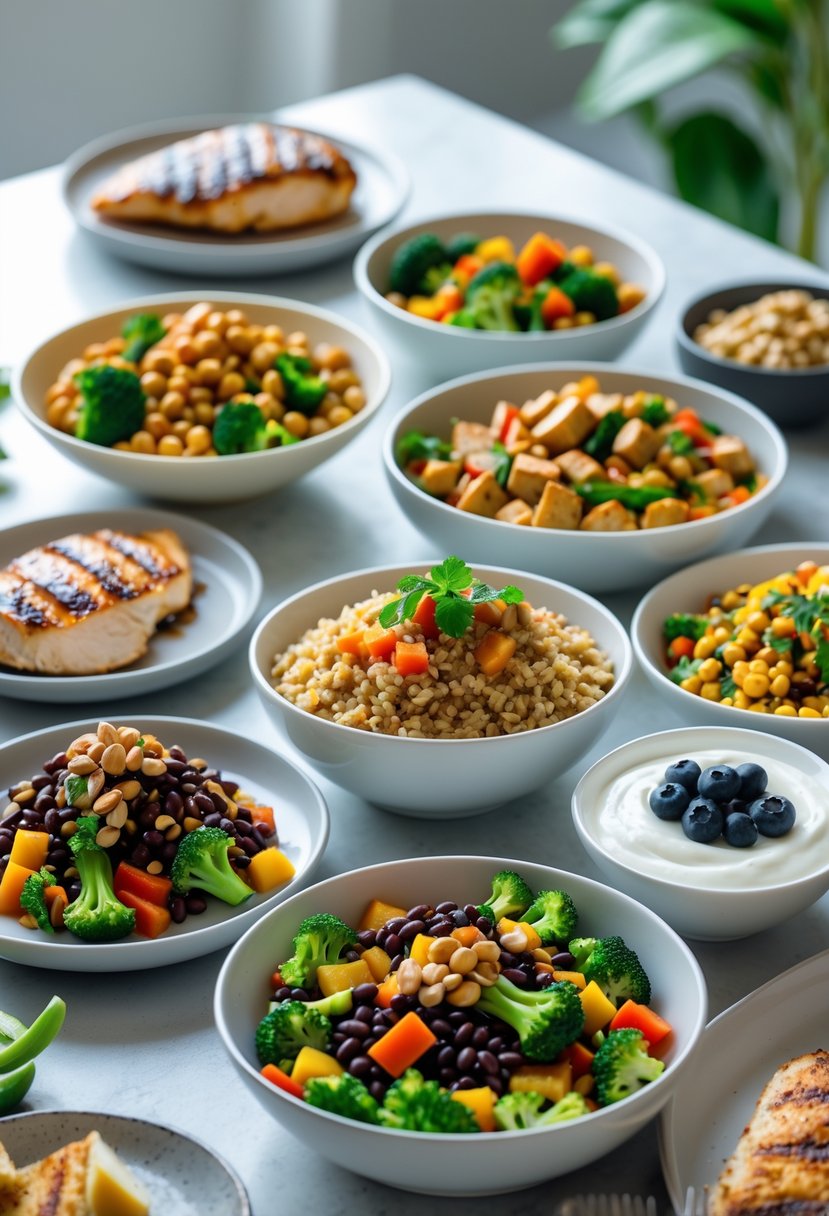
You can build protein-rich meals by focusing on three main sources: plant-based proteins, lean meats and seafood, and dairy products combined with legumes. Each option provides different amounts of protein and works well for various dietary needs.
Plant-Based Protein Alternatives
Greek yogurt delivers about 15-20 grams of protein per cup and works well as a breakfast base. You can add hemp hearts, which contain 10 grams of protein per 3 tablespoons, to boost the protein content further.
Chia seeds provide protein and create a pudding-like texture when soaked overnight. Mix 3 tablespoons of chia seeds with milk or a plant-based alternative for a base that contains about 6 grams of protein before adding toppings.
High-protein plant options include:
- Protein powder (20-30g per scoop)
- Hemp hearts (10g per 3 tablespoons)
- Chia seeds (5g per 2 tablespoons)
- Nut butters (7-8g per 2 tablespoons)
- Quinoa (8g per cup cooked)
Smoothies let you combine multiple protein sources. Blend protein powder with nut butter, plant-based milk, and seeds for a meal with 25-30 grams of protein.
Incorporating Lean Meats and Seafood
Turkey sausage provides 15-20 grams of protein per serving and cooks quickly for breakfast meals. Chicken breast contains about 26 grams of protein per 3-ounce serving and can be prepared ahead for morning wraps or bowls.
Smoked salmon offers 16 grams of protein per 3-ounce serving. You can pair it with whole grain toast and cream cheese for a filling meal. Canned tuna works similarly and provides 20 grams of protein per can.
Ground turkey works well in breakfast hash or patties. Cook it with vegetables and seasonings for a savory option that contains 22 grams of protein per 3-ounce serving. Lean beef also fits into morning meals when portioned correctly.
Using Dairy and Legumes Effectively
Cottage cheese delivers 14 grams of protein per half cup. Top it with fruit and nuts for a complete meal that requires no cooking.
Black beans and chickpeas contain 15 grams of protein per cup. You can mash them onto toast or add them to breakfast burritos. White beans work well in savory oatmeal or grain bowls.
| Dairy & Legume | Protein per Serving |
|---|---|
| Cottage cheese | 14g per 1/2 cup |
| Greek yogurt | 15-20g per cup |
| Black beans | 15g per cup |
| Lentils | 18g per cup cooked |
Ricotta cheese provides 14 grams of protein per half cup and spreads easily on whole grain bread. Mix it with cinnamon for a sweet option or herbs for a savory version. Lentils cook faster than other legumes and add bulk to breakfast dishes.
Frequently Asked Questions
High-protein breakfasts without eggs can include options like Greek yogurt parfaits, cottage cheese bowls, quinoa breakfast dishes, protein smoothies, and overnight oats enriched with nut butters and seeds. These choices work well for various dietary needs, including vegetarian, dairy-free, and weight loss goals.
What are some high-protein breakfast options for vegetarians that exclude eggs?
Greek yogurt with berries and chia seeds provides around 15-20 grams of protein per serving. You can add hemp hearts or ground flaxseeds to boost the protein content even more.
Cottage cheese bowls work well when paired with pineapple and flaxseeds. A typical serving gives you about 14 grams of protein.
Quinoa breakfast bowls offer a complete protein source with all essential amino acids. Mix cooked quinoa with nuts, berries, and a drizzle of honey for a filling meal that contains roughly 8-10 grams of protein per cup.
Overnight oats with almond butter and hemp hearts deliver sustained energy. Two tablespoons of almond butter add 7 grams of protein, while hemp hearts contribute another 10 grams per three tablespoons.
How can I create a protein-rich breakfast for weight loss without using eggs?
Protein smoothies with pea protein powder and spinach keep you full longer while staying low in calories. Use unsweetened almond milk as your base and add a scoop of pea protein for 15-20 grams of protein.
Greek yogurt contains fewer calories than many breakfast options while delivering high protein. Choose plain, non-fat varieties to keep calories down while getting 15-20 grams of protein per cup.
Cottage cheese provides a low-calorie, high-protein option at about 80 calories and 14 grams of protein per half cup. Pair it with fresh fruit instead of sugary toppings to control your calorie intake.
Which high-protein breakfast choices are suitable for someone with a dairy intolerance?
Quinoa breakfast bowls work perfectly for dairy-free diets. Cook quinoa in plant-based milk and top with nuts, seeds, and fresh berries for a complete meal.
Protein smoothies made with pea protein powder and plant-based milk give you 15-20 grams of protein without any dairy. Add spinach, banana, and almond butter for extra nutrients and flavor.
Overnight oats prepared with almond, oat, or coconut milk provide a dairy-free base. Mix in almond butter and hemp hearts to reach 15-20 grams of protein per serving.
Chia seed pudding made with coconut milk offers another dairy-free option. Three tablespoons of chia seeds contain about 6 grams of protein and create a pudding-like texture when soaked overnight.
Could you suggest some protein-packed Indian breakfast ideas?
Moong dal cheela is a savory pancake made from split yellow mung beans that provides about 12 grams of protein per serving. You can add vegetables and spices to enhance the flavor.
Besan chilla uses chickpea flour as its base and delivers roughly 10 grams of protein per serving. Mix the batter with onions, tomatoes, and green chilies for a traditional taste.
Idli made from fermented rice and urad dal batter offers about 6 grams of protein per serving. Serve with sambar or coconut chutney for added protein and flavor.
Upma prepared with semolina and mixed with vegetables provides around 6 grams of protein per cup. Add roasted peanuts or cashews to increase the protein content.
What high-protein foods can I substitute for eggs to maintain a balanced diet?
Greek yogurt offers similar protein content to eggs with about 15-20 grams per cup compared to 6 grams in one egg. It also provides probiotics for gut health.
Cottage cheese delivers 14 grams of protein per half cup. It contains casein protein, which digests slowly and keeps you satisfied longer.
Hemp hearts provide 10 grams of complete protein per three tablespoons plus omega-3 fatty acids. You can sprinkle them on yogurt, oatmeal, or smoothies.
Pea protein powder gives you 15-20 grams of protein per scoop and works well in smoothies. It contains all nine essential amino acids your body needs.
Are there any breakfast foods that are higher in protein than oatmeal and don’t contain eggs?
Plain oatmeal contains only about 5 grams of protein per cup when cooked. Greek yogurt provides three to four times more protein at 15-20 grams per cup.
Cottage cheese beats oatmeal with 14 grams of protein per half cup. It takes just seconds to prepare compared to cooking oatmeal.
Quinoa offers slightly more protein than oatmeal at 8 grams per cooked cup. It cooks in about 15 minutes and provides all essential amino acids.
You can boost regular oatmeal’s protein content by adding almond butter, hemp hearts, or chia seeds. Two tablespoons of almond butter adds 7 grams while three tablespoons of hemp hearts contribute 10 grams.