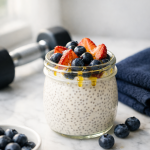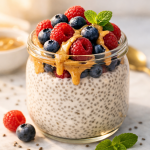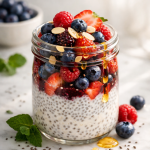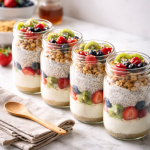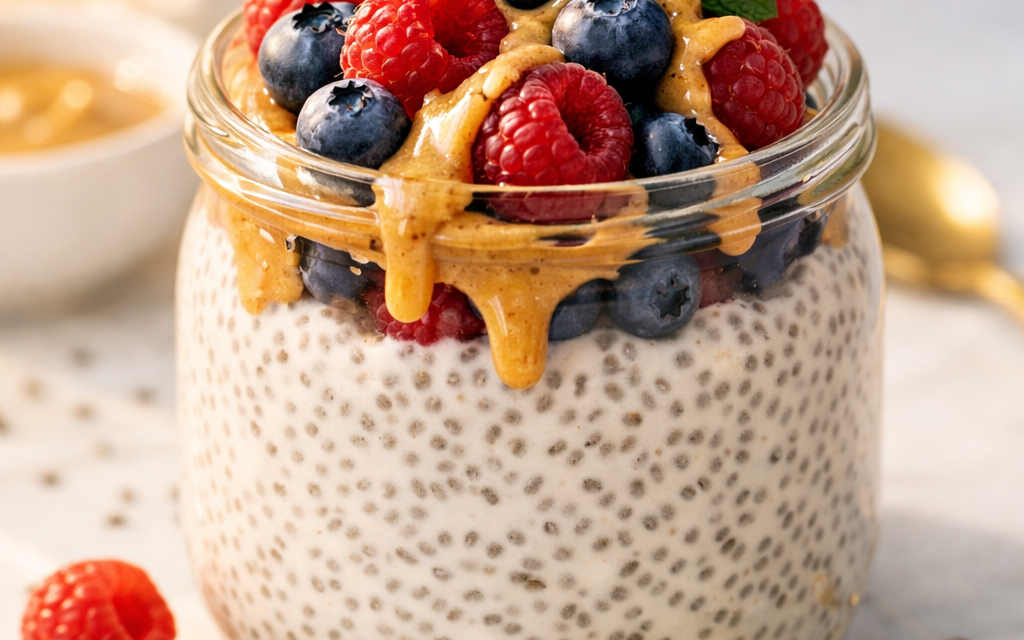
What if a single breakfast could deliver rich, dessert-like flavor, keep hunger at bay until lunch, and still fit comfortably within a calorie-conscious eating plan? Low Calorie, High Flavor: Protein Chia Seed Pudding for Breakfast makes that possible — no cooking required, no complicated techniques, and no compromise on taste. This guide walks through everything a health-conscious eater needs to know to master this nutrient-dense morning staple.
Key Takeaways 📌
- Protein chia pudding delivers 10g to 46g of protein per serving, depending on the ingredients chosen.
- Most recipes require only 5–15 minutes of hands-on preparation before refrigeration overnight.
- Each serving provides 8–15g of dietary fiber, supporting digestive health and satiety.
- Total calories typically range from 305–320 per serving, making it ideal for calorie-aware meal plans.
- The recipe is fully customizable — dairy, plant-based, vegan, and low-sugar versions are all achievable.
Why Protein Chia Seed Pudding Is a Breakfast Game-Changer
The Nutritional Case for Chia Seeds
Chia seeds are small but remarkably powerful. When soaked in liquid, they absorb up to ten times their weight and form a thick, creamy gel — the foundation of chia pudding. Beyond texture, chia seeds contribute meaningful nutritional value:
| Nutrient | Per 2 Tbsp (28g) Chia Seeds |
|---|---|
| Calories | ~138 |
| Protein | ~5g |
| Dietary Fiber | ~10g |
| Omega-3 Fatty Acids | ~5g |
| Calcium | ~18% DV |
💡 “Chia seeds are one of the most nutrient-dense foods available, offering fiber, protein, and healthy fats in a single small serving.”
Adding a quality protein powder to the base mixture elevates the nutritional profile dramatically. Recipes consistently achieve 8–15g of dietary fiber per serving, while protein content can be tailored anywhere from a modest 10g to an impressive 46g depending on the protein source selected.
Calorie Control Without Sacrificing Flavor
One of the most compelling aspects of Low Calorie, High Flavor: Protein Chia Seed Pudding for Breakfast is its ability to satisfy without excess calories. Prepared puddings typically land between 305 and 320 calories per serving — a range that fits comfortably within most structured eating plans. When sweetened with natural zero-calorie alternatives such as stevia or monk fruit, sugar content can drop to as little as 3g per serving, making this an excellent option for those monitoring glycemic load.
How to Make Low Calorie, High Flavor: Protein Chia Seed Pudding for Breakfast
Core Ingredients
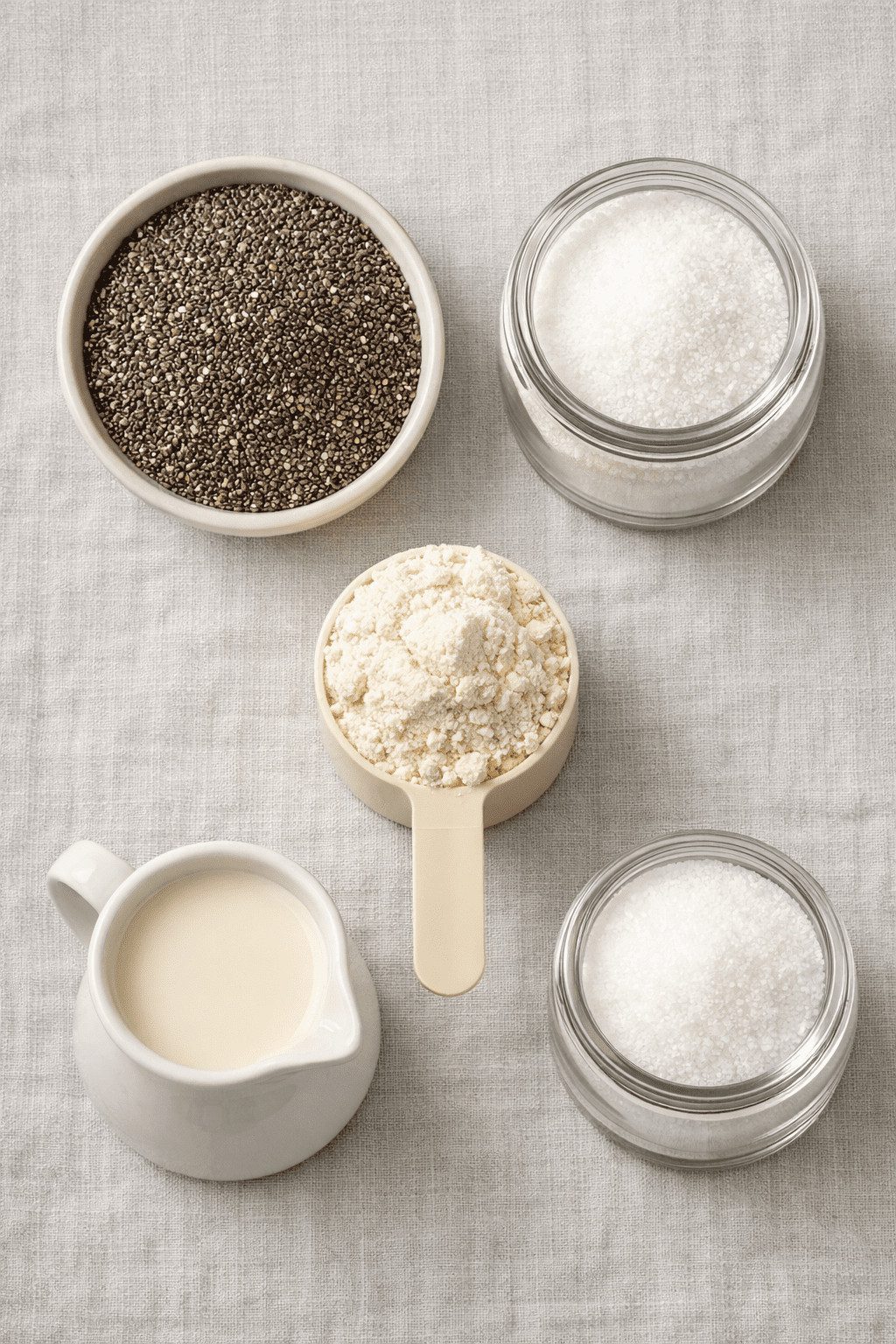
The simplest version of this recipe requires just four ingredients:
- ✅ Chia seeds — the structural base
- ✅ Milk of choice — dairy or plant-based
- ✅ Protein powder — vanilla, chocolate, or unflavored
- ✅ Sweetener — stevia, monk fruit, maple syrup, or honey
The beauty of this formula is its flexibility. The table below outlines popular milk options and their approximate calorie contributions per cup:
| Milk Type | Calories (per cup) | Protein (per cup) | Best For |
|---|---|---|---|
| Whole dairy milk | ~149 | ~8g | Creaminess, higher protein |
| Greek yogurt (thinned) | ~100 | ~10g | Extra protein, thick texture |
| Unsweetened almond milk | ~30 | ~1g | Lowest calorie option |
| Oat milk | ~120 | ~3g | Mild, naturally sweet flavor |
| Hemp milk | ~60 | ~3g | Omega-3 boost |
| Coconut milk (lite) | ~45 | ~0.5g | Tropical flavor profile |
Step-by-Step Preparation
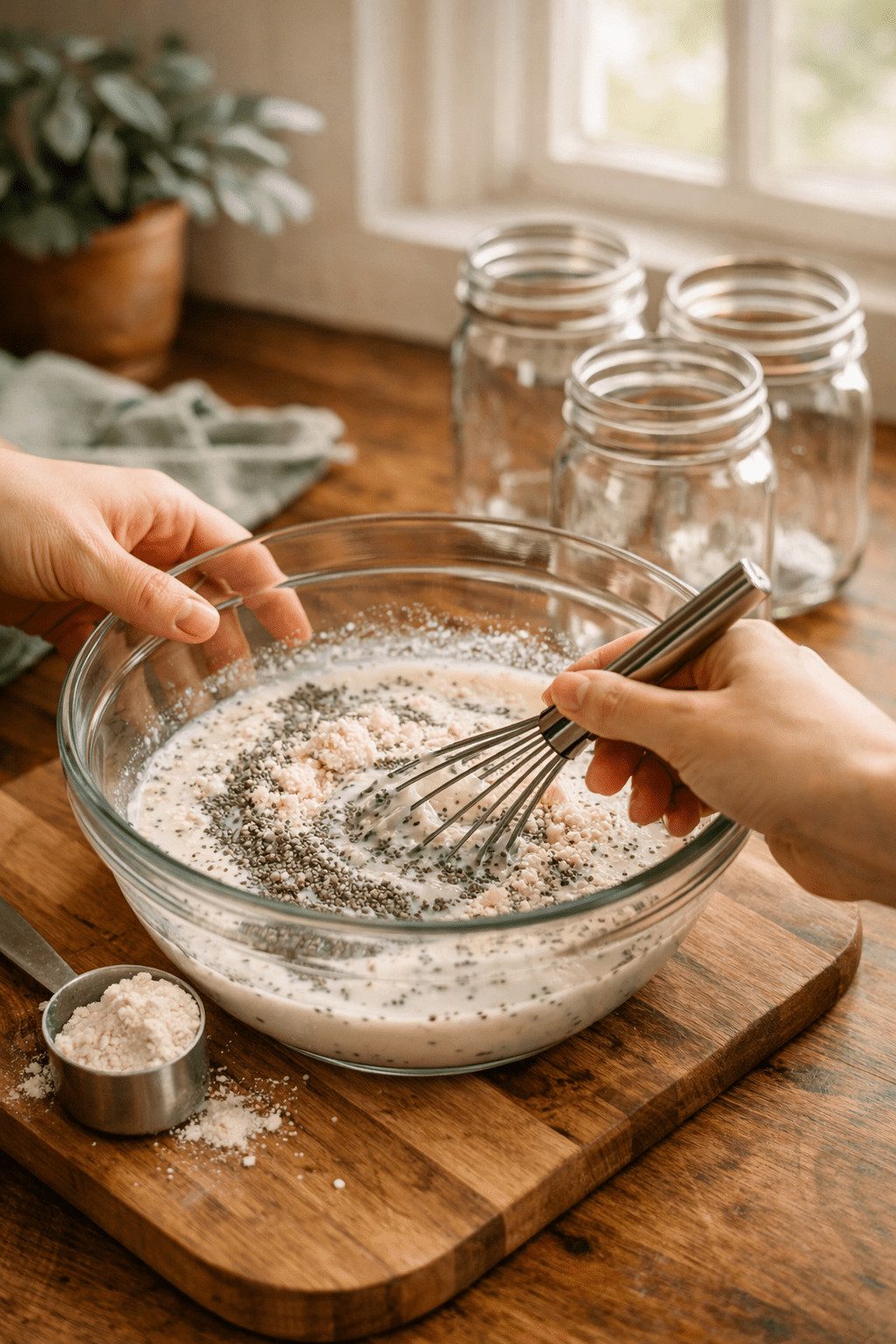
Prep time: 5–10 minutes | Chill time: 4 hours minimum (overnight preferred) | Servings: 1–4
Step 1 — Combine dry ingredients
In a bowl or mason jar, whisk together 3 tablespoons of chia seeds and one scoop of protein powder. Mixing the dry ingredients first prevents clumping when liquid is added.
Step 2 — Add liquid
Pour in 1 cup of milk of choice. Stir vigorously for 60 seconds to ensure the protein powder fully dissolves and chia seeds are evenly distributed.
Step 3 — Sweeten to taste
Add preferred sweetener. Start with a small amount — ½ teaspoon of stevia or 1 teaspoon of monk fruit — and adjust after tasting.
Step 4 — Rest and stir again
Allow the mixture to sit at room temperature for 5 minutes, then stir a second time. This second stir prevents the chia seeds from settling into a clump at the bottom.
Step 5 — Refrigerate overnight
Cover and refrigerate for a minimum of 4 hours, ideally overnight. The pudding will thicken to a creamy, spoonable consistency.
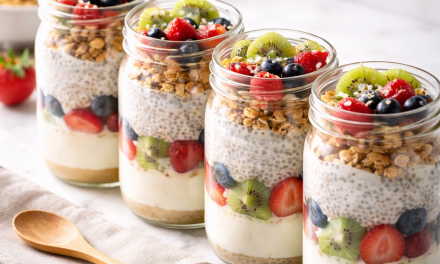
Step 6 — Add toppings before serving
Just before eating, layer on chosen toppings for maximum freshness and crunch.
🕐 Most recipes require only 5–15 minutes of hands-on prep time — making this one of the most efficient high-protein breakfasts available.
Boosting Protein Content
For those with higher protein targets, several strategies can push the protein content well above the baseline:
- Double the protein powder — adds approximately 20–25g additional protein
- Use Greek yogurt as part of the liquid base — contributes 10g+ per ½ cup
- Stir in cottage cheese — blends smoothly and adds significant protein
- Choose a high-protein milk — dairy milk or pea milk outperforms almond milk significantly
Combining Greek yogurt with a full scoop of protein powder and dairy milk can push a single serving toward 40–46g of protein — suitable for athletes or those in active muscle-building phases.
Customization, Toppings, and Meal Prep Strategies
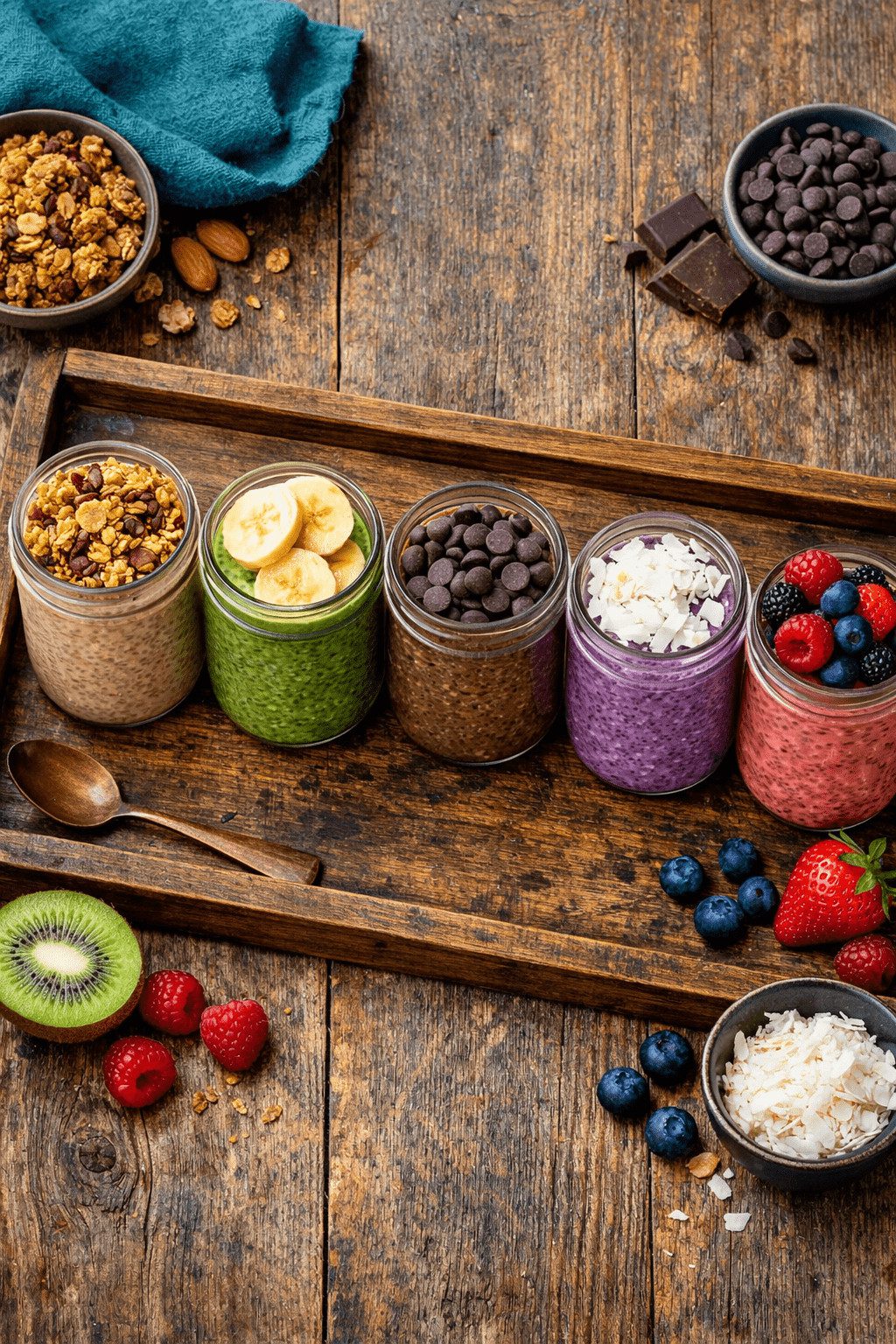
Flavor Variations to Keep Breakfast Interesting 🍫🫐
Rotating flavors prevents breakfast fatigue. Below are five proven flavor profiles:
| Flavor Profile | Protein Powder | Key Add-In | Suggested Topping |
|---|---|---|---|
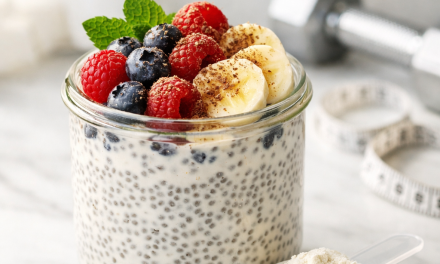
| Classic Vanilla Berry | Vanilla whey | — | Fresh mixed berries |
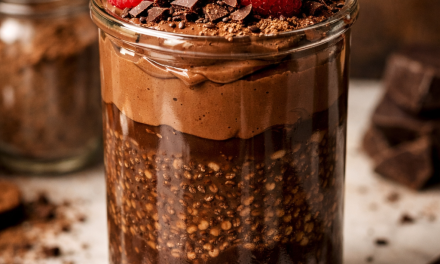
| Dark Chocolate | Chocolate casein | 1 tsp cocoa powder | Dark chocolate chips |
| Tropical Coconut | Unflavored plant-based | Lite coconut milk | Toasted coconut flakes |
| Peanut Butter Banana | Vanilla whey | 1 tbsp PB powder | Sliced banana, granola |
| Matcha Green Tea | Unflavored collagen | 1 tsp matcha | Honey drizzle, almonds |
Vegan and Dairy-Free Options 🌱
Low Calorie, High Flavor: Protein Chia Seed Pudding for Breakfast is fully compatible with vegan diets. Simply substitute:
- Dairy milk → unsweetened almond, oat, hemp, or coconut milk
- Whey protein → pea protein, brown rice protein, or a blended plant-based powder
- Honey → maple syrup or agave nectar
Plant-based versions maintain comparable fiber content and can still achieve 20–30g of protein per serving with the right powder selection.
Meal Prep for the Entire Week 📦
One of the most practical advantages of this recipe is its no-cook, batch-prep format. Preparing five servings on a Sunday evening takes under 20 minutes and provides a ready-to-eat breakfast every weekday morning.
Batch prep tips:
- Use wide-mouth mason jars for easy stirring and storage
- Label each jar with the flavor and preparation date
- Store in the refrigerator for up to 5 days
- Keep toppings separate until serving to preserve texture
Conclusion
Low Calorie, High Flavor: Protein Chia Seed Pudding for Breakfast represents one of the most efficient, nutritious, and genuinely enjoyable morning meals available to health-conscious eaters in 2026. With preparation times under 15 minutes, calorie counts between 305 and 320 per serving, and protein content scalable from 10g to 46g, this recipe adapts to virtually any dietary goal.
Actionable Next Steps ✅
- Start this week — gather chia seeds, a preferred protein powder, and one milk option.
- Batch prep on Sunday — fill five mason jars and refrigerate for the week ahead.
- Experiment with flavors — try one new flavor profile each week using the variation table above.
- Track results — monitor energy levels, hunger cues, and satiety through the morning to identify the optimal protein and calorie ratio.
- Explore vegan options — if dairy-free eating is a goal, test a plant-based milk and pea protein combination.
A nutritious, flavorful breakfast does not need to be complicated or time-consuming. Chia pudding proves that simplicity and quality can coexist on the same spoon.
References
- Burgess, L. (2019). What are the benefits of chia seeds? Medical News Today.
- Dreher, M. L. (2018). Whole fruits and fruit fiber emerging health effects. Nutrients, 10(12), 1833.
- Lattimer, J. M., & Haub, M. D. (2010). Effects of dietary fiber and its components on metabolic health. Nutrients, 2(12), 1266–1289.
- Muñoz, L. A., Cobos, A., Diaz, O., & Aguilera, J. M. (2013). Chia seed (Salvia hispanica): An ancient grain and a new functional food. Food Reviews International, 29(4), 394–408.
- Nieman, D. C., Cayea, E. J., Austin, M. D., Henson, D. A., McAnulty, S. R., & Jin, F. (2009). Chia seed does not promote weight loss or alter disease risk factors in overweight adults. Nutrition Research, 29(6), 414–418.
- Vuksan, V., Jenkins, A. L., Dias, A. G., Lee, A. S., Jovanovski, E., Rogovik, A. L., & Hanna, A. (2010). Reduction in postprandial glucose excursion and prolongation of satiety: Possible explanation of the long-term effects of whole grain Salba (Salvia hispanica L.). European Journal of Clinical Nutrition, 64(4), 436–438.
- Williamson, G. (2017). The role of polyphenols in modern nutrition. Nutrition Bulletin, 42(3), 226–235.