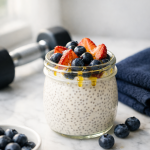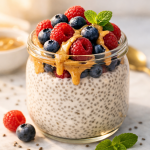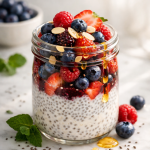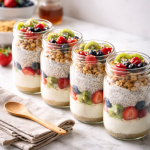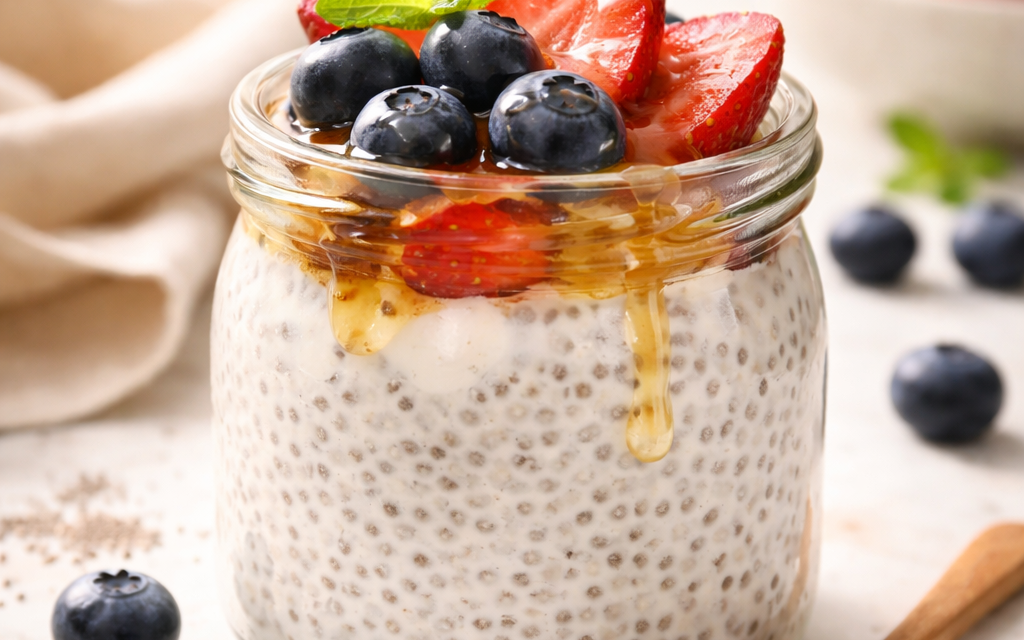
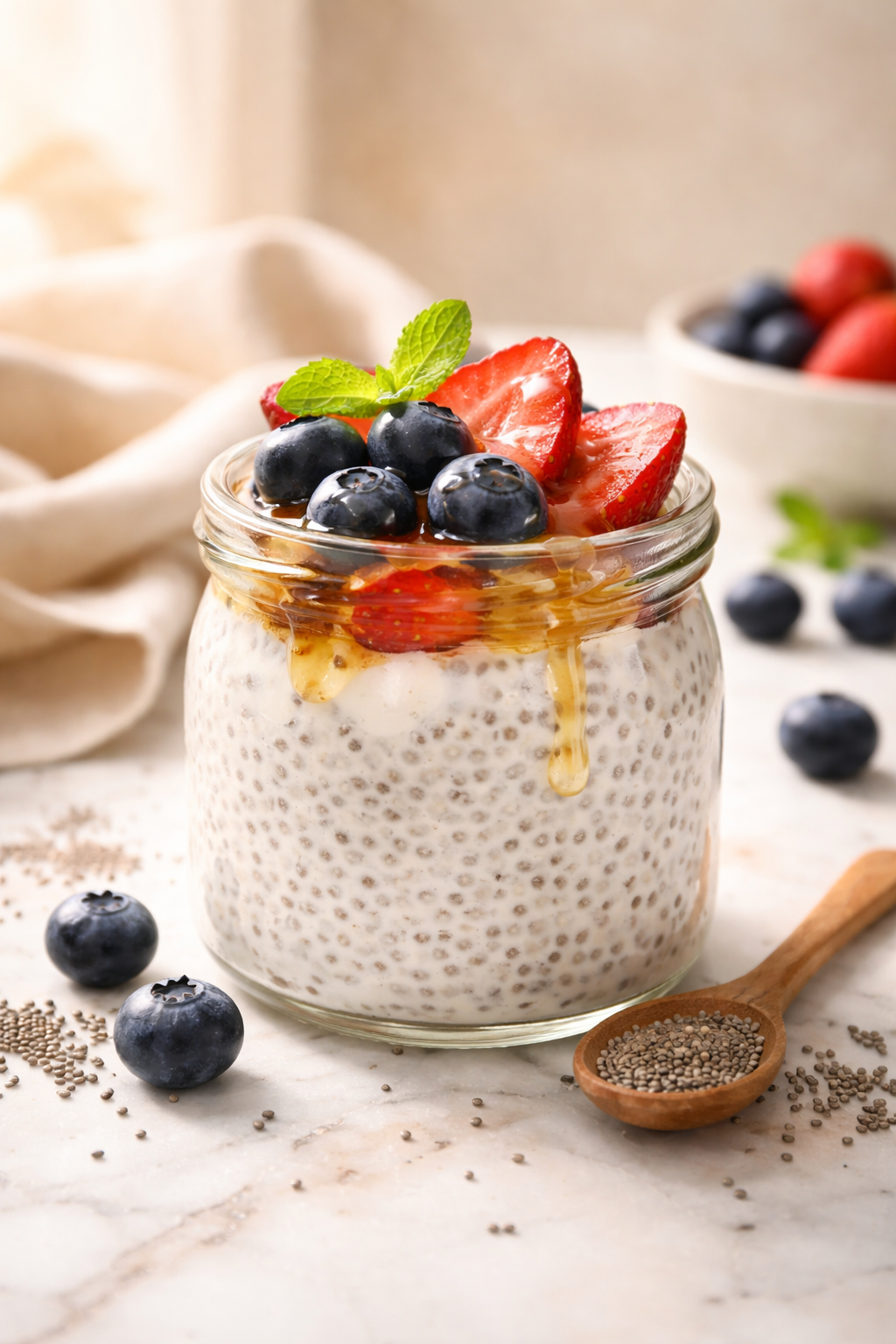
What if a single breakfast could deliver 19 to 32 grams of protein, keep total calories under 300, and require less than five minutes of active preparation? That is exactly what Under 300 Calories: A Creamy Protein Chia Seed Pudding Recipe offers — a nutrient-dense, satisfying meal that fits seamlessly into the busiest morning routine. In 2026, with meal-prep culture at an all-time high, this recipe has become a cornerstone of smart, health-conscious eating.
Key Takeaways 🌟
- ✅ Calorie range: Protein chia pudding can be crafted for 243–299 calories per serving, depending on ingredients chosen.
- ✅ Protein power: Adding Greek yogurt and/or protein powder boosts protein from a standard 5g up to 32g per serving.
- ✅ Minimal prep: Most versions require just 5 minutes of hands-on time, with a 2-hour or overnight soak.
- ✅ Nutrient-rich base: Chia seeds provide omega-3 fatty acids, fiber, calcium, iron, and vitamin K in every serving.
- ✅ Flexible formulas: Multiple recipe variations exist to suit different calorie, protein, and flavor preferences.
Why Chia Seeds Are the Foundation of a Low-Calorie, High-Protein Pudding
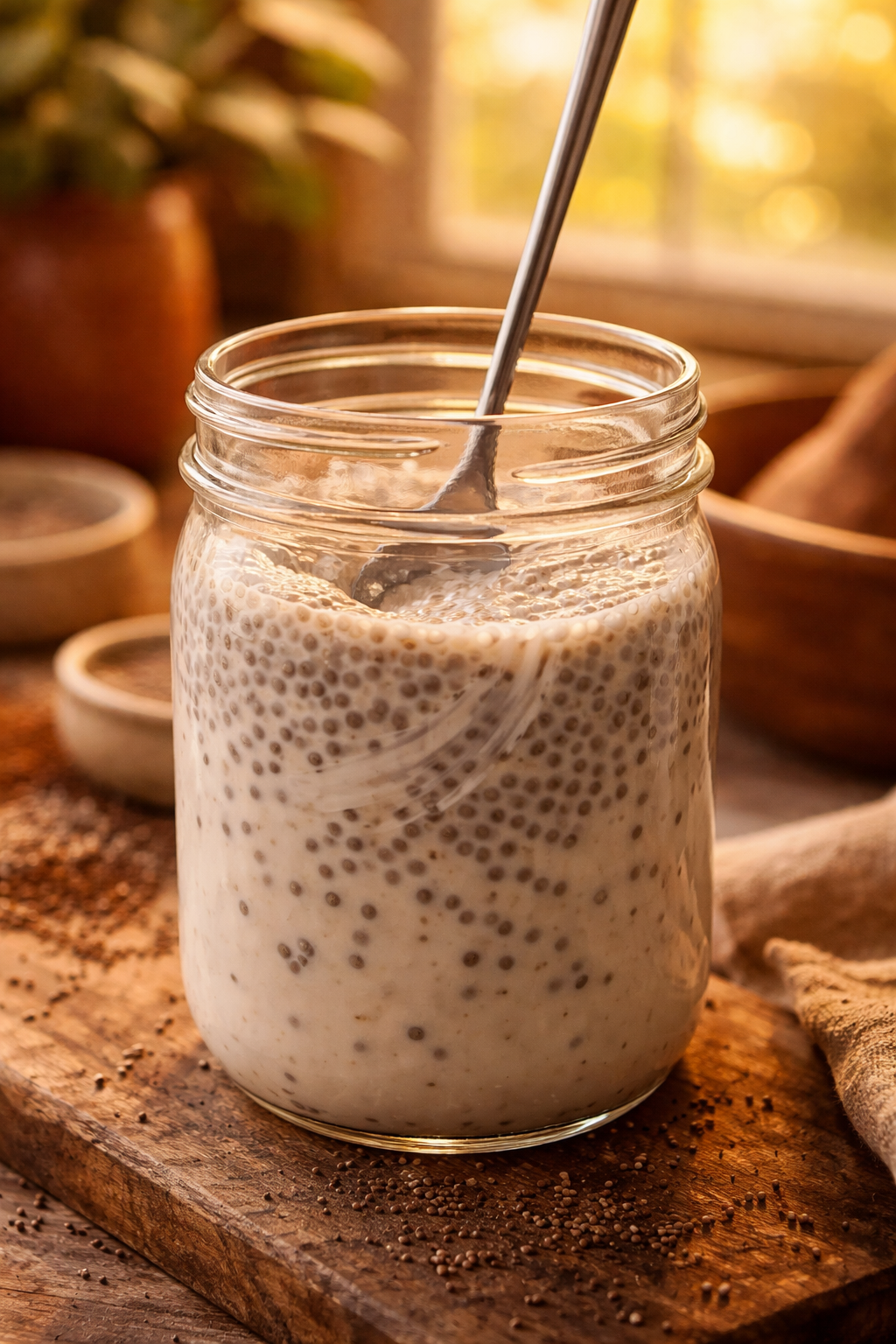
Chia seeds are among the most nutrient-dense foods available. A single ¼ cup serving delivers approximately 7 grams of plant-based protein, along with meaningful amounts of omega-3 fatty acids, antioxidants, fiber, iron, calcium, and vitamin K. Crucially, chia seeds can absorb up to 10 times their weight in water, which is what creates the signature thick, creamy pudding texture without any cooking required.
However, plain chia pudding made with only seeds and liquid typically contains around 5 grams of protein — not enough to sustain energy or support muscle recovery on its own. This is where strategic ingredient additions transform a simple snack into a macro-balanced meal.
The Protein Gap: Standard vs. Enhanced Chia Pudding
| Version | Calories | Protein | Fiber | Sugar |
|---|---|---|---|---|
| Standard chia pudding | ~150 | 5g | 10g | Varies |
| Greek yogurt-based (Eat the Gains) | 280 | 19g | 7g | Low |
| 4-ingredient formula (Eating Bird Food) | 243 | 19g | High | 3g |
| Cottage cheese + protein powder version | 299 | 32g | Moderate | Low |
💬 “The difference between a 5g-protein pudding and a 32g-protein pudding is simply a matter of knowing which two or three ingredients to add.”
Core Nutritional Benefits of Chia Seeds
- Heart health: Omega-3 fatty acids support cardiovascular function
- Digestive regularity: High fiber content promotes healthy gut motility
- Blood sugar stability: Soluble fiber slows glucose absorption
- Bone strength: Calcium and vitamin K contribute to skeletal health
- Weight management: High satiety factor reduces overall calorie intake
How to Make Under 300 Calories: A Creamy Protein Chia Seed Pudding Recipe
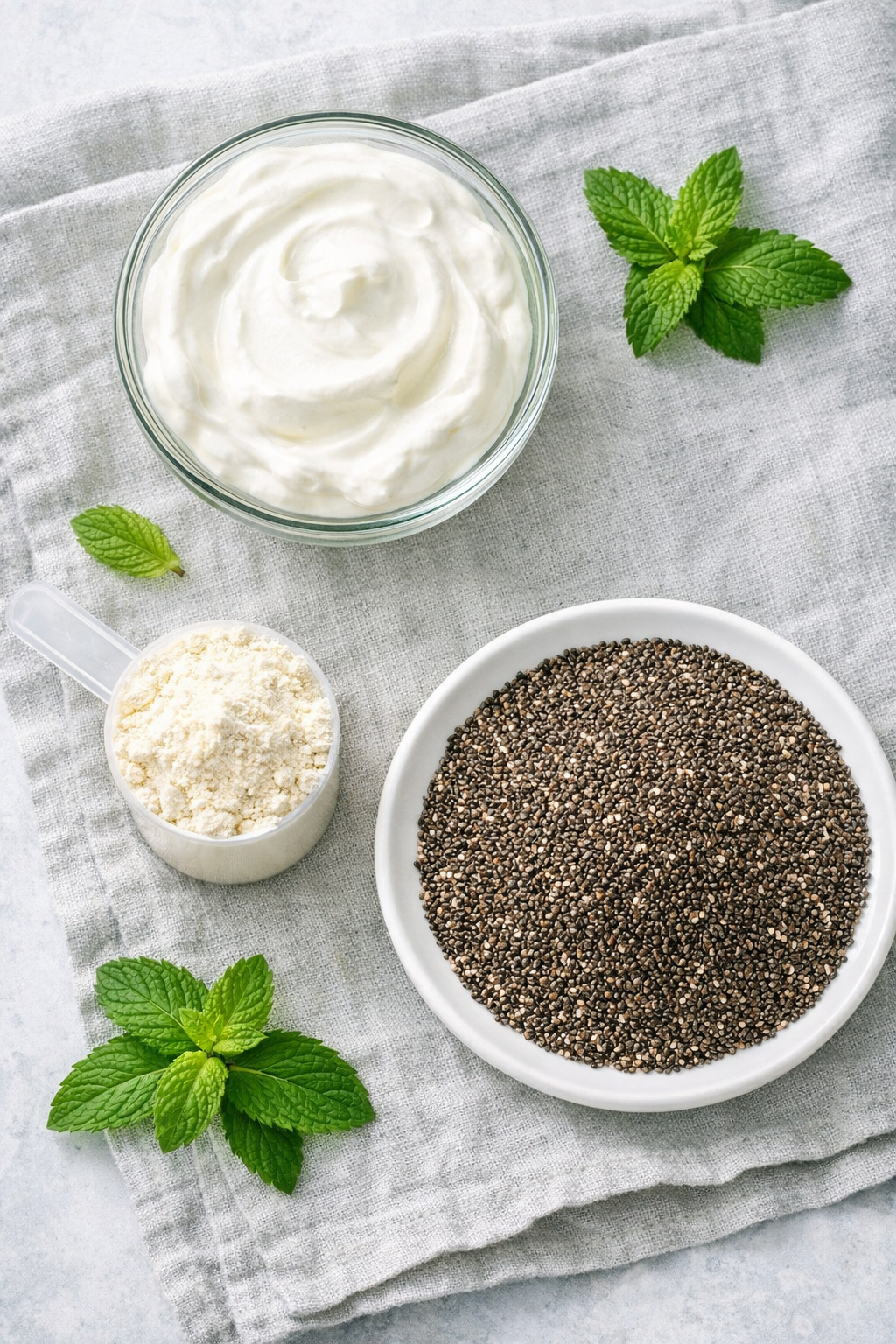
The beauty of this recipe lies in its simplicity. Three core formulas have been tested and refined by nutrition-focused recipe developers, each landing under or at the 300-calorie mark while maximizing protein content.
Formula 1: The 4-Ingredient Classic (243 Calories | 19g Protein)
This streamlined approach, popularized by Eating Bird Food, proves that fewer ingredients can still deliver exceptional nutrition. With only 3 grams of sugar per serving, it is ideal for those monitoring glycemic impact.
Ingredients:
- 3 tablespoons chia seeds
- ¾ cup unsweetened almond milk
- ½ cup plain non-fat Greek yogurt
- 1 scoop vanilla protein powder (approx. 20g protein)
Method:
- Whisk protein powder into almond milk until fully dissolved.
- Add Greek yogurt and stir until smooth.
- Fold in chia seeds thoroughly.
- Refrigerate for a minimum of 2 hours (or overnight for best texture).
- Stir once more before serving and add desired toppings.
⏱️ Prep time: 5 minutes | Soak time: 2 hours minimum
Formula 2: The Greek Yogurt Macro Bowl (280 Calories | 19g Protein | 7g Fiber)
Developed with blood sugar stability in mind, this version from Eat the Gains uses Greek yogurt as both a protein booster and a natural thickener. The result is a macro-balanced pudding that sustains energy for several hours.
Ingredients:
- 3 tablespoons chia seeds
- ½ cup unsweetened oat milk
- ¾ cup non-fat plain Greek yogurt
- ½ teaspoon pure vanilla extract
- Pinch of cinnamon
Method:
- Combine all ingredients in a jar or bowl.
- Stir vigorously for 2 minutes to prevent clumping.
- Seal and refrigerate overnight.
- Top with fresh berries before serving.
Formula 3: The High-Protein Powerhouse (299 Calories | 32g Protein)
For those with higher protein targets, Mary’s Whole Life formula combines cottage cheese (or Greek yogurt) with protein powder to reach an impressive 32 grams of protein while staying just under the 300-calorie ceiling.
Ingredients:
- 3 tablespoons chia seeds
- ½ cup unsweetened almond milk
- ½ cup low-fat cottage cheese (blended smooth)
- 1 scoop unflavored or vanilla protein powder
Method:
- Blend cottage cheese until completely smooth (this eliminates the grainy texture).
- Mix blended cottage cheese with almond milk and protein powder.
- Stir in chia seeds.
- Refrigerate for at least 4 hours or overnight.
💡 Pro tip: Blending cottage cheese before mixing eliminates texture concerns and creates a pudding base that rivals any yogurt-based version.
Quick-Set Method: Ready in 30 Minutes ⚡
For mornings when overnight prep is not possible, a 30-minute quick-set method exists. By increasing the ratio of Greek yogurt to liquid, the mixture thickens significantly faster. This approach, noted by Hummusapien, achieves 10+ grams of protein and 8 grams of fiber in under half an hour — though the texture is slightly less firm than the overnight version.
Customization, Meal Prep, and Troubleshooting
Flavor Variations to Prevent Palate Fatigue
Rotating flavors is essential for long-term consistency. Below are four tested combinations that keep the recipe exciting throughout the week:
| Flavor Profile | Add-Ins | Topping Suggestion |
|---|---|---|
| 🍫 Chocolate Mocha | 1 tsp cocoa powder + espresso | Dark chocolate chips |
| 🥭 Tropical | ½ tsp coconut extract | Mango cubes + toasted coconut |
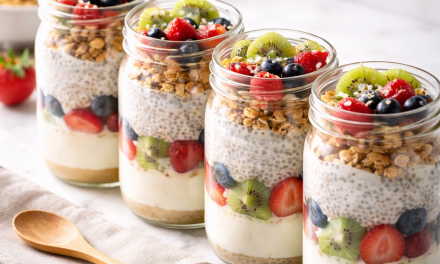
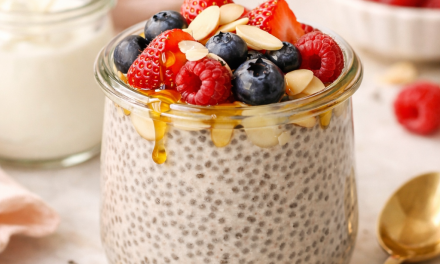
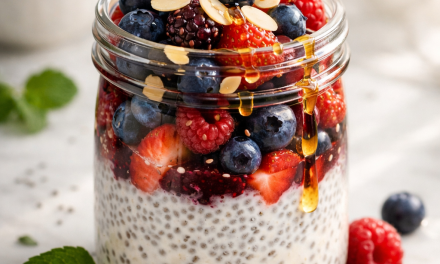
| 🍓 Berry Vanilla | ½ tsp vanilla extract | Mixed fresh berries |
| 🍌 Banana Cinnamon | ½ mashed banana | Granola + cinnamon dust |
Meal Prep Strategy for the Week
Registered dietitian-reviewed guides published in 2026 emphasize that batch preparation is the single most effective strategy for maintaining consistency with healthy eating. Here is a practical approach:
- Sunday prep: Prepare 4–5 jars simultaneously using any formula above.
- Storage: Sealed jars keep well in the refrigerator for up to 5 days.
- Toppings: Store fresh fruit separately and add immediately before eating to preserve texture.
- Labeling: Mark each jar with the date prepared for easy tracking.
Common Texture Problems and Fixes
- Too thin/runny: Increase chia seeds by 1 tablespoon or extend soak time.
- Too thick/gluey: Add 2–3 tablespoons of additional milk and stir well.
- Clumping: Stir the mixture twice during the first 15 minutes of soaking.
- Grainy protein powder texture: Dissolve powder in liquid before adding other ingredients.
Topping Ideas That Stay Under the Calorie Budget 🫐
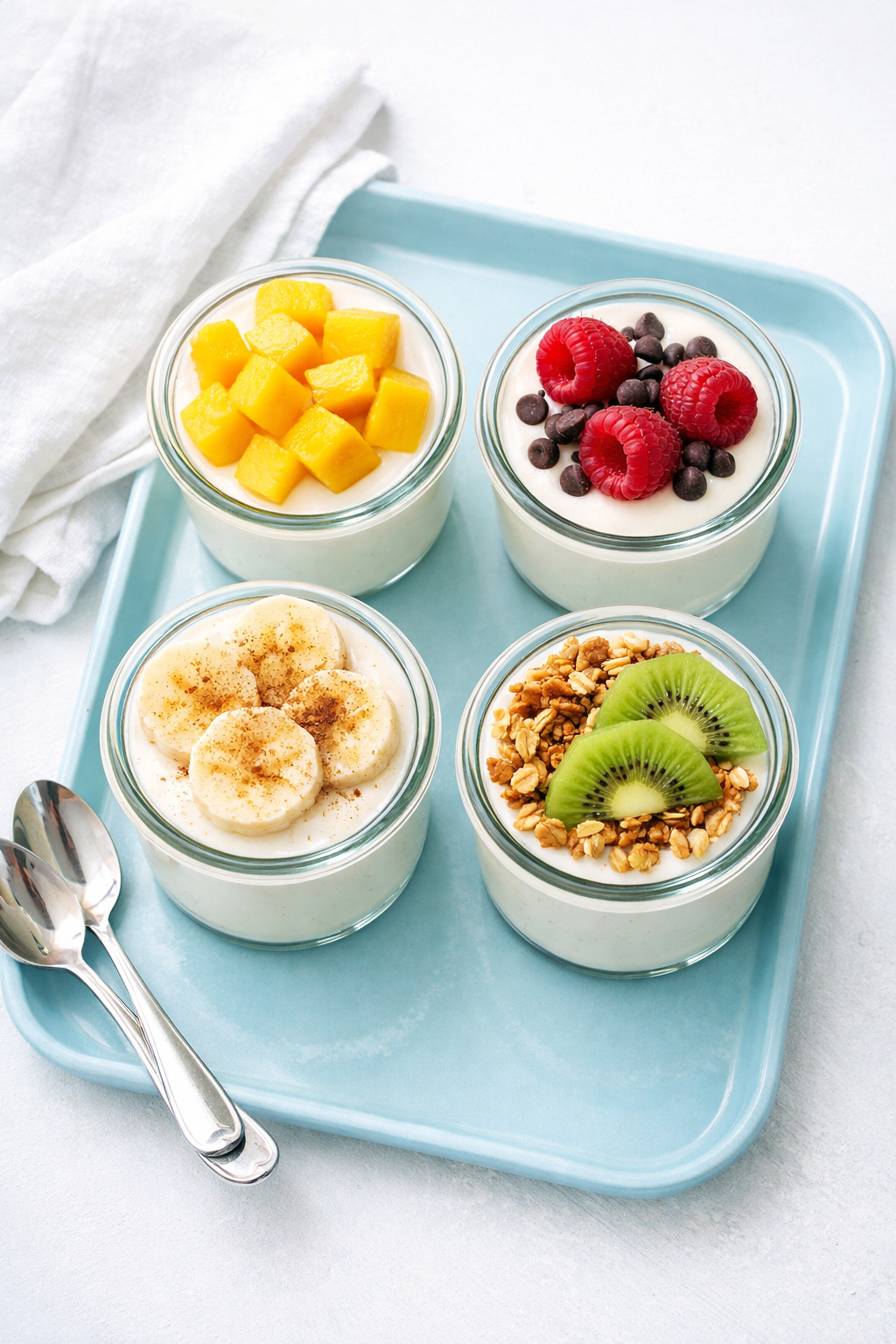
Toppings can easily push a 243-calorie pudding over the 300-calorie threshold if not chosen carefully. These options add flavor and nutrition without significant calorie additions:
- Fresh berries (½ cup = ~35 calories)
- Sliced kiwi (1 medium = ~42 calories)
- Unsweetened shredded coconut (1 tbsp = ~18 calories)
- A light drizzle of honey (1 tsp = ~21 calories)
- Cinnamon or cardamom (negligible calories)
Conclusion
Under 300 Calories: A Creamy Protein Chia Seed Pudding Recipe is not a trend — it is a practical, evidence-backed approach to starting the day with maximum nutrition and minimal effort. Whether the goal is weight management, muscle support, or simply better energy throughout the morning, this recipe delivers on every front.
Actionable next steps for healthy eaters in 2026:
- Choose one formula from the three options above that best aligns with current protein and calorie targets.
- Prepare a batch of four jars this Sunday to establish a consistent meal-prep habit.
- Track macros for the first two weeks to understand how this recipe fits within daily nutrition goals.
- Rotate flavors weekly to maintain long-term consistency and prevent boredom.
- Adjust protein powder type (whey, casein, or plant-based) based on dietary preferences and digestion.
The data is clear: a single recipe, five minutes of preparation, and the right combination of ingredients can meaningfully elevate daily nutrition — all while staying well under 300 calories.
References
- Mary’s Whole Life. High Protein Chia Pudding. maryswholelife.com. Retrieved 2026.
- Eat the Gains. Protein Chia Pudding. eatthegains.com. Retrieved 2026.
- Eating Bird Food. Protein Chia Pudding (4 Ingredients). eatingbirdfood.com. Retrieved 2026.
- Chia seeds nutritional profile. Various peer-reviewed nutritional databases. Retrieved 2026.
- Hummusapien. Greek Yogurt Chia Pudding. hummusapien.com. Retrieved 2026.
- CTCD Registered Dietitian Guide. High-Protein Chia Pudding for Modern Meal Prep. 2026.
- Healthy Holme. High-Protein Chia Pudding Guide (30–40g Protein). healthyholme.com. March 2, 2026.
- The Modern Nonna. Ultra-High-Protein Chia Pudding. themodernnonna.com. Retrieved 2026.