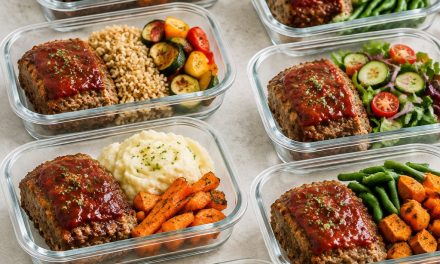
You can add more protein to your breakfast with simple swaps and add-ins, such as plain Greek yogurt, eggs, cottage cheese, milk, tofu, or beans. Start with a breakfast you already enjoy, then add a measured portion of a protein-rich food.
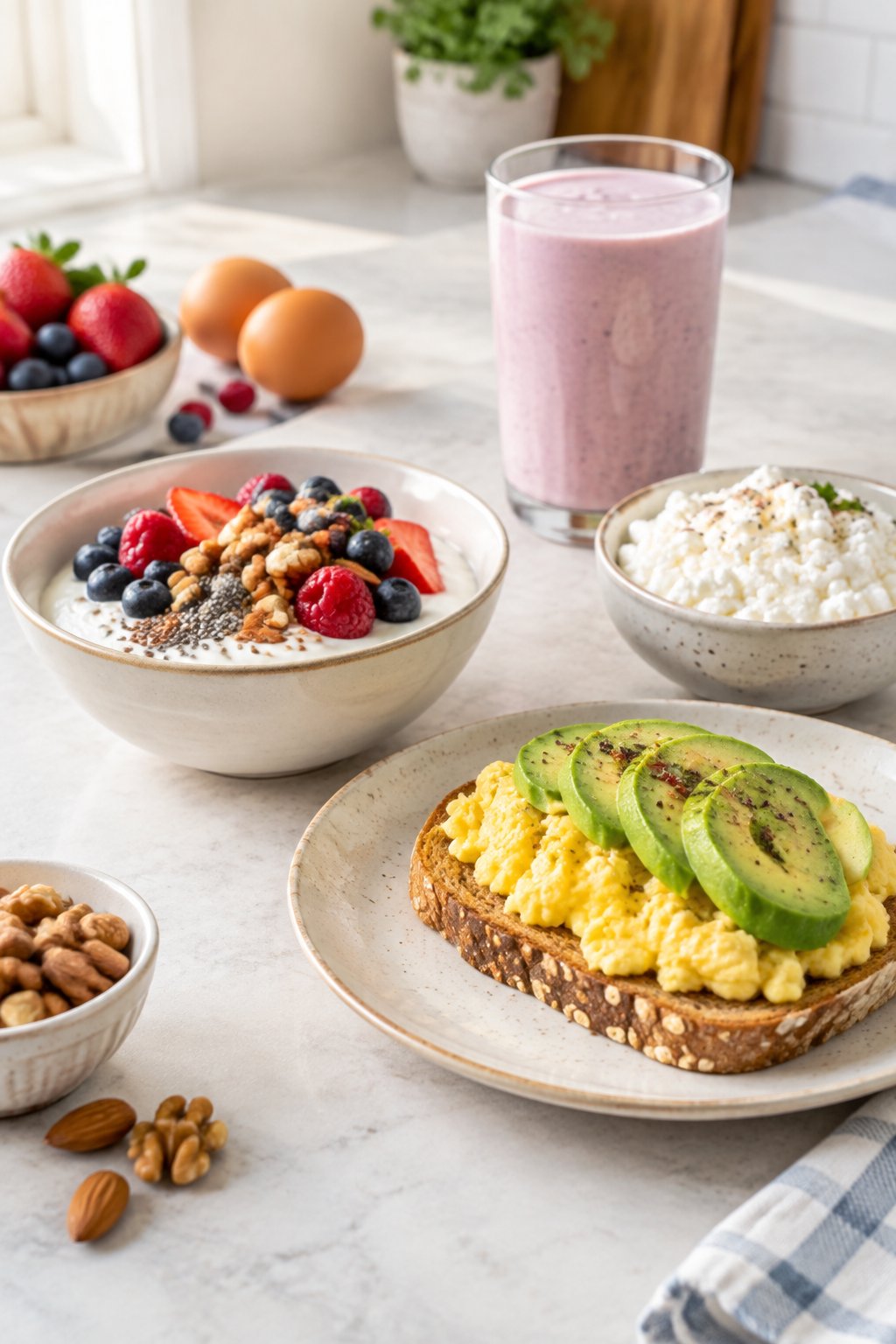
For a sense of scale, you get about 12 grams of protein from two large eggs and roughly 8 grams from a cup of dairy milk. Those small additions help you build a more filling morning meal while supporting muscle maintenance. The protein estimates below vary by brand, so check your package labels.
1) Swap Regular Yogurt for Plain Greek Yogurt
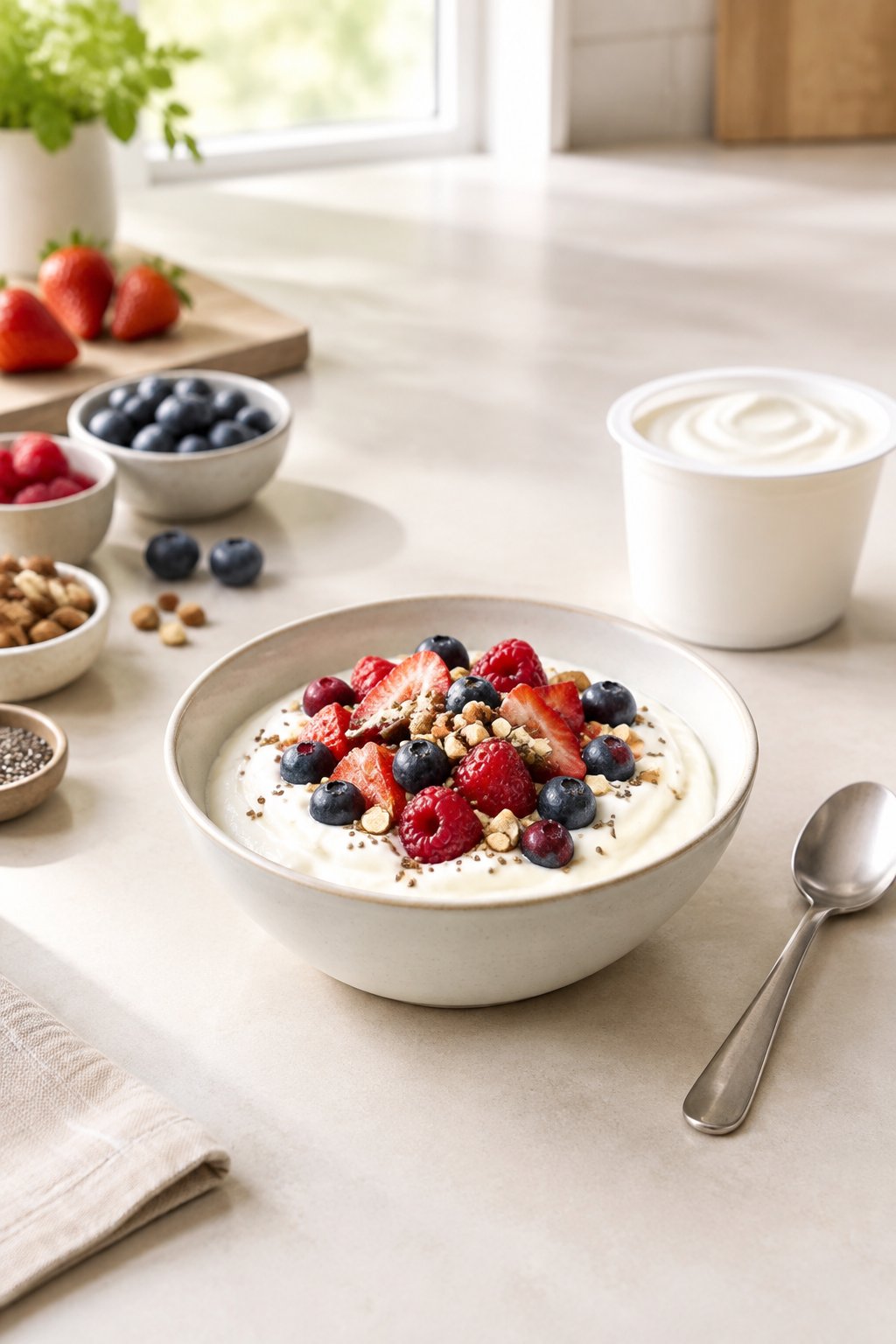
With plain Greek yogurt, you get about 15–18 grams of protein per ¾-cup serving. Its thick texture gives your breakfast bowl a creamy base, and choosing plain lets you control the sweetness.
For a quick yogurt parfait, add berries and chopped walnuts. If you pack breakfast ahead, keep the nuts separate until you eat so they stay crisp.
Yield: 1 serving
Prep time: 3 minutes
Cook time: 0 minutes; no heat needed
Ingredients
- ¾ cup plain Greek yogurt
- ½ cup fresh berries
- 1 tablespoon chopped walnuts
- ¼ teaspoon ground cinnamon
Step By Step Instructions
- Spoon the Greek yogurt into a bowl or lidded container.
- Add the berries and cinnamon.
- Sprinkle the walnuts over your yogurt just before serving.
2) Add Two Eggs to Your Morning Toast
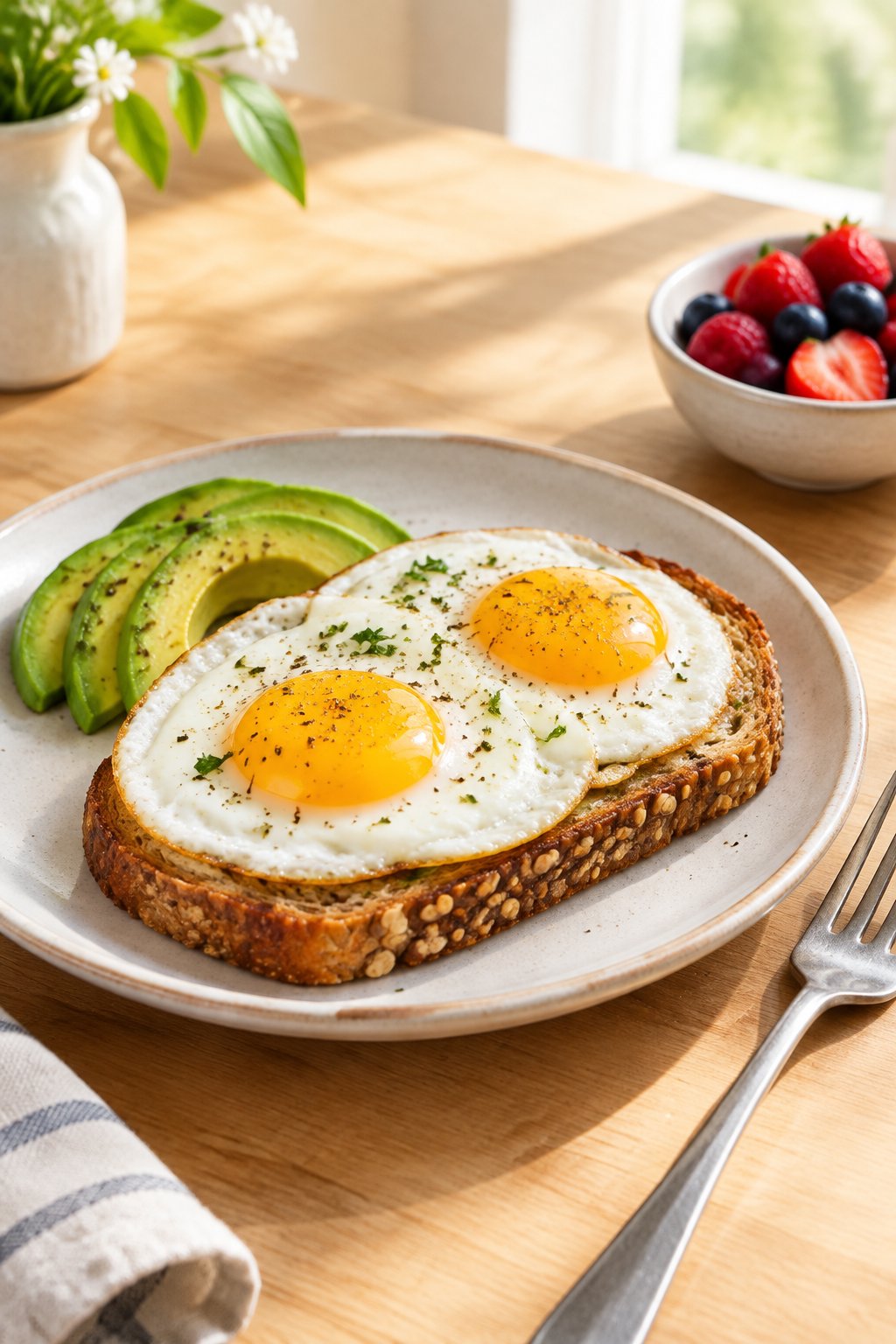
Adding two large eggs gives your toast about 12 extra grams of protein. You also get choline, a nutrient that supports brain function.
Use whole-grain bread for extra fiber, and cook your eggs gently for a softer scramble. Pull the pan from the heat as soon as the eggs are fully set to keep them from drying out.
Yield: 1 serving
Prep time: 2 minutes
Cook time: 4–5 minutes
Ingredients
- 2 large eggs
- 1 slice whole-grain bread
- 1 teaspoon olive oil
- ⅛ teaspoon black pepper
Step By Step Instructions
- Toast the bread to your preferred crispness.
- Beat the eggs with the pepper.
- Warm the olive oil in a small nonstick skillet over medium-low heat.
- Add the eggs and stir gently for 3–4 minutes, until fully set and the center reaches 160°F.
- Spoon the eggs onto your toast and serve.
3) Pair Cottage Cheese With Fresh Fruit
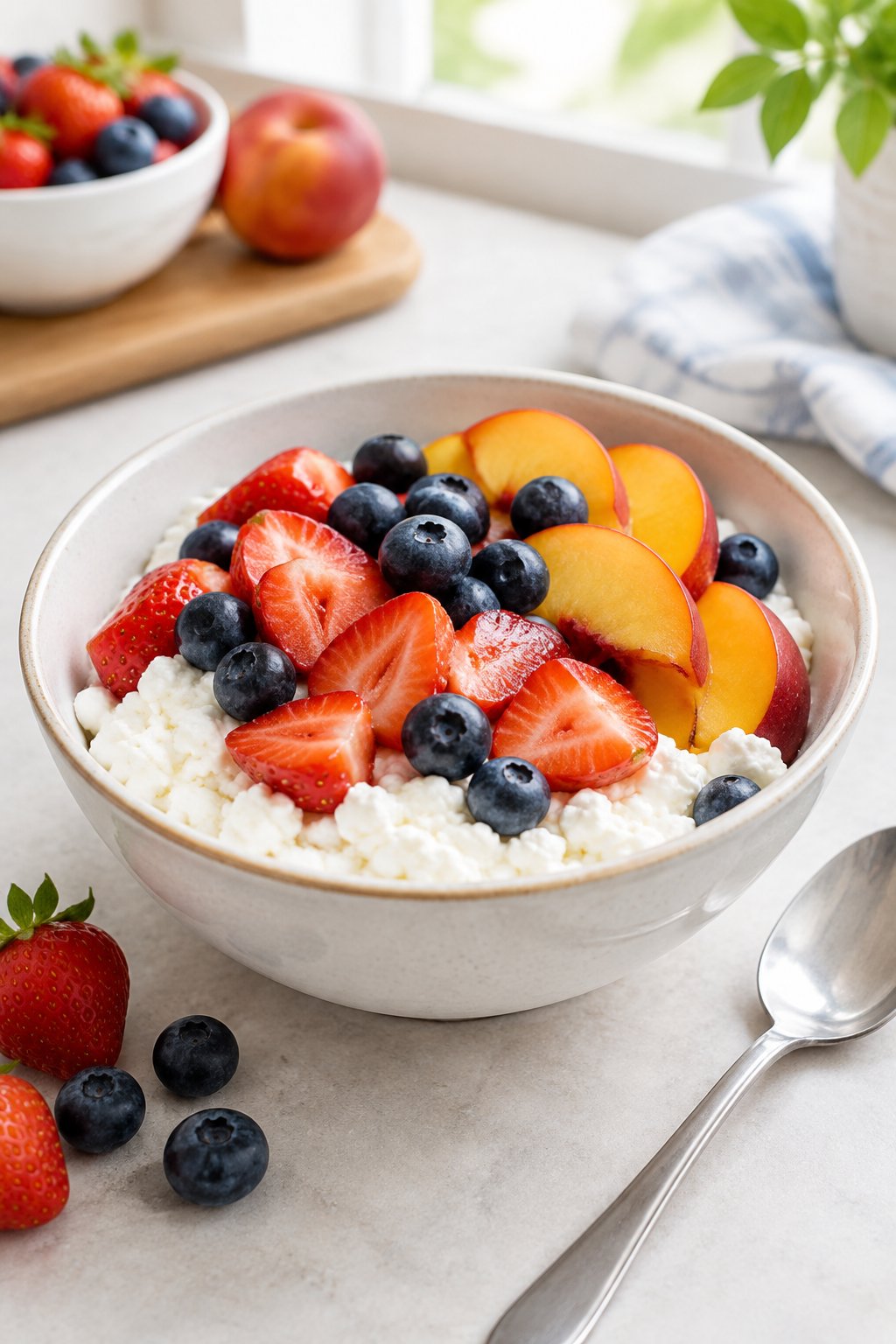
You get roughly 18–21 grams of protein from ¾ cup of cottage cheese, making it a useful no-cook breakfast base. Fresh fruit adds sweetness and fiber.
Choose small-curd cottage cheese if you prefer a finer texture. For a smoother bowl, blend your cottage cheese briefly before adding the fruit. Compare sodium on labels if you are watching your salt intake.
Yield: 1 serving
Prep time: 4 minutes
Cook time: 0 minutes; no heat needed
Ingredients
- ¾ cup cottage cheese
- ¼ cup sliced strawberries
- ¼ cup blueberries
- ¼ cup sliced peach
- ⅛ teaspoon ground cinnamon
Step By Step Instructions
- Place the cottage cheese in a bowl.
- Wash the fruit and cut the strawberries and peach into bite-size pieces.
- Arrange the fruit over your cottage cheese.
- Dust with cinnamon and serve cold.
4) Make Oatmeal With Dairy or Soy Milk Instead of Water
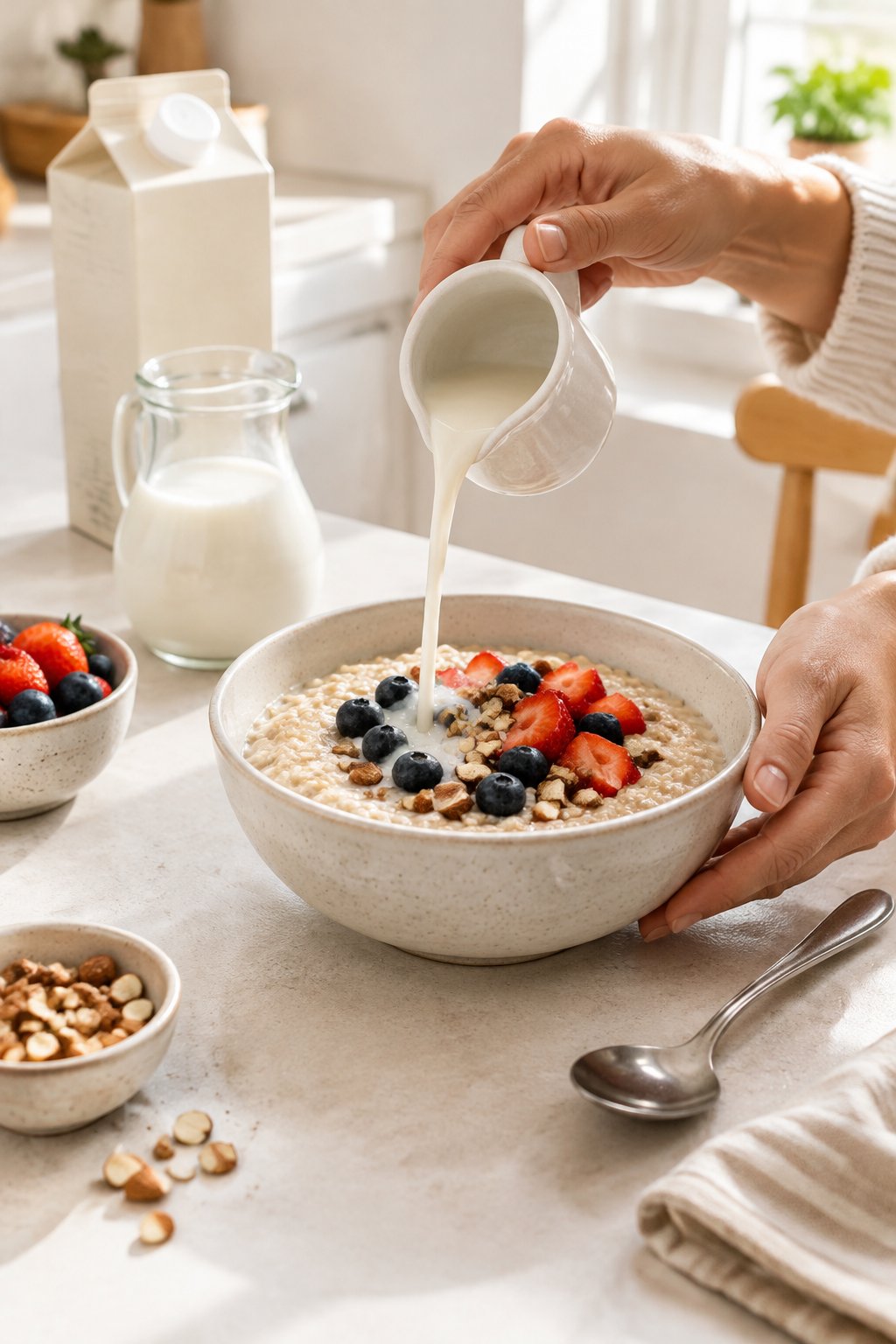
Cooking your oats with a cup of dairy or soy milk adds about 7–8 grams of protein to your bowl. With the oats included, you get roughly 12–13 grams before toppings.
Choose unsweetened, fortified soy milk for a dairy-free option with protein, calcium, and vitamin D. Stir near the bottom of the pan as your oatmeal cooks because milk scorches easily.
Yield: 1 serving
Prep time: 2 minutes
Cook time: 5–7 minutes
Ingredients
- ½ cup old-fashioned rolled oats
- 1 cup dairy milk or unsweetened fortified soy milk
- ½ cup blueberries
- ¼ teaspoon ground cinnamon
Step By Step Instructions
- Combine the oats and milk in a small saucepan.
- Heat over medium heat until gently simmering, approximately 190–200°F. Avoid a rolling boil.
- Reduce the heat to low and stir frequently for 5–7 minutes, until the oats soften.
- Transfer your oatmeal to a bowl and add the blueberries and cinnamon.
5) Blend Protein Powder Into Your Breakfast Smoothie
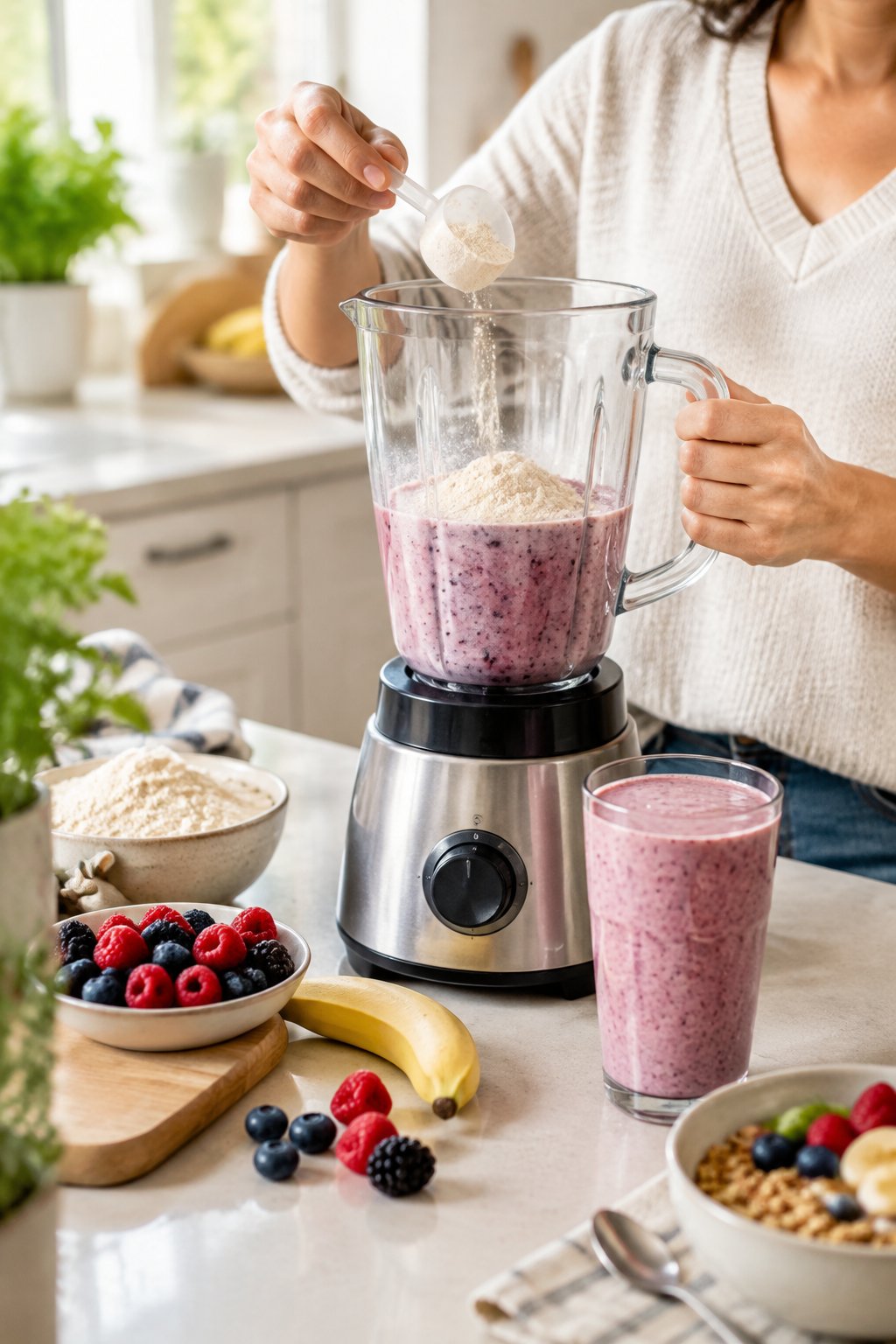
A measured serving of protein powder gives your smoothie a concentrated protein boost, commonly around 20–25 grams. Choose whey if you eat dairy, or use soy or a pea-based blend for a plant-based option.
Check the serving weight because scoop sizes differ. For added quality assurance, look for independent certification, such as NSF Certified for Sport or Informed Sport.
Yield: 1 serving
Prep time: 5 minutes
Cook time: 0 minutes; no heat needed
Ingredients
- 1 cup unsweetened soy milk
- 30 grams protein powder, or the labeled serving weight
- ½ medium banana
- ½ cup frozen berries
- ¼ cup cold water
Step By Step Instructions
- Pour the soy milk and water into your blender.
- Add the banana, berries, and measured protein powder.
- Blend for 30–60 seconds, until smooth.
- Check the powder and milk labels to calculate your smoothie’s protein total.
6) Scramble Firm Tofu With Breakfast Vegetables
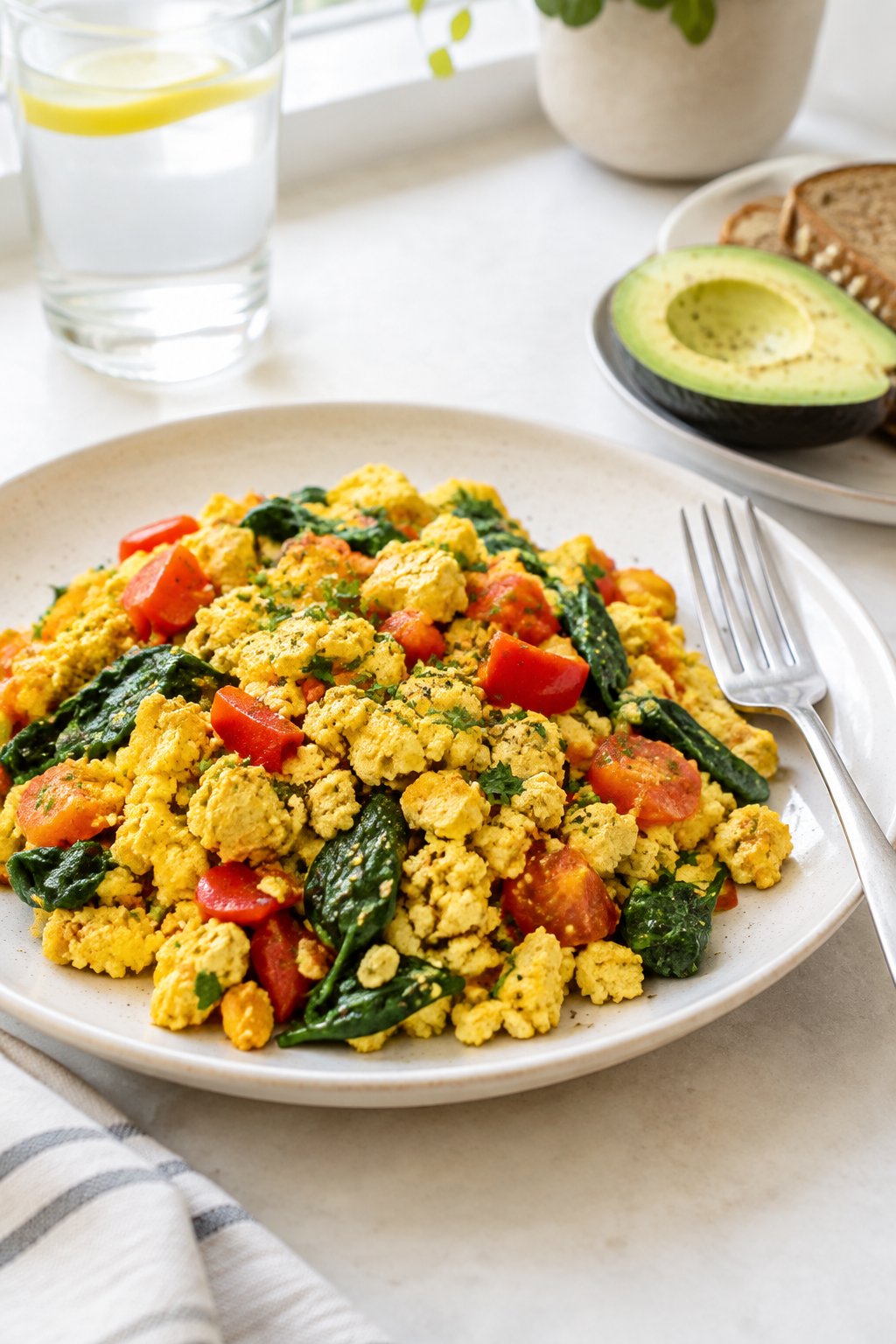
Firm tofu gives you an egg-free scramble with about 10–15 grams of protein per 4-ounce portion. Soy also supplies all nine essential amino acids your body needs from food.
Pat your tofu dry before crumbling it to reduce excess moisture. Chop the vegetables into small pieces so they cook quickly, and add the spinach near the end to keep it from becoming soggy.
Yield: 1 serving
Prep time: 5 minutes
Cook time: 7–8 minutes
Ingredients
- 4 ounces firm tofu, drained
- 1 teaspoon olive oil
- ¼ cup diced bell pepper
- ¼ cup chopped tomato
- ½ cup baby spinach
- ⅛ teaspoon each ground turmeric, garlic powder, and black pepper
Step By Step Instructions
- Pat the tofu dry and crumble it into bite-size pieces.
- Heat the oil in a skillet over medium heat, about 350°F on an electric skillet.
- Cook the bell pepper for 2–3 minutes.
- Add the tofu, tomato, and seasonings. Cook for 4 minutes, stirring occasionally.
- Fold in the spinach and cook for 1 minute, until wilted.
7) Add Black Beans to a Breakfast Wrap
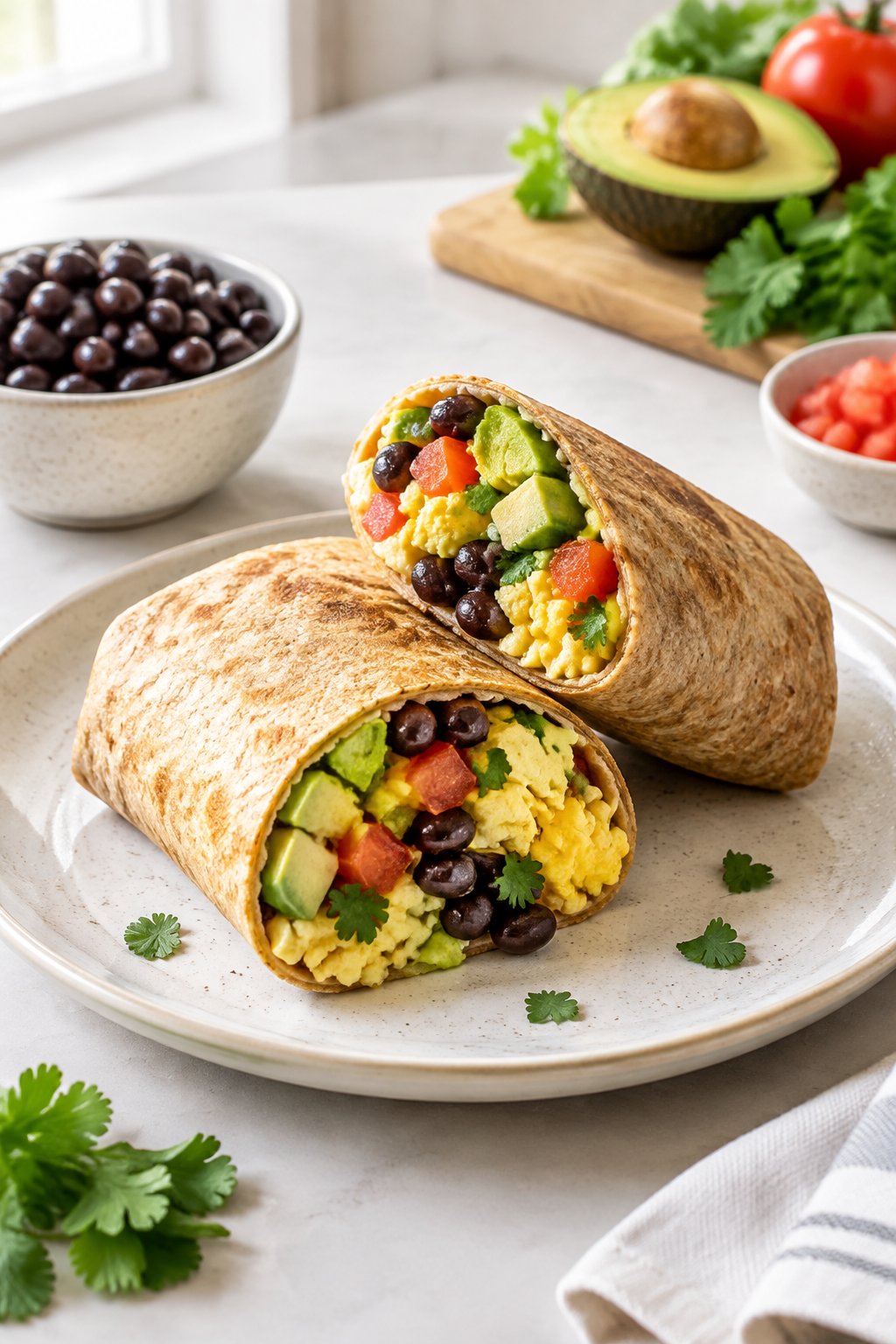
Half a cup of black beans adds about 7 grams of protein and 7 grams of fiber to your breakfast wrap. Pairing them with an egg raises the protein in the filling to about 13 grams.
Use canned beans for faster prep. Drain and rinse them, then shake off excess water so your tortilla stays sturdy. A thick salsa also helps prevent a soggy wrap.
Yield: 1 wrap
Prep time: 4 minutes
Cook time: 5 minutes
Ingredients
- 1 medium whole-wheat tortilla, about 8 inches
- ½ cup canned black beans, drained and rinsed
- 1 large egg
- 1 teaspoon olive oil
- 2 tablespoons salsa
- 2 tablespoons diced avocado
Step By Step Instructions
- Warm the oil in a nonstick skillet over medium heat.
- Beat the egg, add it to the skillet, and scramble until fully set and 160°F.
- Add the beans and stir for 1–2 minutes, until hot.
- Warm the tortilla in a separate dry skillet for about 15 seconds per side.
- Fill your tortilla with the egg mixture, salsa, and avocado. Fold in the sides and roll closed.
8) Spread Peanut Butter on Whole-Grain Toast
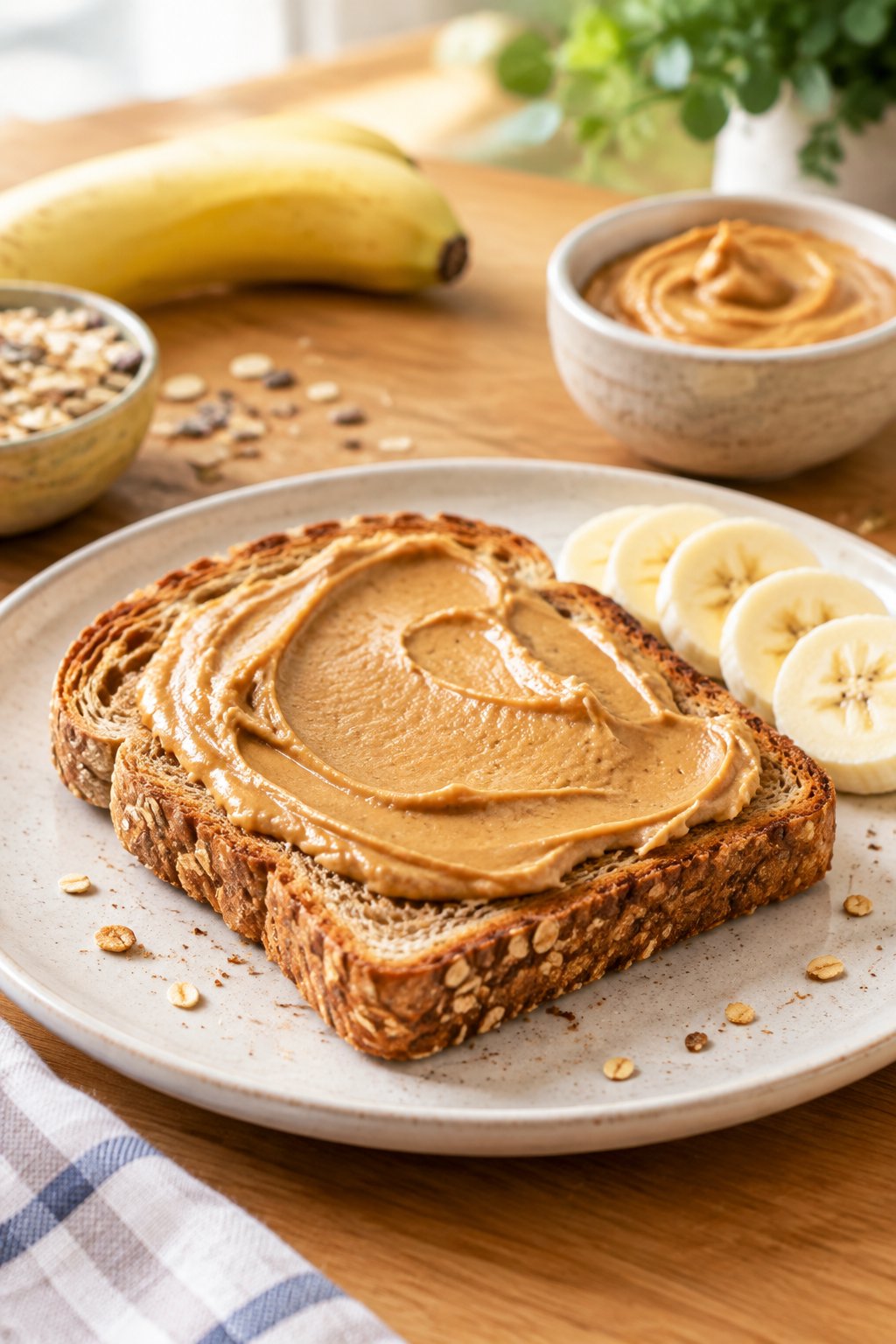
Two tablespoons of peanut butter add about 7–8 grams of protein to your toast, along with mostly unsaturated fats. Your bread contributes additional protein, with the amount listed on its label.
Stir natural peanut butter well before measuring it so the oil blends back in. For an easy topping, use thin banana slices that stay in place when you pick up the toast.
Yield: 1 serving
Prep time: 3 minutes
Cook time: 5–7 minutes
Ingredients
- 1 slice whole-grain bread
- 2 tablespoons peanut butter
- ½ medium banana, sliced
- ⅛ teaspoon ground cinnamon
Step By Step Instructions
- Heat your oven or toaster oven to 350°F.
- Toast the bread on a baking sheet for 5–7 minutes, turning halfway through.
- Spread the peanut butter over the warm bread.
- Add the banana slices and cinnamon.
9) Sprinkle Hemp Hearts Over Cereal or Yogurt
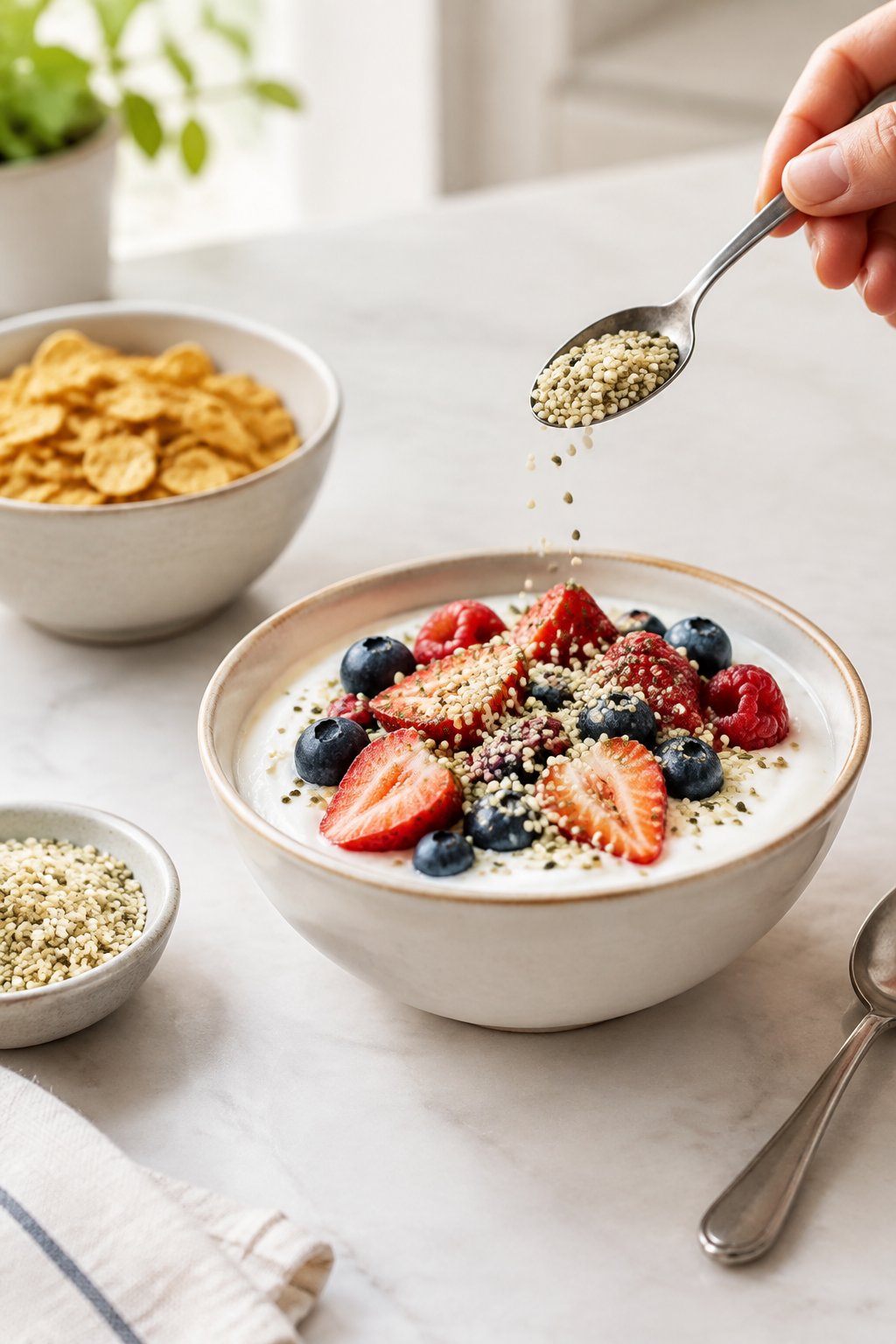
With 3 tablespoons of hemp hearts, you add about 10 grams of plant-based protein to your breakfast. These soft, shelled hemp seeds also supply unsaturated fats, including the omega-3 fat ALA.
Their mild, nutty flavor works well with cereal or yogurt. Measure your portion first, then sprinkle it evenly so you get seeds throughout the bowl.
Yield: 1 serving
Prep time: 2 minutes
Cook time: 0 minutes; no heat needed
Ingredients
- ¾ cup plain yogurt
- 3 tablespoons hemp hearts
- ½ cup berries
- ¼ cup whole-grain cereal
Step By Step Instructions
- Spoon the yogurt into your bowl.
- Stir in 2 tablespoons of the hemp hearts.
- Add the berries and cereal.
- Scatter the remaining tablespoon of hemp hearts over the top and serve immediately.
10) Melt Swiss Cheese Into a Breakfast Sandwich
A 1-ounce portion of Swiss cheese adds about 8 grams of protein to your breakfast sandwich. Check the package weight because thin slices contain less cheese and protein.
You also get calcium from Swiss cheese. Keep the portion measured if you are watching saturated fat, and add tomato or spinach for extra produce.
Yield: 1 sandwich
Prep time: 3 minutes
Cook time: 6–8 minutes
Ingredients
- 1 whole-wheat English muffin, split
- 1 ounce Swiss cheese, thinly sliced
- 2 thin tomato slices
- ¼ cup baby spinach
- ⅛ teaspoon black pepper
Step By Step Instructions
- Preheat your oven or toaster oven to 350°F.
- Place both English muffin halves cut-side up on a baking sheet.
- Divide the Swiss cheese between the halves.
- Bake for 6–8 minutes, until the cheese melts and the edges turn lightly crisp.
- Add the tomato, spinach, and pepper, then close your sandwich.
How to Build a Balanced Higher-Protein Breakfast
Build your breakfast around a measured protein source, then add fiber-rich foods and a portion of healthy fat. This gives you a fuller meal while leaving room for foods you enjoy.
How Much Protein Should You Aim for at Breakfast?
You can use 20–30 grams of protein at breakfast as a practical starting target. Your needs change with your body size, age, activity level, and total daily intake.
If your current breakfast is low in protein, begin by adding 5–10 grams. Spread your protein across meals to support muscle maintenance throughout the day. If you have kidney disease or a prescribed protein limit, ask your clinician or registered dietitian for a personal target.
How Can You Compare Protein per Serving on Food Labels?
Start with the serving size on the Nutrition Facts label, then find the protein grams for that amount. Match the labeled portion to what you plan to eat.
For example, if your yogurt has 16 grams of protein per ¾ cup, a ⅜-cup portion supplies 8 grams. Compare equal amounts when choosing between brands, then check added sugars, sodium, and saturated fat according to your needs.
How Do Fiber and Healthy Fats Help Round Out Breakfast?
Fiber supports digestion and helps you feel satisfied, while unsaturated fats supply essential fatty acids. You get fiber from whole grains, beans, fruit, and vegetables.
Add a modest portion of nuts, seeds, or avocado for healthy fats. For example, round out your egg toast with berries and a few avocado slices. Keep carbohydrate-rich foods in your breakfast, too, since they provide energy for your morning.
Frequently Asked Questions
You have several ways to increase breakfast protein using everyday groceries, including vegetarian and egg-free choices.
What is the easiest way to add protein to a breakfast I already eat?
Adding a ready-to-eat protein food takes the least preparation: keep a single-serve plain Greek yogurt alongside your usual breakfast. Choose a container with around 15 grams of protein or more, and you avoid extra cooking.
How can I get 20–30 grams of protein at breakfast without eggs?
Combine ¾ cup cottage cheese with 1 cup dairy or soy milk for roughly 25–29 grams of protein. Add fruit or whole-grain toast to round out your meal, and check your labels for the exact total.
Which vegetarian breakfast additions provide the most protein?
For a concentrated boost, your strongest options include protein powder, Greek yogurt, and cottage cheese. If you eat fully plant-based, compare firm tofu, soy milk, and hemp hearts by the portion you will use.
Can I make a high-protein breakfast without protein powder?
You can reach a higher-protein breakfast with whole foods, such as two eggs, ½ cup black beans, and a whole-wheat tortilla. That combination supplies roughly 22–24 grams of protein, depending on your tortilla.
Can adding protein to breakfast help with weight loss?
Adding protein to breakfast may support weight loss by helping you feel fuller and making your eating plan easier to follow. Your total calorie intake still affects weight change, so measure calorie-dense additions such as nut butter and cheese as you build your meal.