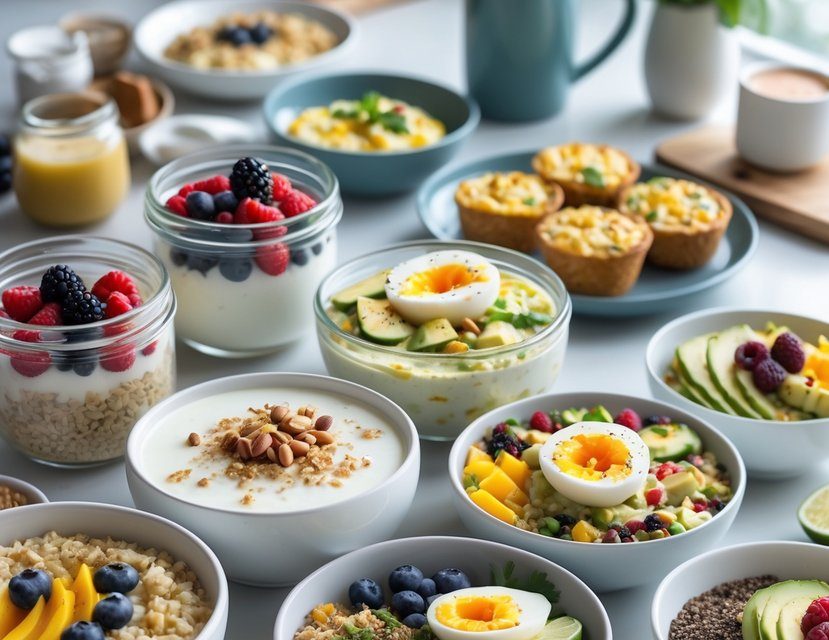
You know how rushed mornings steal time and leave you hungry by mid-morning. This article gives you ten make-ahead, high-protein breakfasts that save time and keep you full so you can start the day focused and energized.
You’ll find simple, prep-friendly options—from oats and smoothies to egg bakes and burritos—that store well and taste good. Use these ideas to plan a week of quick breakfasts that match your schedule and fuel your mornings.
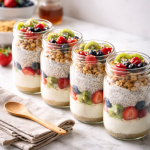
1) Overnight Protein Oats with Greek Yogurt
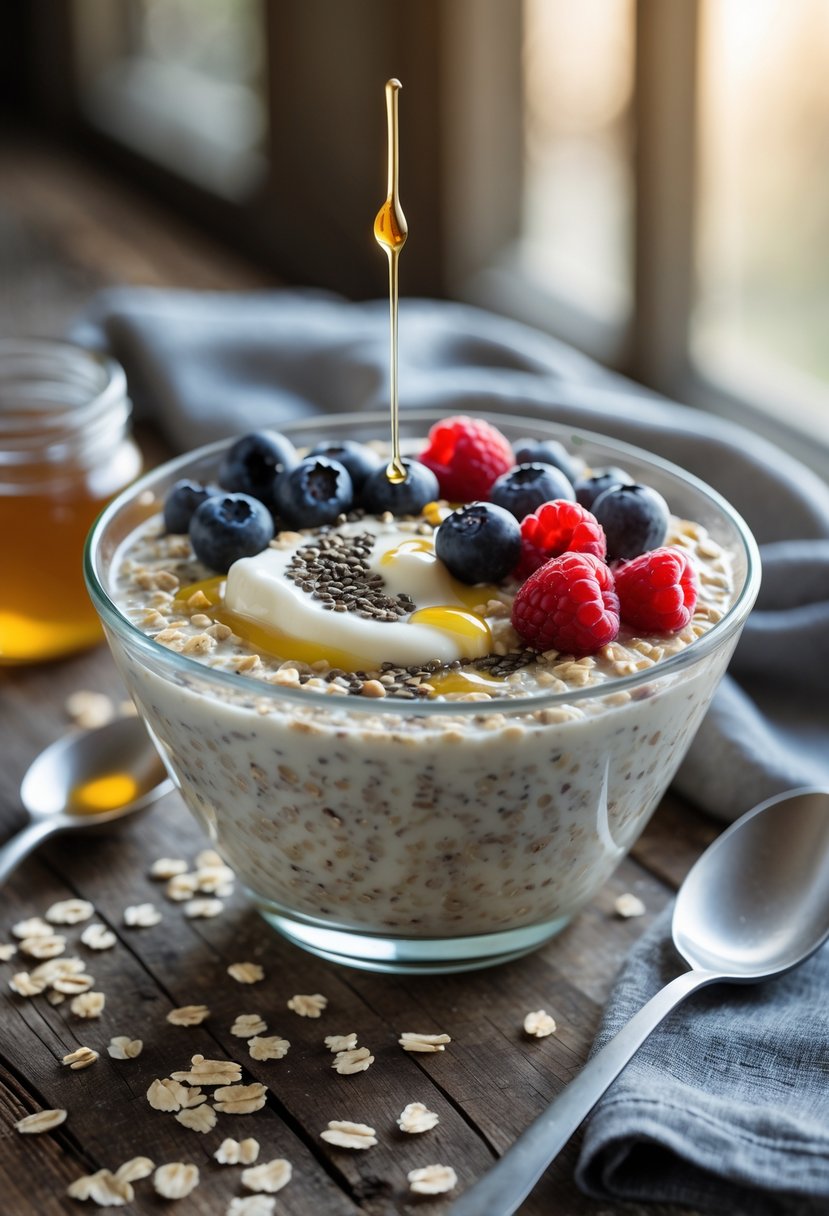
You can make a high-protein breakfast the night before and grab it when you leave. These overnight oats use Greek yogurt and optional protein powder to boost protein without cooking.
The texture is creamy and thick, and you can change flavors with fruit, nuts, or spices. Prep jars for several days to save time on busy mornings.
Ingredients
- 1/2 cup rolled oats
- 1/2 cup Greek yogurt (plain or flavored)
- 1/2 cup milk or milk alternative
- 1 scoop protein powder (optional)
- 1 tablespoon chia seeds or ground flax
- 1 teaspoon honey or maple syrup (optional)
- Pinch of salt and a dash of cinnamon (optional)
- Fresh fruit, nuts, or seeds for topping
Step By Step Instructions
- Combine oats, Greek yogurt, milk, protein powder, chia seeds, sweetener, salt, and cinnamon in a jar or container.
- Stir or shake until ingredients are mixed and oats are fully moistened.
- Seal the jar and refrigerate at least 4 hours or overnight.
- In the morning, stir the oats and add a splash of milk if they are too thick.
- Top with fresh fruit, nuts, or seeds and eat cold or warm briefly in the microwave if you prefer.
2) Make-Ahead Egg Muffins with Spinach and Sausage
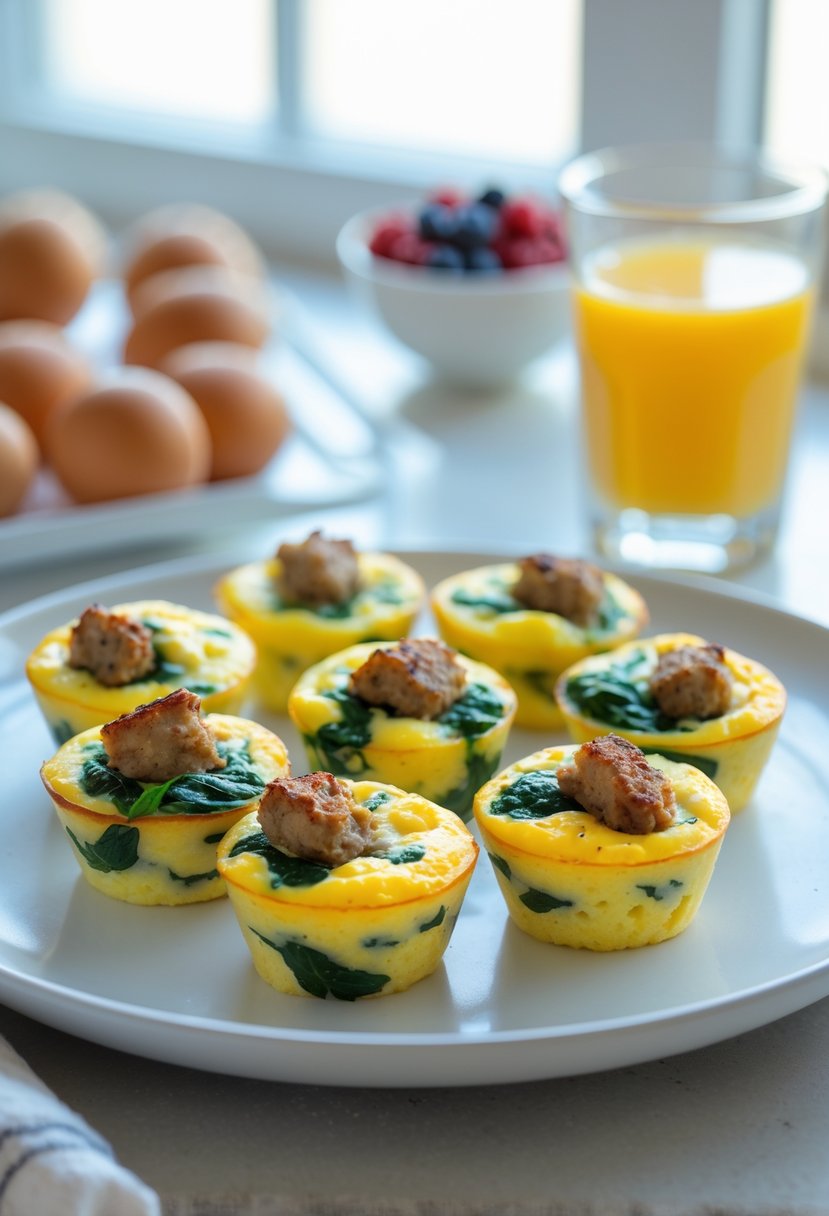
Egg muffins save time and pack a lot of protein into a small, portable bite. You can make a batch on the weekend and grab them all week.
These muffins combine eggs, cooked sausage, spinach, and a bit of cheese for flavor. They reheat well and work for breakfast or a quick snack.
Ingredients
- 8 large eggs
- 1 cup cooked sausage, crumbled (pork or turkey)
- 1 cup fresh spinach, chopped (or 3/4 cup frozen, thawed and drained)
- 1/2 cup shredded cheese (cheddar, mozzarella, or your choice)
- 2 tablespoons milk or water
- 1/4 teaspoon salt and 1/4 teaspoon black pepper
- Optional: 1/4 cup diced bell pepper or onion, and a pinch of red pepper flakes
Step By Step Instructions
- Preheat oven to 350°F (175°C) and grease a 12-cup muffin tin or use liners.
- Cook and crumble the sausage in a skillet until fully done; drain excess fat. Let it cool slightly.
- Whisk eggs, milk (or water), salt, and pepper in a bowl until combined.
- Stir in sausage, chopped spinach, cheese, and any optional vegetables. Mix gently.
- Divide the mixture evenly among the muffin cups, filling each about three-quarters full.
- Bake 18–22 minutes, until edges are set and a toothpick comes out mostly clean.
- Let muffins cool in the tin for a few minutes, then transfer to a wire rack to cool completely.
- Store in an airtight container in the fridge for up to 4 days, or freeze for up to 3 months. Reheat in the microwave for 30–90 seconds depending on size and temperature.
3) Cottage Cheese and Veggie Egg Bake
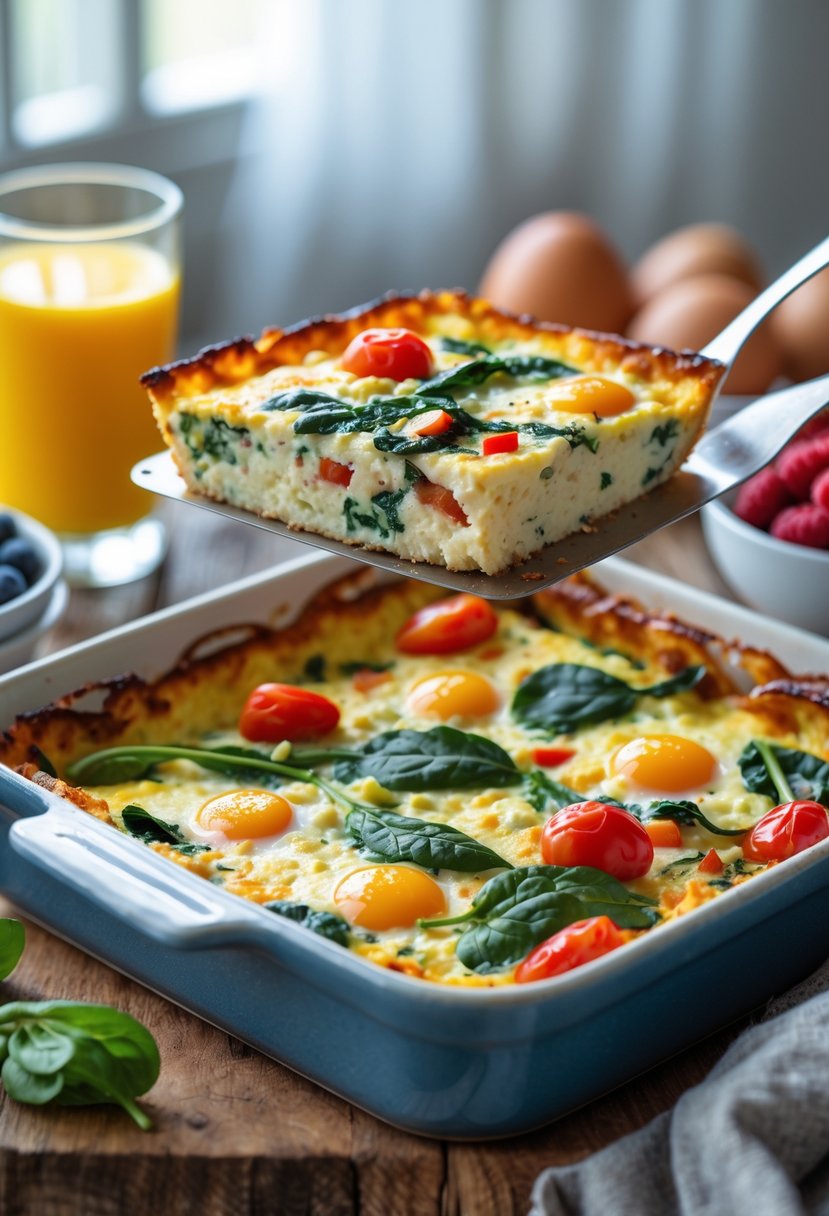
This egg bake gives you protein, veggies, and easy reheating for busy mornings. It uses cottage cheese to add creaminess and boost protein without a lot of work.
You can mix in any vegetables you like, and add cooked meat or cheese if you want. It holds well in the fridge and slices easily for quick breakfasts all week.
Ingredients
- 6 large eggs
- 1 cup cottage cheese (use low-fat or regular)
- 1/2 cup milk or unsweetened plant milk
- 1–2 cups mixed chopped vegetables (spinach, bell pepper, onion, zucchini)
- 1/2 teaspoon salt
- 1/4 teaspoon black pepper
- 1/2 teaspoon dried herbs (oregano, basil, or mixed)
- Optional: 1 cup cooked chopped ham, crumbled bacon, or shredded cheese
Step By Step Instructions
- Preheat your oven to 350°F (175°C) and grease an 8×8-inch baking dish.
- Whisk eggs, cottage cheese, and milk in a large bowl until smooth. Stir in salt, pepper, and dried herbs.
- Fold in the chopped vegetables and any optional cooked meat or cheese. Mix until evenly combined.
- Pour the mixture into the prepared dish and spread it into an even layer.
- Bake for 30–40 minutes, until the center is set and a knife inserted comes out clean.
- Let the bake cool for 10 minutes, then slice into portions. Store covered in the fridge for up to 4 days.
- Reheat individual slices in the microwave for 45–90 seconds or in a 350°F oven until warmed through.
4) High-Protein Quiche with Ham and Cheese

A ham and cheese quiche gives you a solid dose of protein to start the day. You can make it ahead, refrigerate or freeze slices, and reheat for quick breakfasts all week.
This version skips complex steps and focuses on simple ingredients you likely have. It uses eggs, ham, and cheese for a high-protein base and lets you add spinach or green onions if you want more flavor and nutrients.
Make the quiche in a regular pie dish or a sheet-pan for larger batches. It reheats well in the oven or microwave, so you can grab a slice and go.
Ingredients
- 6 large eggs
- 1 cup milk or half-and-half
- 1 to 1 1/2 cups diced cooked ham
- 1 to 1 1/2 cups shredded Swiss, cheddar, or a mix
- 1/2 cup cottage cheese or 1/4 cup cream cheese (optional for extra creaminess)
- 1/2 cup chopped spinach or sliced green onions (optional)
- Salt and pepper to taste
- 1 unbaked 9-inch pie crust or use no crust for lower carbs
Step By Step Instructions
- Preheat your oven to 350°F (175°C). If using a crust, place it in the pie dish and set aside.
- Whisk eggs and milk together until smooth. Stir in salt and pepper and any creamy cheese you choose.
- Fold in diced ham, shredded cheese, and any veggies like spinach or green onions.
- Pour the mixture into the prepared pie crust or directly into a greased pie dish for a crustless quiche.
- Bake 35–45 minutes, or until the center is set and a knife comes out clean. Times vary by oven and dish depth.
- Cool for 10–15 minutes before slicing. Store leftovers in the fridge for up to 4 days or freeze portions for longer storage.
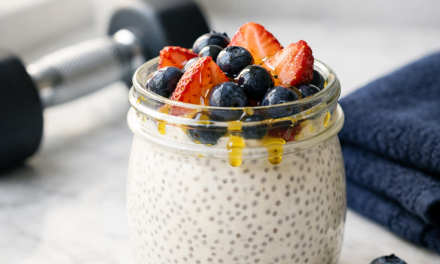
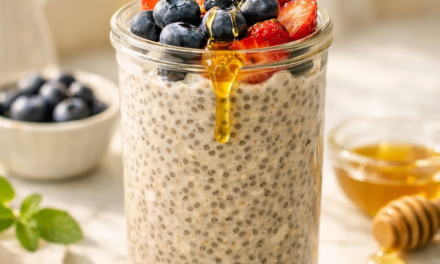
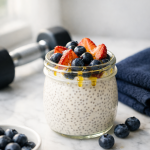
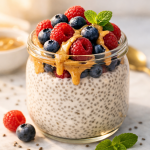
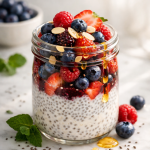
5) Peanut Butter Chia Seed Pudding
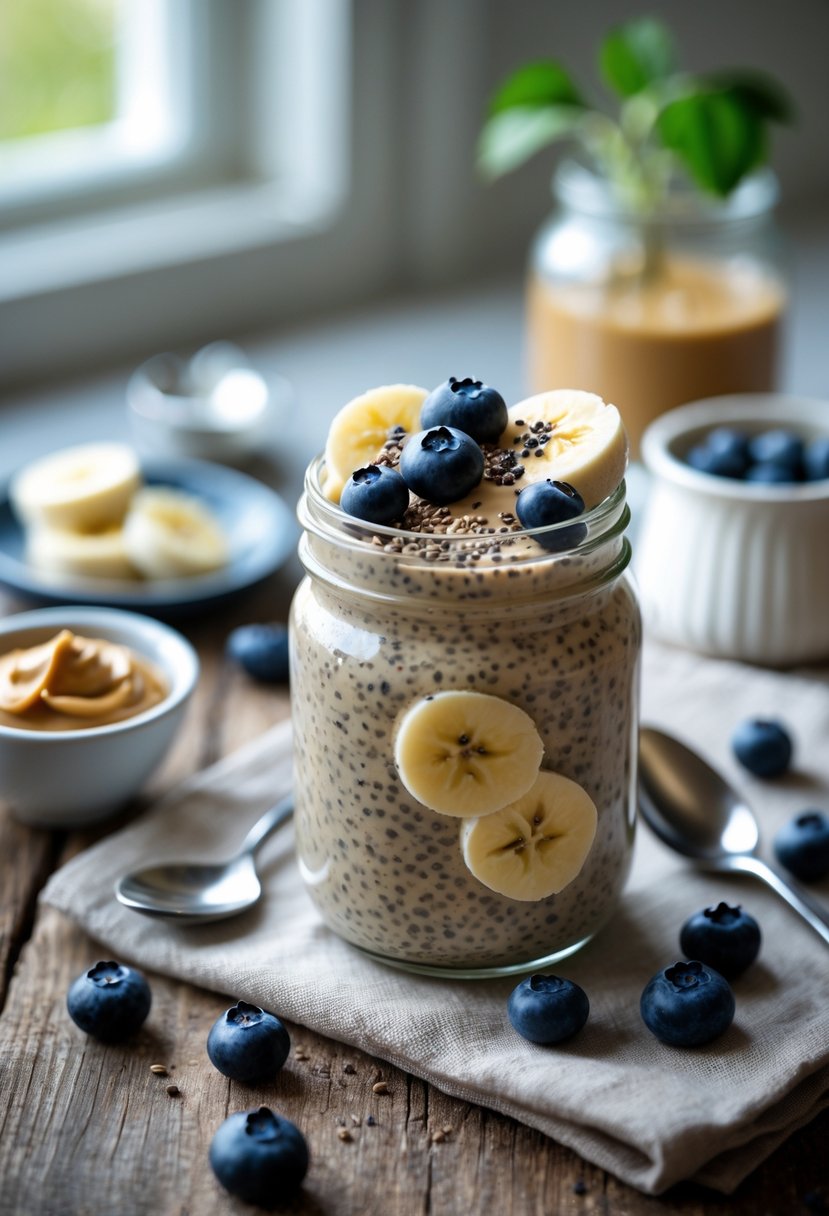
Peanut butter chia seed pudding gives you a filling, make-ahead breakfast with good protein and fiber. You can prep it the night before and grab it on busy mornings.
This pudding stays creamy and holds up well in the fridge for a few days. Add toppings like banana slices or berries to change the flavor without extra work.
Ingredients:
- 1/4 cup chia seeds
- 1 cup milk or milk alternative
- 2 tablespoons peanut butter
- 1 scoop vanilla or chocolate protein powder (optional)
- 1–2 teaspoons sweetener (honey, maple syrup, or a sugar substitute)
- Pinch of salt
Step By Step Instructions:
- In a jar or bowl, whisk together milk, peanut butter, protein powder (if using), sweetener, and salt until smooth.
- Stir in chia seeds until fully mixed and no clumps form.
- Cover and refrigerate at least 4 hours or overnight so the pudding thickens.
- Before eating, stir again. Add milk if you prefer a thinner texture.
- Top with sliced banana, berries, chopped nuts, or a drizzle of extra peanut butter.
6) Turkey and Black Bean Breakfast Burritos
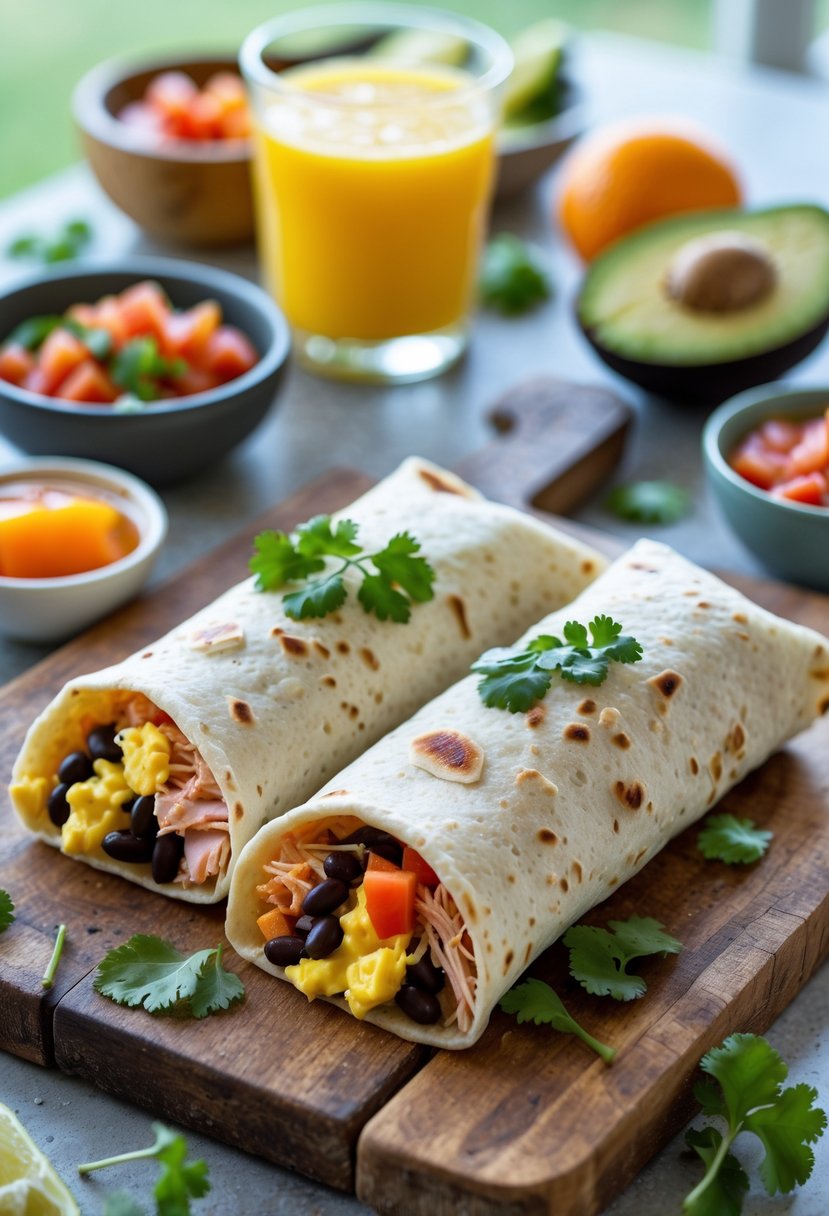
These burritos pack a solid mix of lean protein and fiber to keep you full through busy mornings. You can make a big batch, freeze them, and heat one up in minutes during the week.
They combine ground turkey, scrambled eggs, black beans, cheese, and mild spices wrapped in a whole wheat tortilla. The flavors hold up well after freezing, and the texture stays satisfying when reheated.
Ingredients
- 1 pound lean ground turkey
- 1 can (15 oz) black beans, drained and rinsed
- 6 large eggs, beaten
- 1 cup shredded cheddar or Monterey Jack cheese
- 1 small onion, finely chopped
- 1 bell pepper, diced
- 1 teaspoon ground cumin
- 1/2 teaspoon chili powder (optional)
- Salt and pepper to taste
- 6 large whole wheat tortillas
- Cooking oil or spray
Step By Step Instructions
- Cook the turkey: Heat a skillet over medium heat, add a little oil, and cook the onion and bell pepper until soft. Add the ground turkey, cumin, chili powder, salt, and pepper. Cook until no pink remains, about 6–8 minutes.
- Add beans: Stir in the black beans and heat through for 2–3 minutes. Remove the mixture from the pan and set aside.
- Scramble eggs: In the same pan, add a splash of oil or cooking spray and pour in the beaten eggs. Cook gently, stirring, until just set but still moist.
- Assemble burritos: Warm the tortillas briefly to make them pliable. Divide the turkey-bean mix, scrambled eggs, and cheese among the tortillas. Fold sides in and roll tightly.
- Pack for freezing or serving: Wrap each burrito individually in foil or plastic wrap. For freezing, place wrapped burritos in a sealed bag and freeze up to 3 months.
- Reheat: From frozen, microwave an unwrapped burrito on a microwave-safe plate for 2–3 minutes, turning once, until hot. You can also reheat wrapped burritos in a 350°F oven for 20–25 minutes.
7) Protein-Packed Smoothie Packs
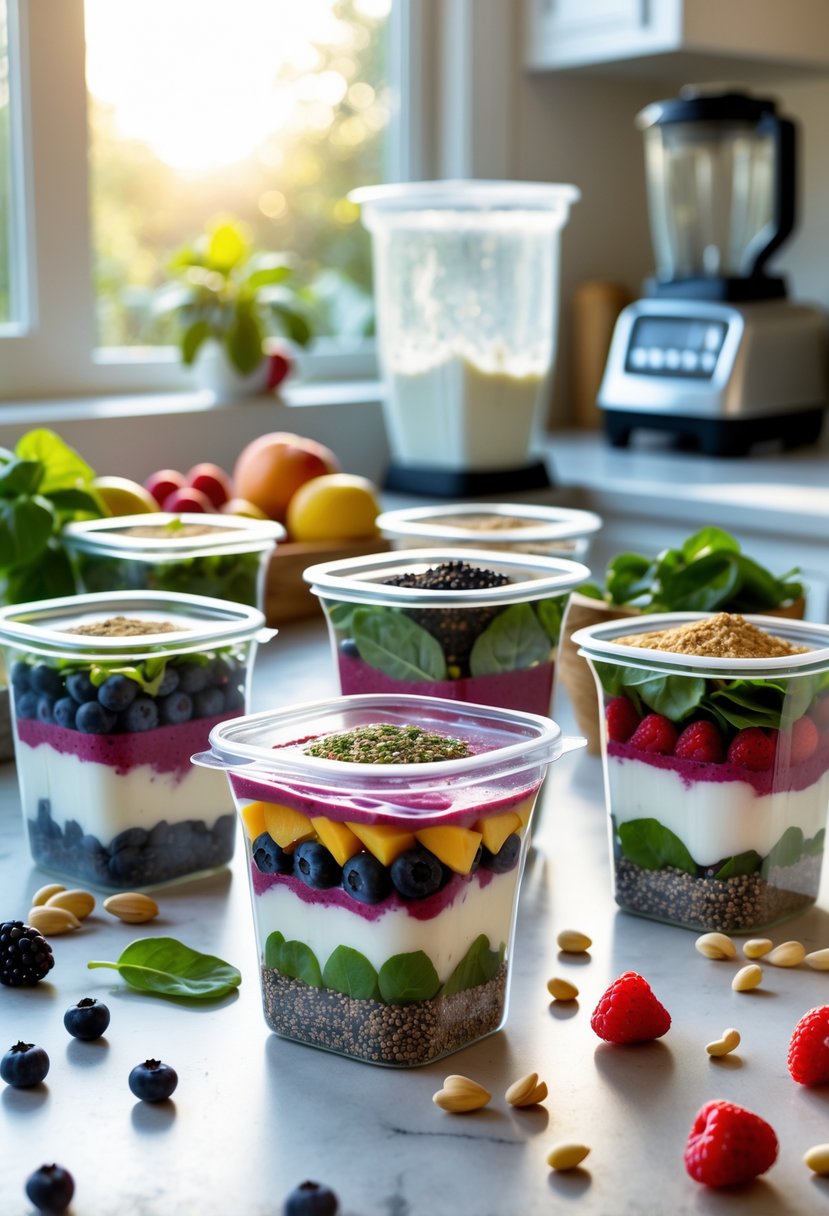
Smoothie packs save time on busy mornings. You prepare ingredients ahead, freeze them, and blend when you need a quick high-protein breakfast.
You control the protein source and portions, so the shake fits your goals. Use yogurt, protein powder, cottage cheese, or silken tofu to boost protein without extra prep.
Pick a liquid to blend with: milk, plant milk, or water. Measure once and keep the rest simple to avoid waste.
Ingredients
- 1 cup frozen fruit (berries, banana, or mango)
- 1/2 to 1 cup spinach or mild greens (optional)
- 1 scoop protein powder or 1/2 cup Greek yogurt or 1/2 cup cottage cheese
- 1/4 cup rolled oats or 1 tbsp nut butter for extra calories and texture (optional)
- 1 cup liquid (milk, almond milk, or water)
- 1 tbsp seeds (chia or flax) or 1 tsp cinnamon (optional)
Step By Step Instructions
- Lay out freezer-safe bags or containers and portion the frozen fruit into single-serving packs.
- Add greens, oats or nut butter, and seeds to each pack, keeping the protein source separate if using powder.
- Freeze the packs flat to save space and speed thaw time.
- In the morning, dump one pack into your blender and add the liquid and protein powder or yogurt.
- Blend until smooth, pour into a travel cup, and go.
8) Breakfast Sausage and Egg Casserole
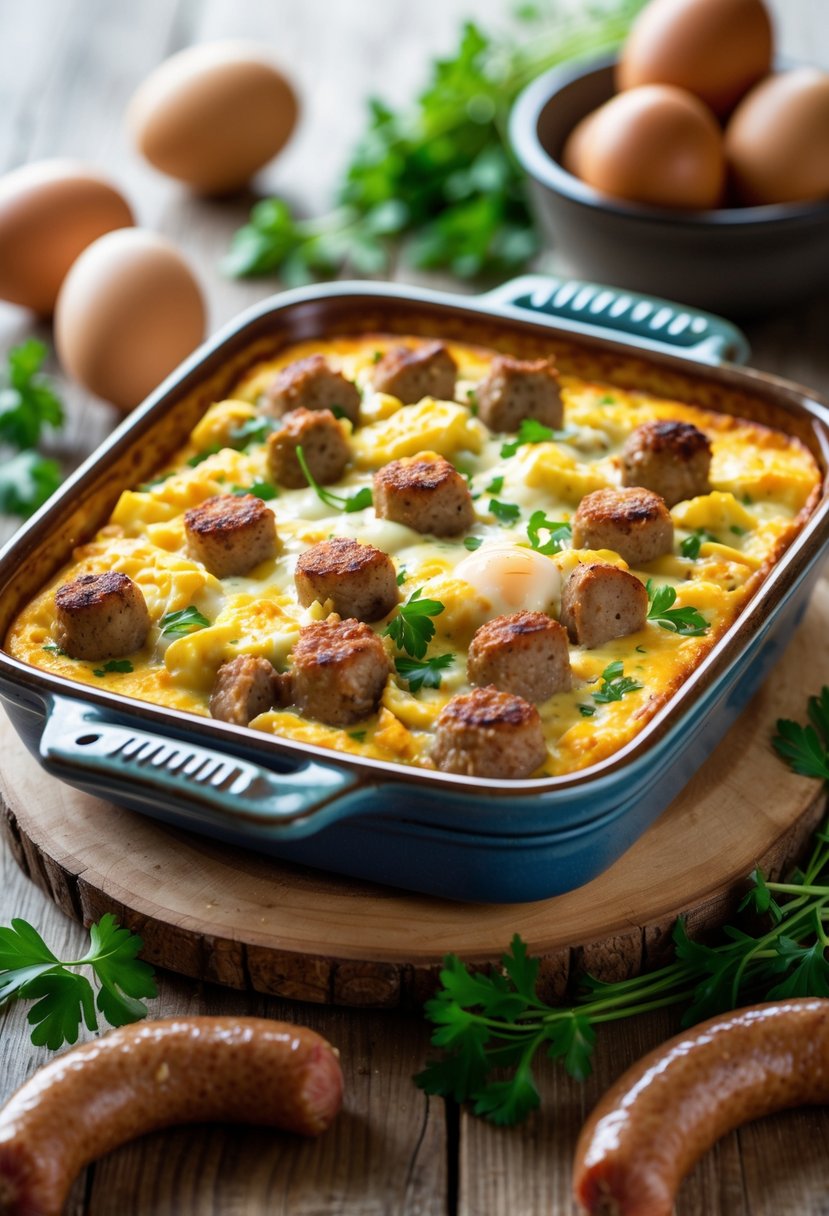
This sausage and egg casserole gives you a high-protein morning that you can make ahead. You can bake it the night before a busy day, cool it, and refrigerate so mornings stay simple.
The recipe mixes cooked sausage, beaten eggs, cheese, and a few add-ins like bell pepper or spinach. You can swap turkey or chicken sausage to reduce fat, or add extra veggies to boost fiber.
Bake the casserole in a 9×13 pan, then cut into portions you can reheat or grab-and-go. It holds well in the fridge for 3–4 days and freezes nicely for up to 2 months.
Ingredients
- 1 pound breakfast sausage (pork, turkey, or chicken)
- 10 large eggs
- 1 cup milk or milk alternative
- 2 cups shredded cheddar or a blend of cheeses
- 2 cups bread cubes or 2 cups frozen hashbrowns (optional for texture)
- 1 cup chopped bell pepper, onion, or spinach (choose one or mix)
- 1 teaspoon salt and 1/2 teaspoon black pepper
- Optional: 1/2 teaspoon garlic powder, 1/2 teaspoon paprika
Step By Step Instructions
- Preheat your oven to 350°F (175°C) and grease a 9×13 baking dish.
- Cook the sausage in a skillet until browned, then drain excess fat.
- If using vegetables, sauté them in the same skillet for 2–3 minutes until softened.
- In a large bowl, whisk the eggs, milk, salt, pepper, and any spices until blended.
- Stir in the cooked sausage, vegetables, cheese, and bread cubes or hashbrowns.
- Pour the mixture into the prepared baking dish and spread evenly.
- Bake 35–45 minutes, until the center is set and the top is lightly golden.
- Let the casserole cool 10–15 minutes before slicing into portions.
- Store in an airtight container in the fridge for 3–4 days, or freeze individual portions for up to 2 months.
9) Make-Ahead Protein Pancakes with Cottage Cheese
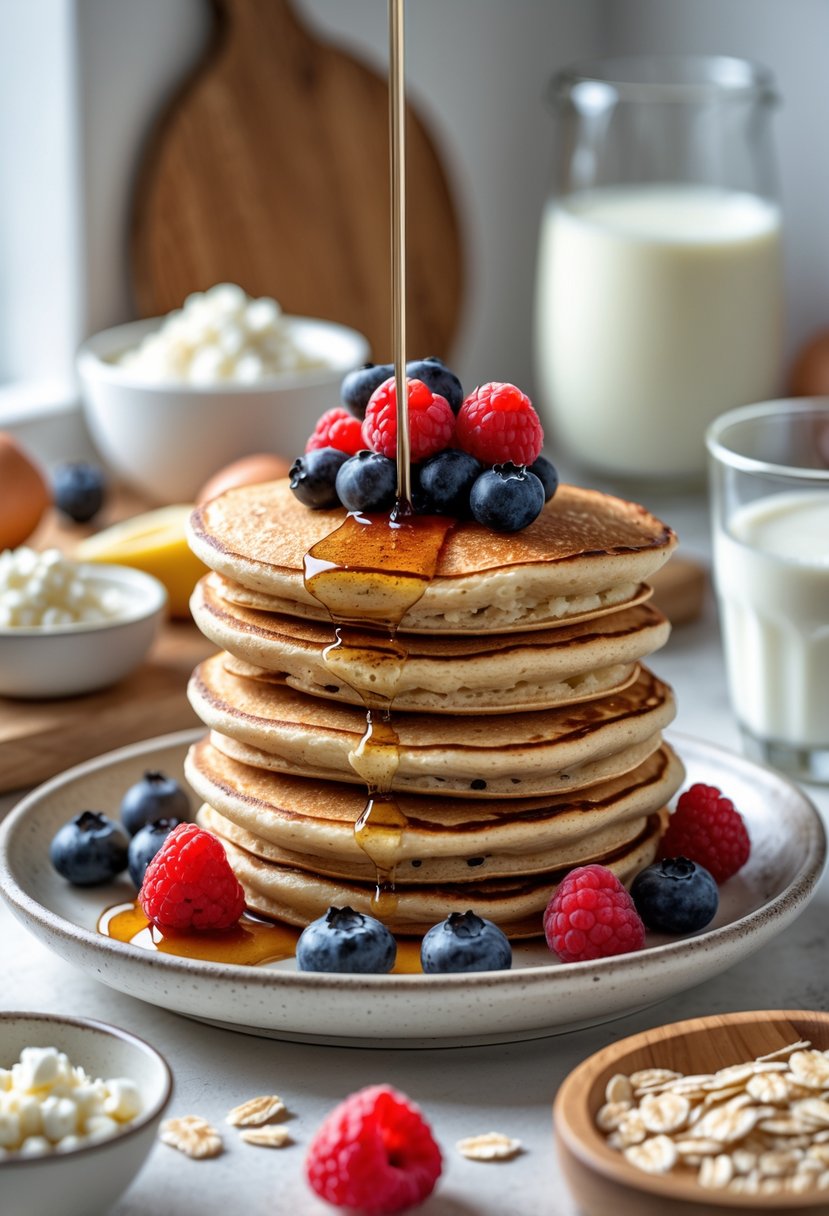
These pancakes use cottage cheese and eggs for a high-protein start that holds up well when made ahead. They stay soft, reheat quickly, and cut down morning prep time.
You can make a big batch, freeze individual stacks, or refrigerate cooked pancakes for a few days. Reheat in the toaster or microwave for a fast, filling breakfast.
Ingredients:
- 1 cup low-fat cottage cheese
- 3 large eggs
- 1/2 cup rolled oats or oat flour
- 1/2 teaspoon baking powder
- 1 teaspoon vanilla extract (optional)
- 1/2 teaspoon cinnamon (optional)
- Pinch of salt
- Cooking spray or a small amount of oil for the pan
Step By Step Instructions:
- Blend the cottage cheese, eggs, oats, baking powder, vanilla, cinnamon, and salt until smooth. The batter should be thick but pourable.
- Heat a nonstick skillet over medium-low and lightly coat with oil or cooking spray. Use medium-low heat so pancakes cook through without burning.
- Spoon batter into the pan to form pancakes about 3–4 inches wide. Cook until edges set and bubbles form on top, about 2–3 minutes.
- Flip and cook the other side for 1–2 minutes, until golden and cooked through. Remove to a plate and let cool slightly.
- To store, stack cooked pancakes with parchment between them. Refrigerate for up to 3 days or freeze in single portions for up to 2 months.
- Reheat frozen pancakes in a toaster, oven, or microwave until warmed through. Add fruit, nut butter, or yogurt when serving for extra flavor and nutrients.
10) Overnight Almond Butter and Banana Oats
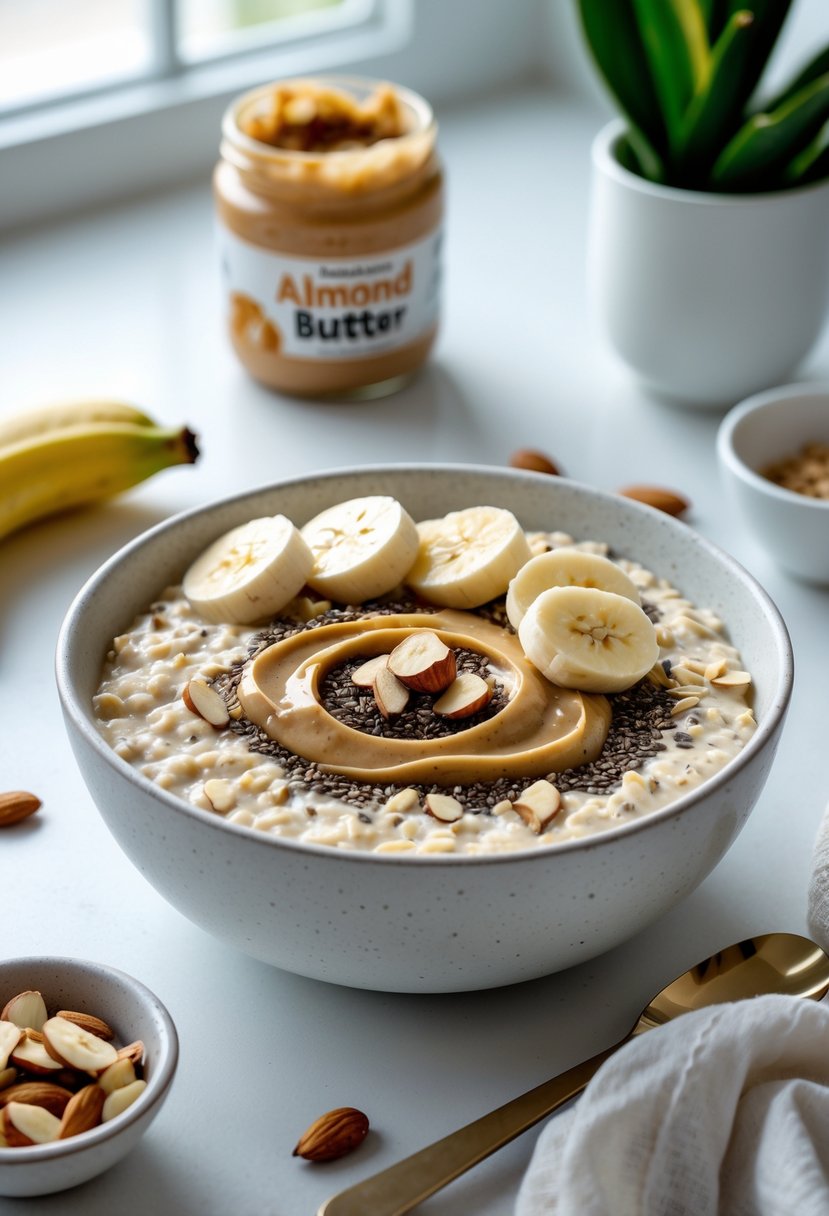
This make-ahead breakfast gives you protein, healthy fats, and carbs in one jar. You prepare it the night before and grab it when you leave, so mornings stay simple.
The base is old-fashioned oats mixed with milk and almond butter for creaminess and protein. A mashed banana adds natural sweetness and potassium, while ground flax or chia helps thicken and adds fiber.
You can customize flavor with cinnamon, vanilla, or a drizzle of honey. Add Greek yogurt for extra protein or a few dark chocolate chips for a treat.
Ingredients
- 1/2 cup old-fashioned oats
- 1/2 to 2/3 cup milk (dairy or plant-based)
- 2 tablespoons almond butter
- 1 small ripe banana, mashed
- 1 tablespoon ground flax or chia seeds
- 2–3 tablespoons Greek yogurt (optional for more protein)
- Pinch of salt, 1/4 teaspoon cinnamon, and 1/2 teaspoon vanilla (optional)
- Sweetener to taste (honey, maple syrup, or none)
Step By Step Instructions
- In a jar or container, combine oats, milk, almond butter, and mashed banana.
- Stir in ground flax or chia seeds, yogurt (if using), and any spices or sweetener.
- Tighten the lid and refrigerate overnight, at least 6 hours.
- In the morning, stir the oats and add more milk if you want a thinner texture.
- Top with sliced banana, nuts, or a spoonful of extra almond butter before eating.
Why High Protein Breakfasts Matter
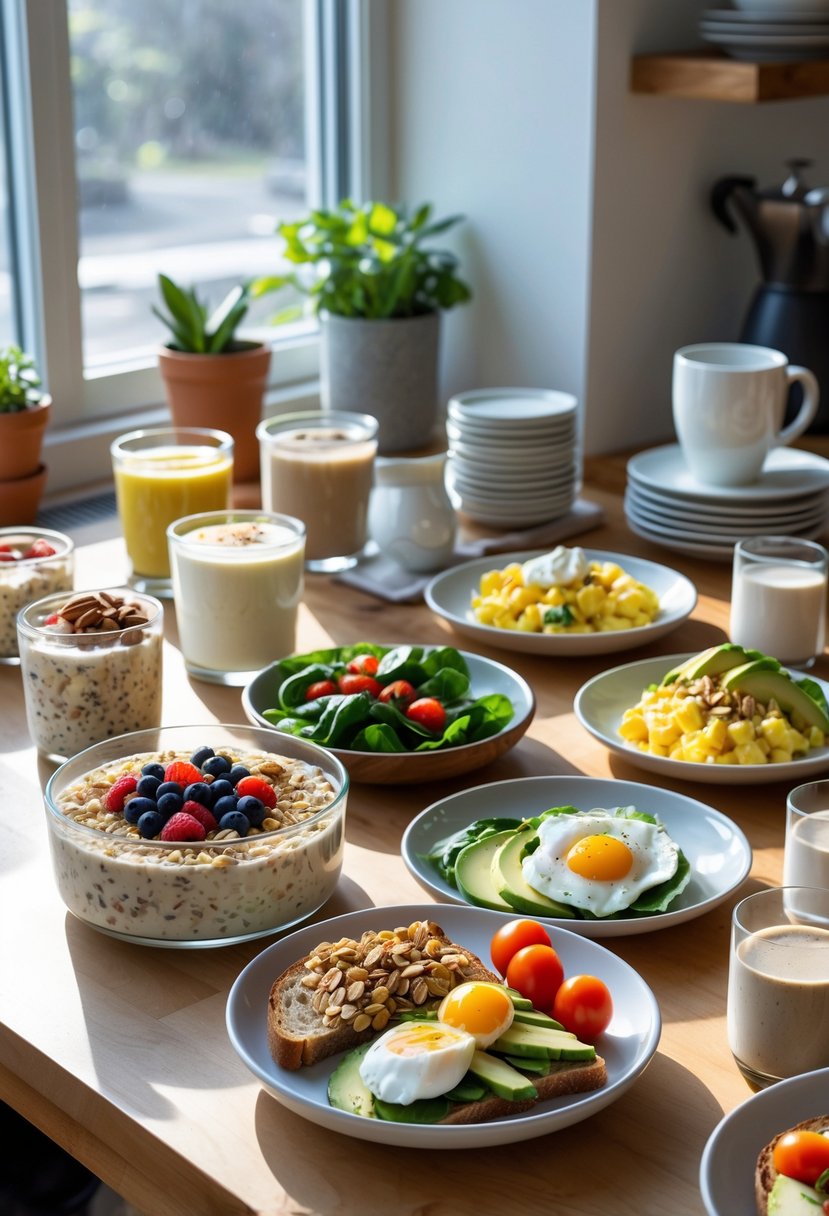
Eating protein at breakfast helps you stay full longer and keeps your energy steady. You get appetite control, fewer mid-morning cravings, and better fuel for daily tasks.
Benefits for Energy and Satiety
Protein slows digestion and raises satiety hormones, which helps you feel full for hours. For example, a breakfast with 20–30 grams of protein — such as Greek yogurt with nuts or eggs with black beans — often reduces hunger until lunch.
Protein also helps steady blood sugar after a meal. Pairing protein with fiber or healthy fats (like oatmeal with whey or avocado toast plus cottage cheese) lowers the spike-and-crash that comes from sugary breakfasts.
Practical tip: Aim for a protein source each morning to cut mid-morning snacking and keep your focus on work or school.
Role in Muscle Maintenance
Breakfast protein supports muscle repair and growth, especially if you exercise in the morning or plan activity later in the day. Consuming 20–30 grams of high-quality protein early helps stimulate muscle protein synthesis.
Choose complete proteins (eggs, dairy, lean meats, or fortified plant-based options) to provide essential amino acids your muscles need.
If you lift weights or do intense workouts, spreading protein across meals — including a solid breakfast — improves recovery and preserves lean mass as you age.
Tips for Making Protein-Packed Breakfasts Ahead
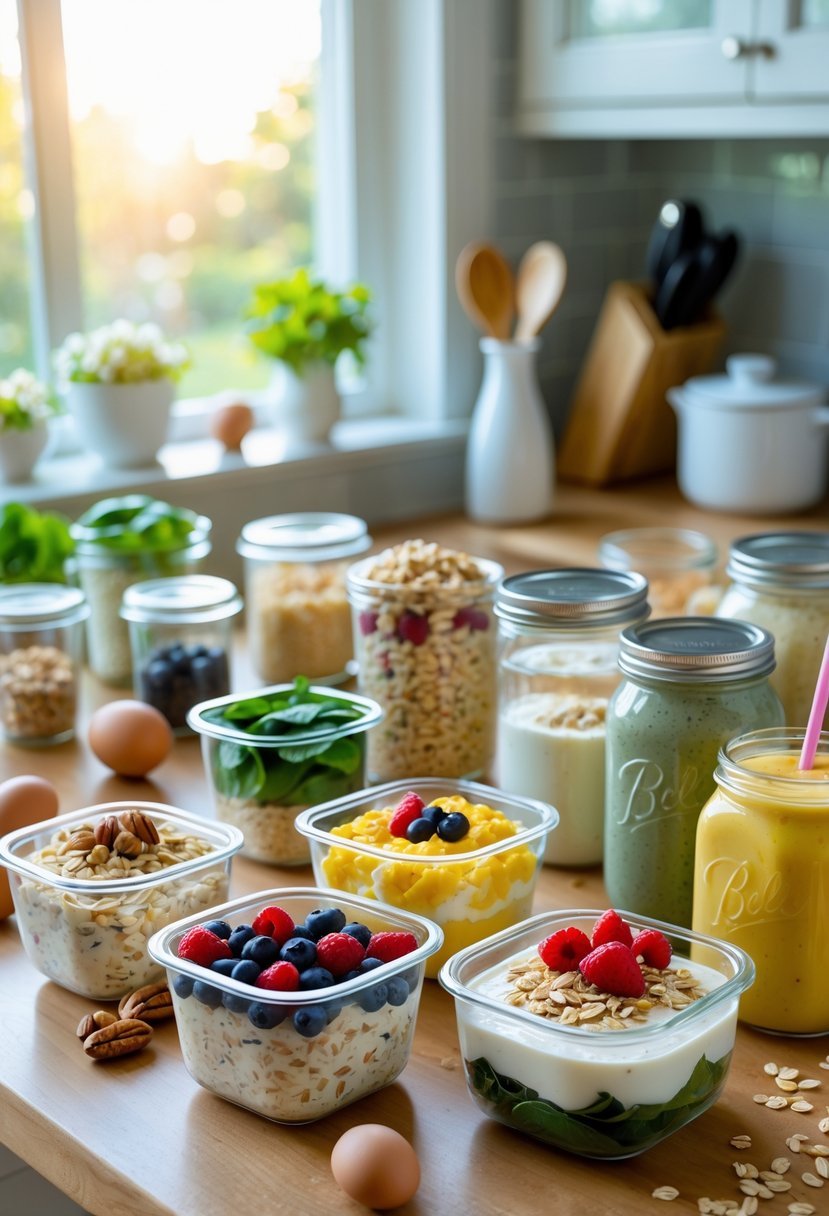
Plan for safe storage, quick reheating, and smart prep. Focus on portioning, labeling, and using simple tools like airtight containers and a reliable oven or microwave to save time on busy mornings.
Storage and Reheating Best Practices
Store cooked egg dishes, casseroles, and muffins in airtight containers in the fridge for 3–4 days. Use glass or BPA-free plastic containers and leave a little space at the top if food will be reheated in the container. For items that freeze well—meatballs, breakfast burritos, and pancakes—wrap tight in foil or freezer bags and freeze up to 2 months.
Reheat thoroughly to 165°F (74°C) for safety. Microwave on medium power and stir or rotate halfway through to avoid cold spots. For crisp edges, reheat in a 350°F oven for 8–12 minutes or use an air fryer for 4–6 minutes. Thaw frozen items in the fridge overnight for best texture.
Label containers with the date and contents. Keep a “use first” stack in the front of the fridge so older items get eaten before new ones.
Ingredient Prep Shortcuts
Batch-cook base proteins: grill or bake a tray of chicken, turkey sausage, or tofu on Sunday. Slice and portion into 3–4 serving containers so you can assemble breakfasts in under five minutes. Hard-boil a dozen eggs at once; store peeled eggs in water in a covered container for quick use.
Pre-measure dry mixes—oatmeal packets, pancake batter mix, or chia pudding jars—into individual jars or bags. In the morning, add milk or water and shake or stir. Chop vegetables and store them in paper-towel-lined containers to keep them crisp. Keep pre-cooked grains (quinoa, brown rice) in single-serve portions in the fridge or freezer to drop into bowls or scrambles.
Use simple gadgets: silicone muffin tins for egg muffins, a slow cooker for frittatas, and a sheet pan for mass-cooking. These tools cut hands-on time and make reheating consistent.
Frequently Asked Questions
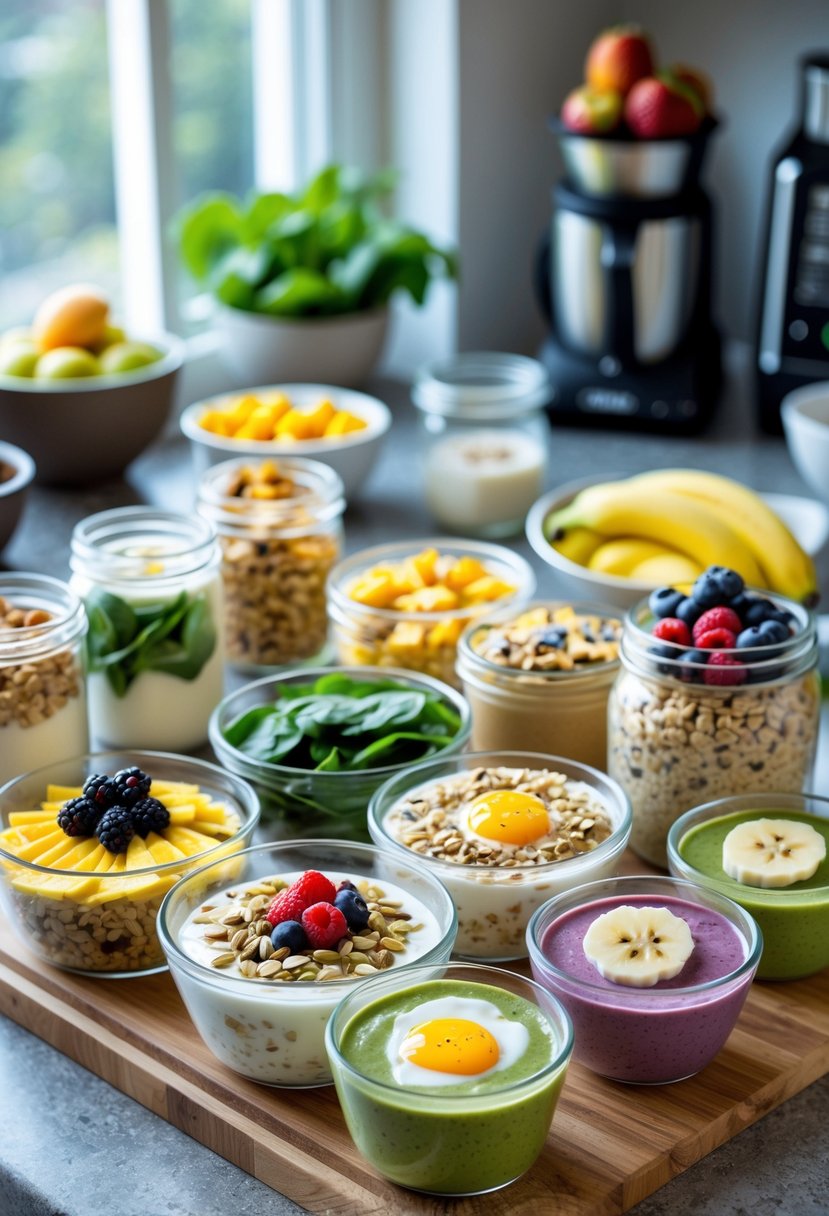
These answers focus on specific foods, simple swaps, storage tips, and easy recipes you can prep ahead. Use the listed make-ahead breakfasts—overnight oats, egg muffins, cottage cheese bake, quiche, and peanut butter chia pudding—as examples for each tip.
What are some high-protein foods that can be prepared the night before for breakfast?
Greek yogurt, cottage cheese, and ricotta hold up well overnight and add 15–20+ grams of protein per serving when used in bowls or overnight oats.
Hard-boiled eggs and make-ahead egg muffins with spinach and sausage cook once and store in the fridge for jours.
Cooked lean ham, shredded chicken, or crumbled cooked sausage can be portioned ahead for quiches or omelets.
Chia pudding mixed with peanut butter and milk or a soy-based milk provides plant-forward protein that sets overnight.
How can I incorporate more protein into my morning meals without using protein powders?
Add Greek yogurt or cottage cheese to overnight oats instead of milk to raise protein by 10–15 grams.
Mix eggs or egg whites into savory oats or bake them into egg muffins and quiches you make ahead.
Top fruit bowls with nut butter or a handful of chopped nuts for 6–8 grams more protein.
Use canned tuna or salmon in quick savory breakfasts or on whole-grain toast for a fast, high-protein option.
Are there any quick high-protein vegan breakfast options for on-the-go?
Chia seed pudding made with soy or pea milk and stirred with peanut butter gives 10–20 grams per serving.
Tofu scramble with black beans can be cooked ahead and reheated; pack in a microwave-safe container.
Overnight oats made with soy or pea-protein milk and mixed seeds (hemp, chia, pumpkin) add protein without dairy.
Roasted chickpeas or a small container of edamame make easy, high-protein sides.
What are the best ways to store pre-made high-protein breakfasts to maintain freshness?
Use airtight containers and refrigerate within two hours of cooking; most egg-based bakes and quiches last 3–4 days.
Store overnight oats, chia pudding, and Greek-yogurt bowls in individual mason jars for 3–5 days.
Freeze portions of quiche or egg muffins wrapped in foil or freezer-safe bags for 1–2 months.
Label containers with date and reheat in microwave or oven until steaming hot for safe eating.
How can I balance macronutrients when planning make-ahead high-protein breakfasts?
Aim for roughly 20–30 grams protein, 25–40 grams carbs, and 10–20 grams fat per meal as a starting point you can adjust.
Combine a protein base (eggs, Greek yogurt, tofu) with a whole-grain or fruit for carbs and a small serving of healthy fat like nut butter or avocado.
Use vegetable add-ins like spinach, peppers, or tomatoes for fiber and micronutrients without many calories.
Portion meals in advance so you hit your target macronutrient mix each morning.
Can you suggest some high-protein breakfast recipes that are also low in carbohydrates?
Make-Ahead Egg Muffins with Spinach and Sausage: eggs, sausage, and spinach baked in a muffin tin—about 2–3g carbs per muffin.
Cottage Cheese and Veggie Egg Bake: cottage cheese plus eggs and non-starchy vegetables gives high protein with minimal carbs.
High-Protein Quiche with Ham and Cheese (crustless): omit the crust to cut carbs and keep protein high.
Peanut Butter Chia Seed Pudding made with unsweetened almond or soy milk and no added sugar keeps carbs low while providing protein and healthy fats.