Plain Greek yogurt ranks first for your everyday routine because you get about 20 grams of protein in a 7-ounce serving with no cooking required. Chicken breast follows for protein density, while lentils earn a top spot by giving you protein plus a generous amount of fiber.
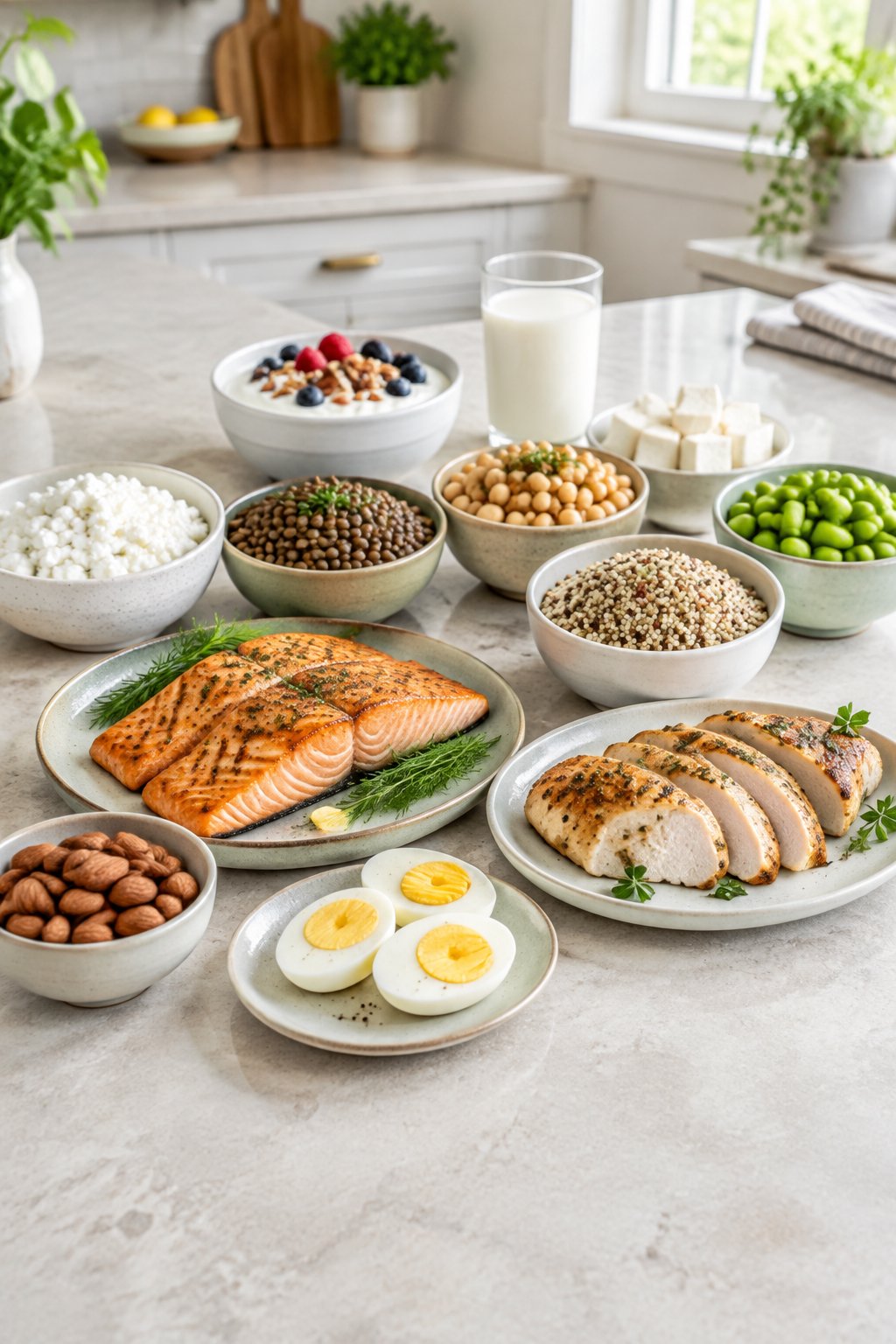
Your fullness after a meal comes from several things: protein, portion size, fiber, fat, and enough food to meet your energy needs. A protein-rich breakfast followed by a tiny lunch still leaves room for afternoon hunger.
Use these rankings as a practical starting point for your grocery list. Protein amounts refer to the featured food alone, and your package label gives you the closest match for the product you buy.
Quick picks:
- Best no-cook option: Plain Greek yogurt for breakfast or snacks.
- Best protein density: Chicken breast for a substantial main meal.
- Best budget plant option: Lentils for protein, fiber, and batch cooking.
1) Plain Greek Yogurt
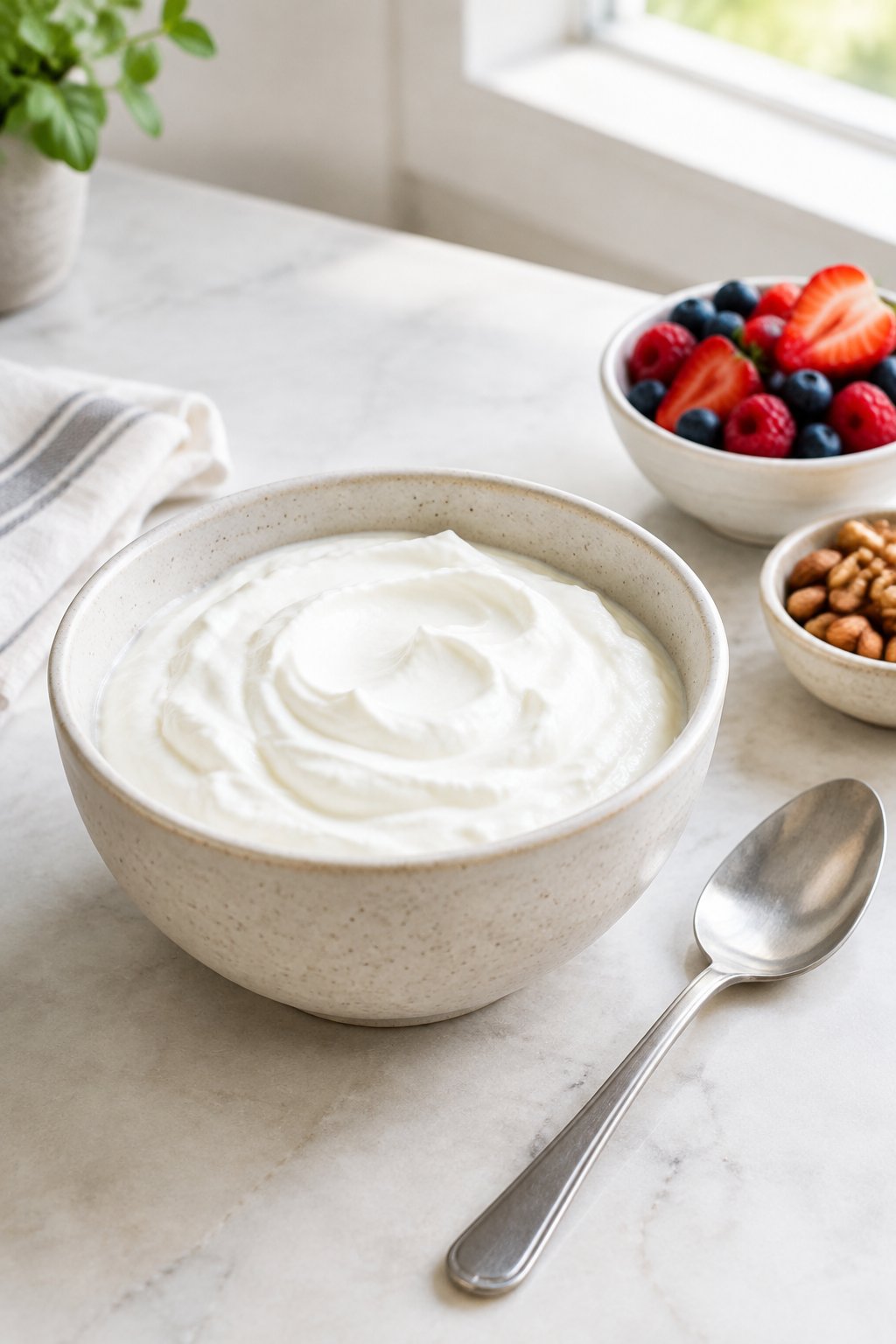
With plain Greek yogurt, you get a high-protein breakfast base that takes minutes to prepare. A 7-ounce serving provides about 20 grams of protein, depending on the brand and fat level.
You also get calcium, and choosing plain gives you control over added sugar. For a more substantial bowl, add oats and fruit to supply fiber and carbohydrates.
Ingredients
Yield: 1 serving. Prep: 5 minutes. Cook: 0 minutes.
- 7 ounces plain Greek yogurt
- ½ cup blueberries
- ¼ cup rolled oats
- 1 tablespoon chopped walnuts
- ¼ teaspoon ground cinnamon
Step By Step Instructions
- Spoon your yogurt into a bowl.
- Stir in your oats and cinnamon.
- Add your blueberries and walnuts. Let the bowl stand for 5 minutes if you prefer softer oats.
For a smoother texture, stir your yogurt before adding toppings. If you have lactose intolerance, look for a lactose-free Greek yogurt with a similar protein amount.
2) Chicken Breast
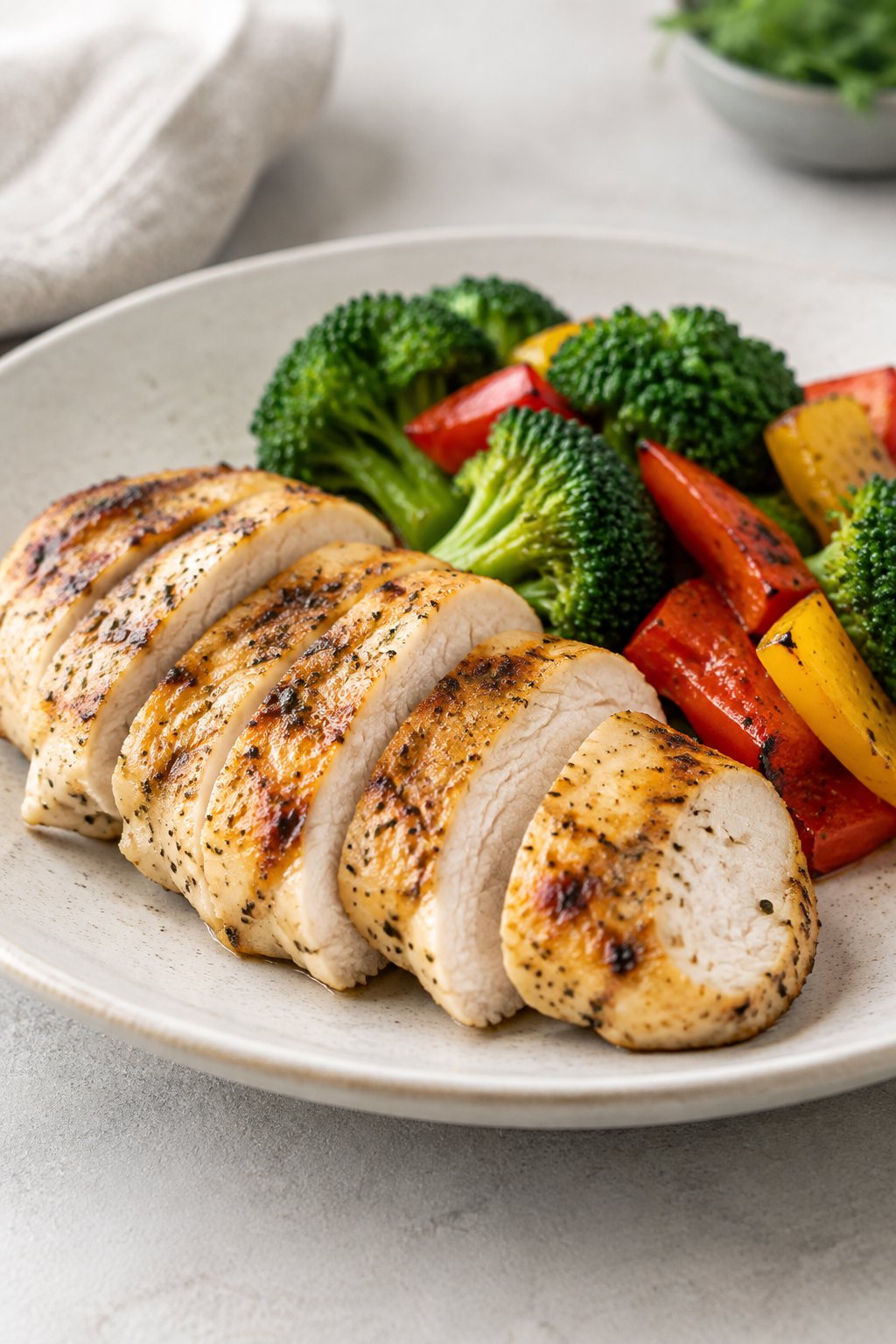
Chicken breast gives you one of the highest protein amounts per calorie on this list. In 3 ounces cooked, you get about 26 grams of protein with little saturated fat when you choose skinless meat.
Pair your chicken with a fiber-rich side to build a filling lunch. Pound the raw breast to an even thickness so the thin end stays moist while the center cooks.
Ingredients
Yield: 1 serving. Prep: 10 minutes. Cook: 18–25 minutes.
- 5 ounces raw boneless, skinless chicken breast
- 1 cup broccoli florets
- 1 teaspoon olive oil
- ¼ teaspoon paprika
- ⅛ teaspoon salt
- ⅛ teaspoon black pepper
Step By Step Instructions
- Heat your oven to 425°F. Line a small sheet pan with parchment.
- Pound your chicken to an even thickness. Place it beside your broccoli, then coat both with oil and seasonings.
- Roast for 18–25 minutes, checking early. Use a food thermometer to confirm your chicken reaches 165°F.
- Rest your chicken for 5 minutes before slicing.
For a complete meal, add cooked brown rice or a baked potato.
3) Lentils
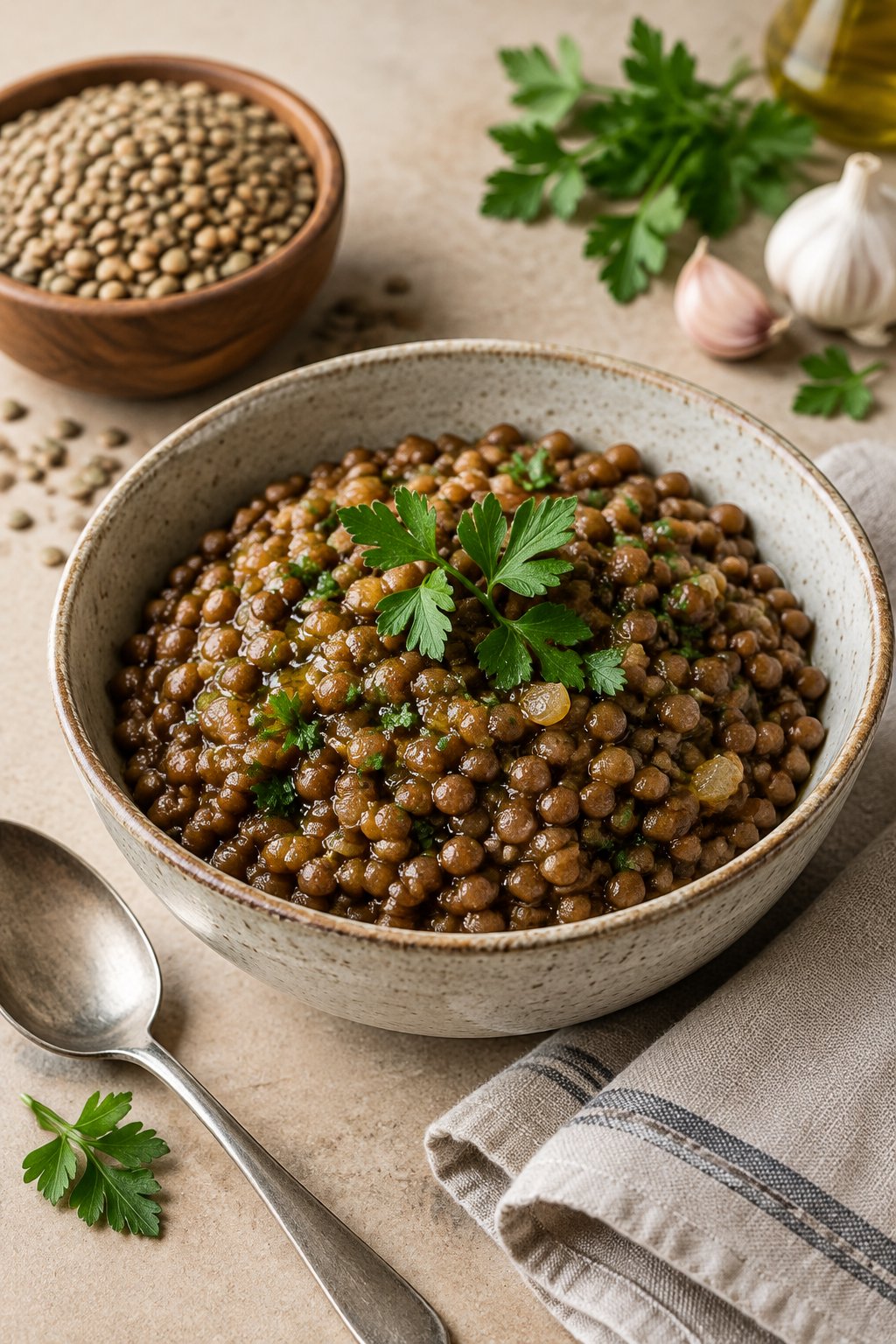
Lentils give you an especially useful combination for appetite control: about 18 grams of protein and 15–16 grams of fiber per cooked cup. You also get folate and iron from an inexpensive pantry staple.
You can use brown or green lentils for a salad that holds its shape. Red lentils soften more quickly and work well when you want a thick soup.
Ingredients
Yield: 2 servings. Prep: 5 minutes. Cook: 20–30 minutes.
- ⅔ cup dry brown or green lentils, rinsed
- 3 cups water
- 1 cup diced cucumber
- 2 tablespoons lemon juice
- 2 teaspoons olive oil
- 2 tablespoons chopped parsley
- ¼ teaspoon salt
Step By Step Instructions
- Bring your lentils and water to a boil in a saucepan.
- Reduce to a gentle simmer. Cook for 20–30 minutes, until tender, then drain.
- Let your lentils cool slightly. Toss with the remaining ingredients and divide between two bowls.
If your usual fiber intake is low, begin with a smaller portion and increase it gradually to reduce gas or bloating.
4) Whole Eggs
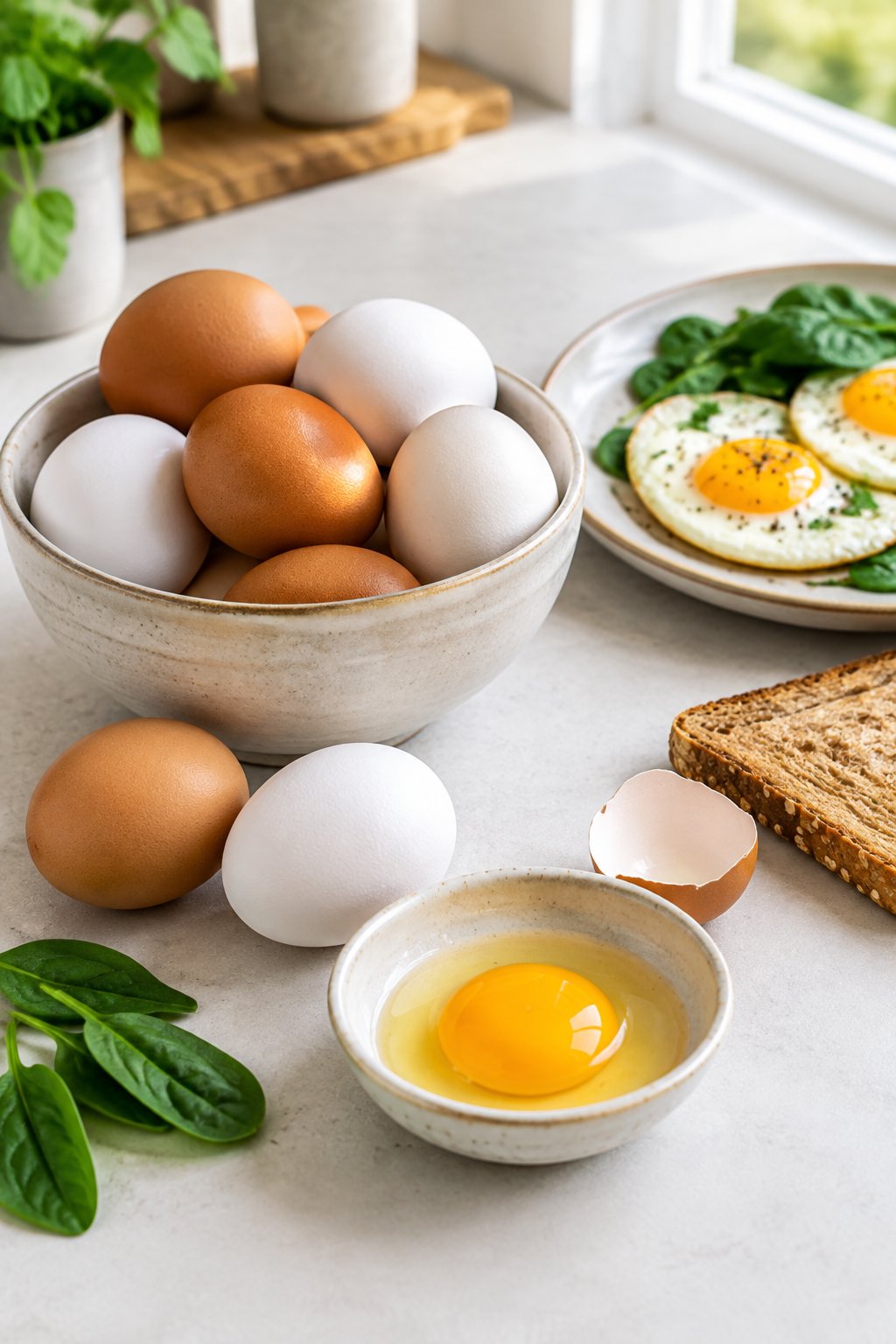
Two large whole eggs give you about 12–13 grams of protein, along with fat that makes your meal more substantial. You also get choline from the yolks, which supports normal cell and brain function.
For a higher-protein breakfast, pair your eggs with another protein source, such as milk or Greek yogurt. Whole-grain toast adds useful fiber and energy.
Ingredients
Yield: 1 serving. Prep: 5 minutes. Cook: 5–7 minutes.
- 2 large eggs
- 1 cup baby spinach
- 1 teaspoon olive oil
- 1 slice whole-grain bread
- ⅛ teaspoon black pepper
Step By Step Instructions
- Beat your eggs with the pepper in a small bowl.
- Warm your oil in a nonstick skillet over medium-low heat. Add your spinach and stir for 1–2 minutes.
- Pour in your eggs and gently fold until fully set, reaching 160°F.
- Toast your bread and serve alongside your eggs.
Keep your pan heat moderate. You get softer scrambled eggs when you give them time to set gently.
5) Cottage Cheese
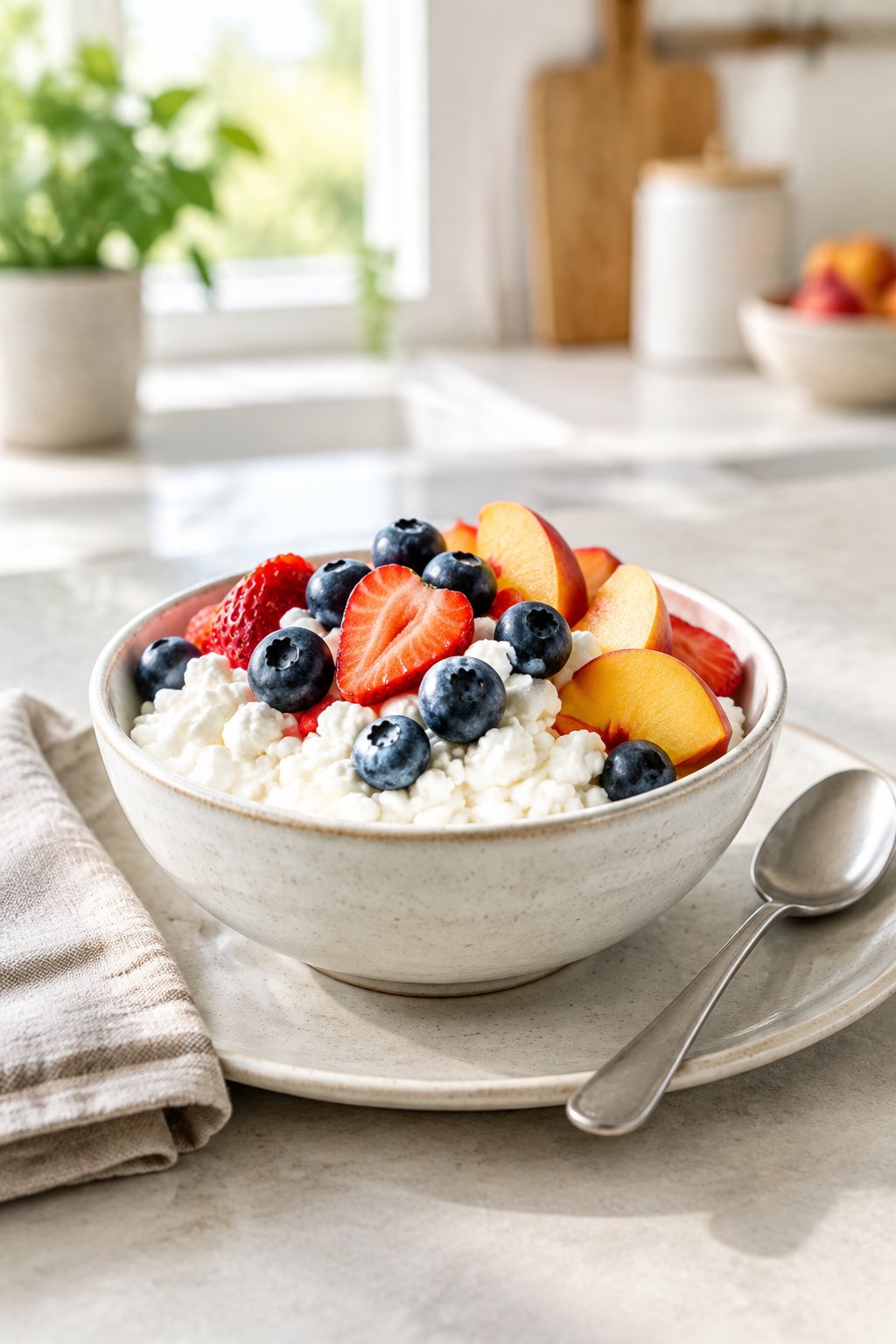
Cottage cheese supplies you with about 24–28 grams of protein per cup, making it a substantial no-cook option. Much of that protein is casein, a slowly digested milk protein.
You also get calcium, though the amount varies by product. Compare sodium on the label if you are managing your salt intake.
Ingredients
Yield: 1 serving. Prep: 5 minutes. Cook: 0 minutes.
- 1 cup cottage cheese
- 1 medium peach, pitted and sliced
- ½ cup raspberries
- 1 tablespoon chopped walnuts
- ¼ teaspoon ground cinnamon
Step By Step Instructions
- Spoon your cottage cheese into a bowl.
- Arrange your peach slices and raspberries on top.
- Finish with your walnuts and cinnamon.
If you prefer a smooth texture, blend your cottage cheese briefly before adding the fruit. Choose the fat level that fits your preferences and energy needs.
6) Edamame
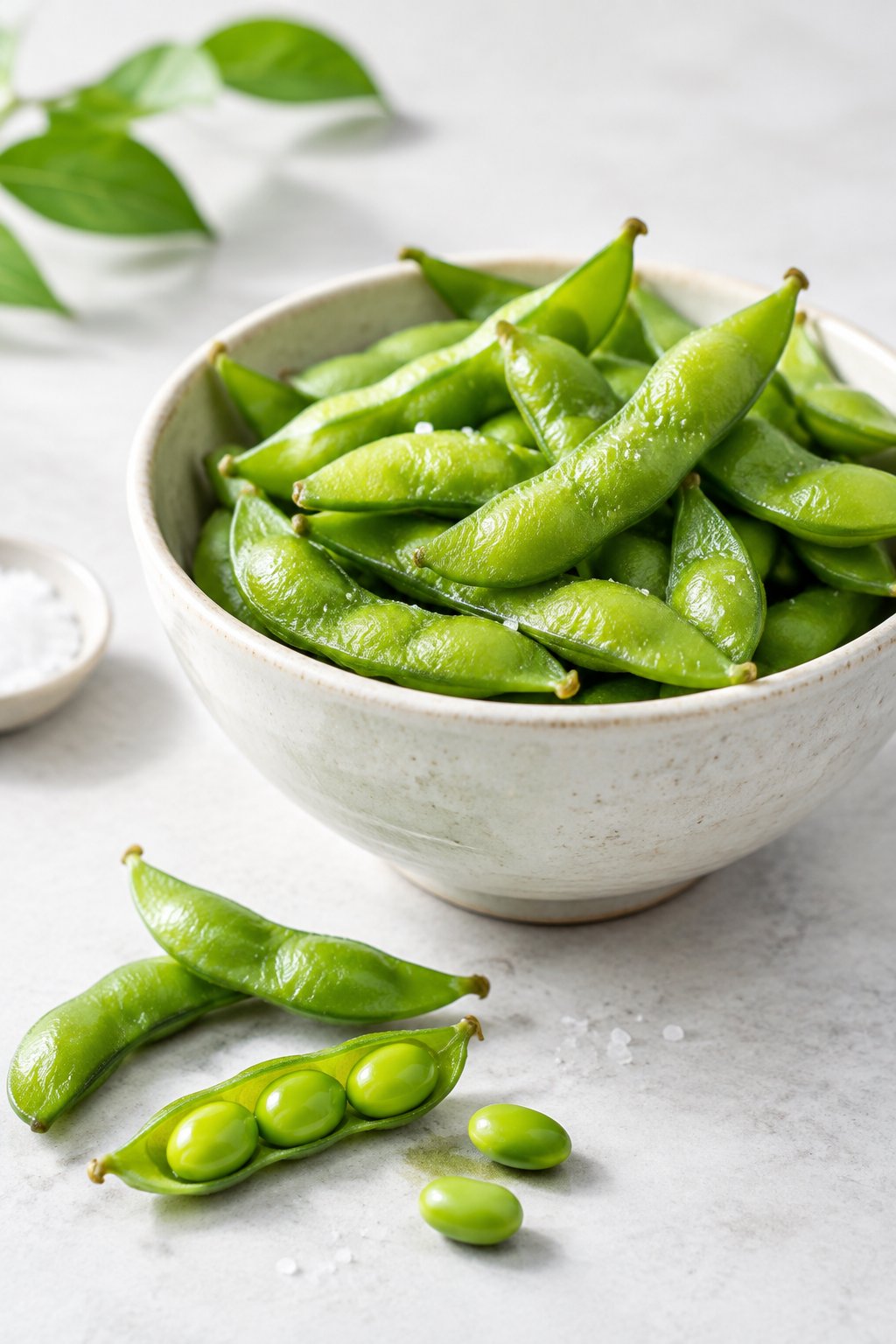
Edamame gives you complete plant protein plus fiber in a quick freezer staple. In 1 cup cooked, shelled beans, you get about 18 grams of protein and 8 grams of fiber.
Measure your portion after removing the pods, since the shells are inedible. Buying frozen shelled edamame also saves you preparation time.
Ingredients
Yield: 1 serving. Prep: 2 minutes. Cook: 4–6 minutes.
- 1 cup frozen shelled edamame
- 2 tablespoons water
- 1 teaspoon sesame oil
- 1 teaspoon lemon juice
- ⅛ teaspoon salt
Step By Step Instructions
- Put your edamame and water in a microwave-safe bowl. Cover with a vented microwave-safe lid.
- Microwave on high for 4–6 minutes, stirring halfway, or follow your package directions.
- Drain any remaining water. Toss your beans with sesame oil, lemon juice, and salt.
Add your warm edamame to a grain bowl, or let it cool for a portable snack. Keep it refrigerated until you are ready to eat.
7) Salmon
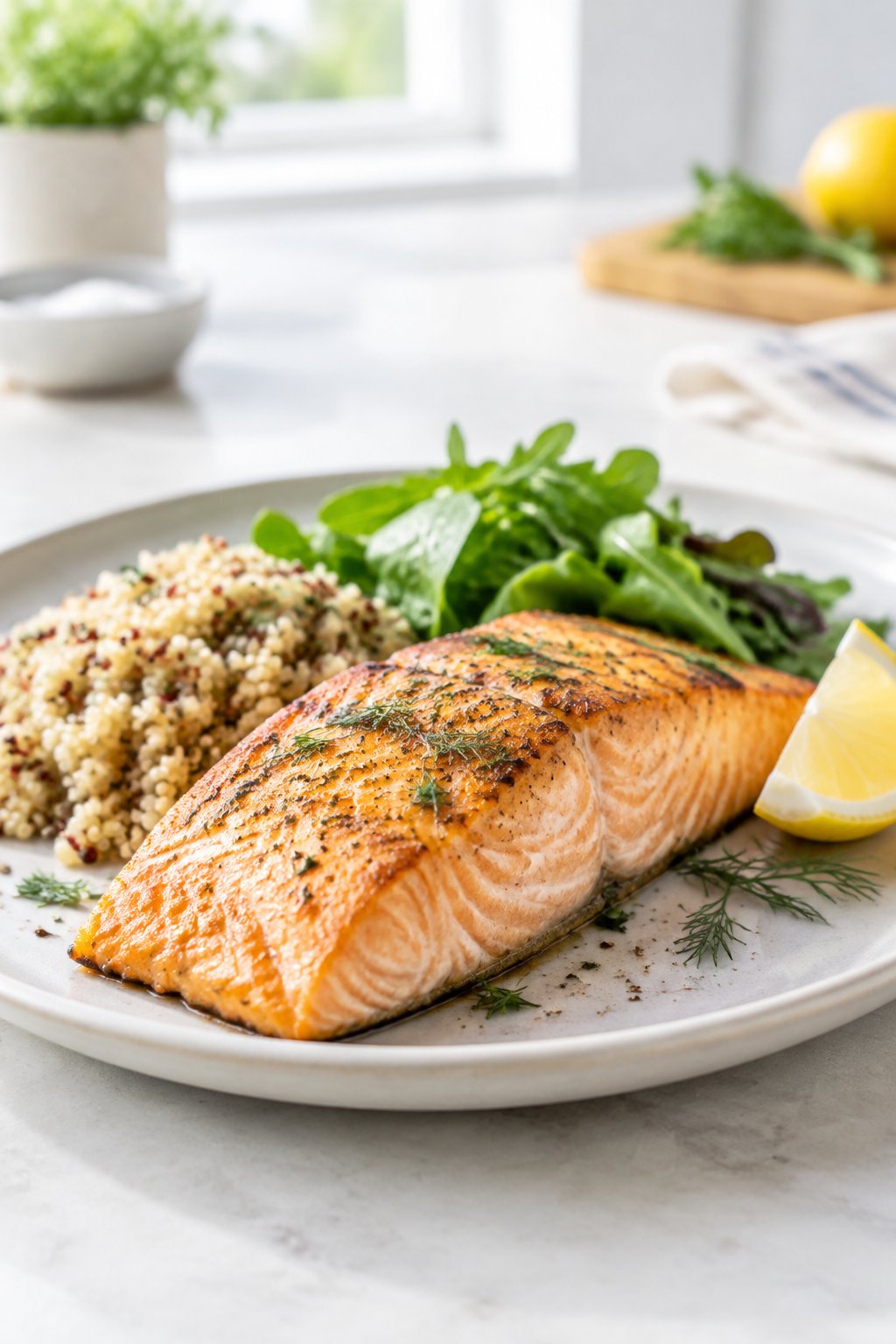
Salmon gives you filling protein along with omega-3 fats that support heart health. A 3-ounce cooked portion provides about 19–22 grams of protein, depending on the species.
Your grocery budget gets more flexibility with frozen fillets or canned salmon. For fresh or frozen fillets, even thickness helps you cook the fish evenly.
Ingredients
Yield: 1 serving. Prep: 5 minutes. Cook: 12–15 minutes.
- 4 ounces raw salmon fillet
- 1 teaspoon olive oil
- 1 teaspoon lemon juice
- ¼ teaspoon garlic powder
- ⅛ teaspoon salt
- ½ cup cooked quinoa
- 1 cup baby spinach
Step By Step Instructions
- Heat your oven to 400°F. Place your salmon on a lined baking sheet.
- Brush with oil and lemon juice, then add garlic powder and salt.
- Bake for 12–15 minutes, until the thickest part reaches 145°F.
- Serve your salmon over the quinoa and spinach.
Begin checking a thin fillet early so you avoid drying out the edges.
8) Firm Tofu
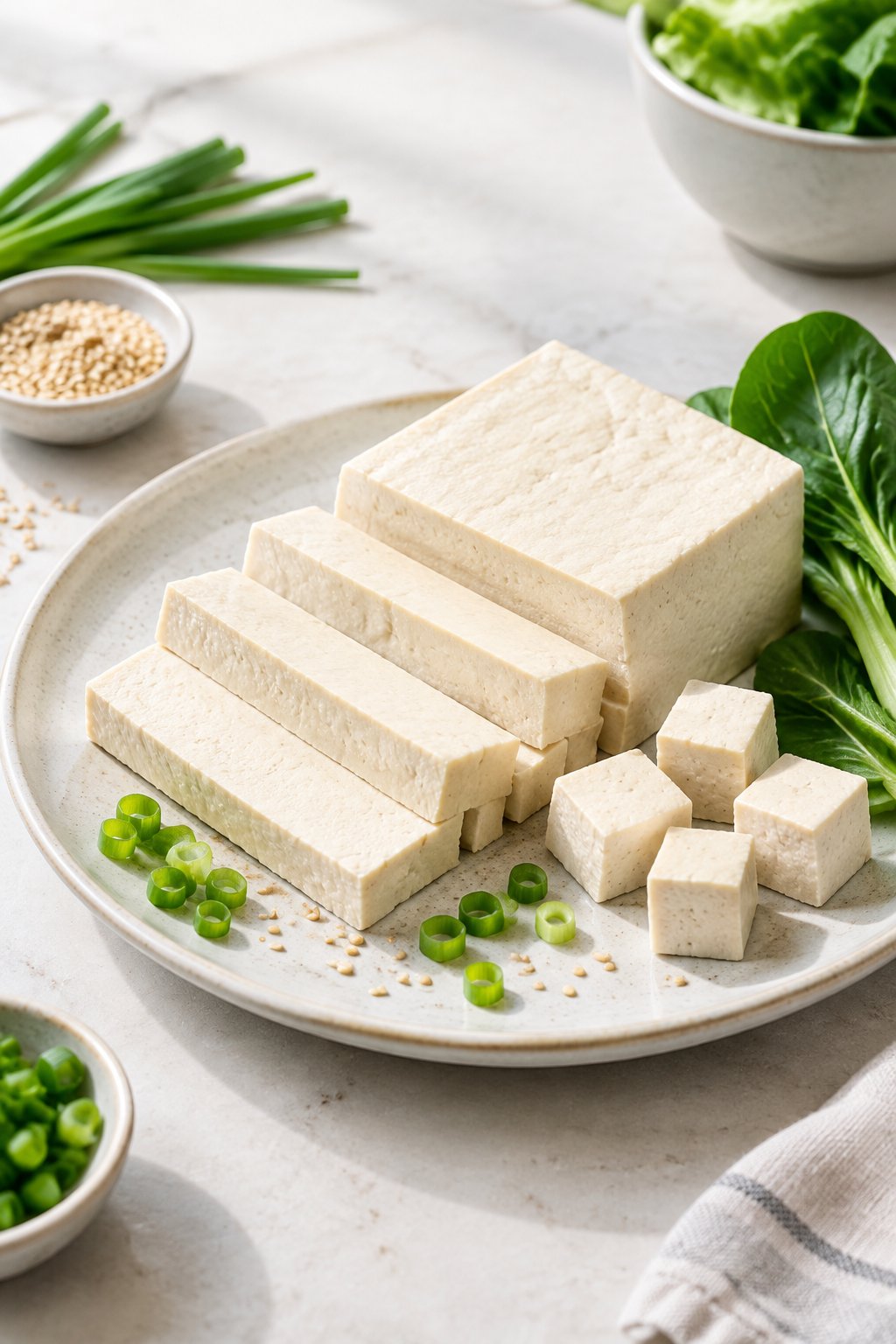
Firm tofu gives you a versatile complete plant protein for meat-free meals. A 4-ounce serving supplies roughly 12–20 grams of protein; water content and brand explain much of the range.
Check your label for calcium, too. You get a meaningful amount when your tofu is made with calcium sulfate.
Ingredients
Yield: 2 servings. Prep: 10 minutes. Cook: 25–30 minutes.
- 8 ounces firm tofu, drained
- 2 cups broccoli florets
- 2 teaspoons olive oil
- 2 teaspoons reduced-sodium soy sauce
- ½ teaspoon garlic powder
- 1 cup cooked brown rice
Step By Step Instructions
- Heat your oven to 425°F. Pat your tofu dry and cut it into ¾-inch cubes.
- Toss your tofu and broccoli with oil, soy sauce, and garlic powder.
- Spread across a lined sheet pan. Bake for 25–30 minutes, turning halfway.
- Divide between two bowls and add ½ cup rice to each.
Give your tofu cubes space on the pan to help the edges brown.
9) Canned Light Tuna
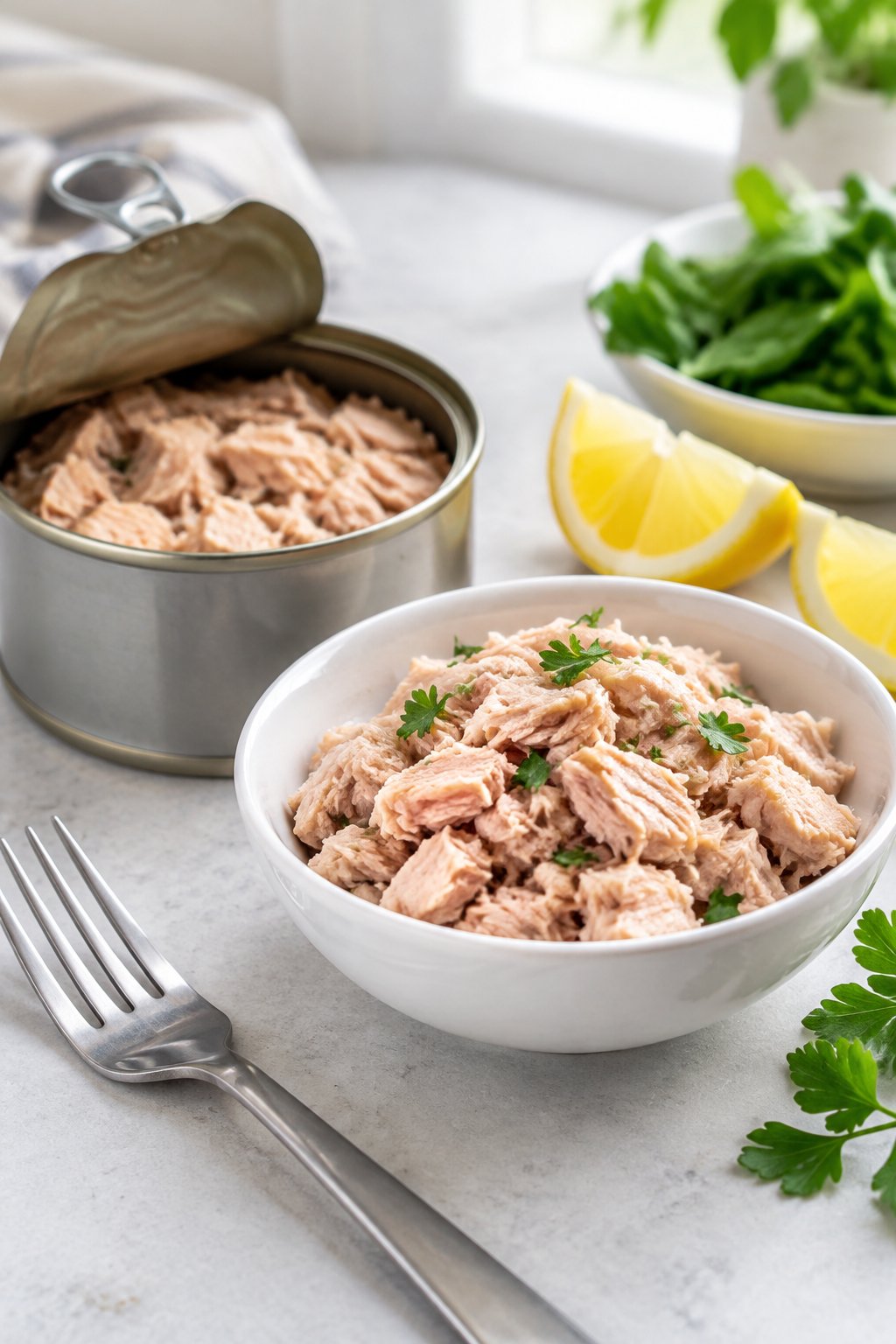
Canned light tuna gives you concentrated protein with almost no preparation. You get about 20–22 grams of protein in 3 ounces drained, making it useful for quick lunches.
Choose canned light tuna for a lower-mercury option than albacore. If you are pregnant or breastfeeding, follow FDA guidance on weekly fish portions and choose a variety of lower-mercury seafood.
Ingredients
Yield: 1 serving. Prep: 8 minutes. Cook: 0 minutes.
- 3 ounces canned light tuna in water, drained
- 2 tablespoons plain Greek yogurt
- ¼ cup diced celery
- 1 teaspoon lemon juice
- ⅛ teaspoon black pepper
- 2 slices whole-grain bread
- 2 lettuce leaves
Step By Step Instructions
- Flake your tuna into a bowl.
- Mix in your yogurt, celery, lemon juice, and pepper.
- Layer your lettuce and tuna mixture between the bread slices.
Keep your sandwich chilled until mealtime. If you are watching sodium, compare labels for a lower-sodium tuna.
10) Black Beans
Black beans help you build a filling meal with about 15 grams of protein and 15 grams of fiber per cooked cup. You also get carbohydrates that fuel your day, making beans a useful base for a substantial lunch.
Canned beans save you soaking and cooking time. Drain and rinse them to reduce some of the sodium from the packing liquid.
Ingredients
Yield: 1 serving. Prep: 5 minutes. Cook: 5–7 minutes.
- 1 cup canned black beans, drained and rinsed
- ¼ cup water
- ½ teaspoon ground cumin
- ½ cup cooked brown rice
- ½ cup diced tomato
- ¼ medium avocado, sliced
- 1 tablespoon lime juice
Step By Step Instructions
- Put your beans, water, and cumin in a small saucepan.
- Heat over medium-low for 5–7 minutes, stirring until hot.
- Spoon your beans over the rice. Add your tomato and avocado, then finish with lime juice.
If a full cup feels uncomfortable, start with ½ cup and increase your portion as your digestion adjusts.
11) Tempeh
Tempeh gives you about 19–20 grams of protein per 100 grams, plus fiber from the whole soybeans used to make it. Its firm texture gives your meal a satisfying chew.
You get complete plant protein, and the nutty flavor works well with bold seasonings. For a milder taste, steam your tempeh briefly before browning it.
Ingredients
Yield: 2 servings. Prep: 10 minutes. Cook: 18–20 minutes.
- 8 ounces plain tempeh
- 2 teaspoons olive oil
- 1 tablespoon reduced-sodium soy sauce
- 1 tablespoon lime juice
- ½ teaspoon smoked paprika
- 2 cups shredded cabbage
- 4 small corn tortillas
Step By Step Instructions
- Cut your tempeh into thin strips. Steam over simmering water for 8 minutes.
- Heat your oil in a skillet over medium heat. Add your tempeh and cook for 8–10 minutes, turning until browned.
- Add your soy sauce, lime juice, and paprika. Stir for 1 minute.
- Warm your tortillas according to package directions. Fill with your tempeh and cabbage.
Check the label if you avoid gluten, since some tempeh products contain added grains.
12) Lean Beef
Lean beef provides you with about 23–26 grams of protein in 3 ounces cooked, along with readily absorbed iron and vitamin B12. You get a protein-dense option for occasional meals.
Choose cuts such as sirloin or use 90% lean ground beef or leaner. Keep variety in your weekly protein choices by also including legumes and fish.
Ingredients
Yield: 1 serving. Prep: 10 minutes. Cook: 10–12 minutes.
- 4 ounces raw 90% lean ground beef
- 1 teaspoon olive oil
- ½ cup diced bell pepper
- ½ cup sliced zucchini
- ¼ teaspoon garlic powder
- ⅛ teaspoon salt
- ½ cup cooked barley
Step By Step Instructions
- Heat your oil in a skillet over medium heat. Add your pepper and zucchini; cook for 4–5 minutes.
- Add your beef, garlic powder, and salt. Break the meat into small pieces.
- Cook for another 5–7 minutes, until your ground beef reaches 160°F.
- Spoon your beef and vegetables over the barley.
Drain excess fat before serving if needed.
How We Ranked These High-Protein Foods
Your ranking balances protein content with the ease of turning each food into a satisfying everyday meal. You get a practical grocery guide, with preparation and cost included in the comparison.
| Food | Practical portion | Approx. protein | Fiber | Preparation effort |
|---|---|---|---|---|
| Plain Greek yogurt | 7 ounces | 20 g | 0 g | Ready to eat |
| Chicken breast | 3 ounces cooked | 26 g | 0 g | Cook thoroughly |
| Lentils | 1 cup cooked | 18 g | 15–16 g | Simmer or heat |
| Whole eggs | 2 large | 12–13 g | 0 g | Quick cooking |
| Cottage cheese | 1 cup | 24–28 g | 0 g | Ready to eat |
| Edamame | 1 cup cooked, shelled | 18 g | 8 g | Heat from frozen |
| Salmon | 3 ounces cooked | 19–22 g | 0 g | Bake or pan-cook |
| Firm tofu | 4 ounces | 12–20 g | 1–3 g | Drain and cook |
| Canned light tuna | 3 ounces drained | 20–22 g | 0 g | Drain and serve |
| Black beans | 1 cup cooked | 15 g | About 15 g | Rinse and heat |
| Tempeh | 100 grams | 19–20 g | Varies by brand | Slice and cook |
| Lean beef | 3 ounces cooked | 23–26 g | 0 g | Cook thoroughly |
Protein Density and Practical Serving Sizes
You get the most useful comparison when the portions match how you eat. A small garnish of beans provides much less protein than a full bowl, while a modest portion of chicken delivers a concentrated amount.
Protein density describes how much protein you receive for a given weight or number of calories. Your highest-density choices include chicken and tuna. Lentils earn their place through fiber and affordability, even with less protein per calorie.
Fullness Potential From Protein, Fiber, and Meal Volume
Your meal has stronger fullness potential when protein comes with enough food volume and fiber. Protein helps support satiety, while water-rich produce adds bulk to your plate.
You receive both protein and fiber from legumes and whole soybeans. With eggs, dairy, or meat, add vegetables or a whole grain to round out the meal. Your response also reflects sleep, activity, and how much you ate earlier.
Cost, Preparation Effort, and Everyday Versatility
Your most useful staple is one you can afford and prepare regularly. Dry lentils and canned beans stretch a grocery budget, while yogurt and cottage cheese save cooking time.
Compare the cost per usable serving when you shop. Frozen fish reduces pressure to cook immediately, and frozen edamame lets you portion out exactly what you need. For cooked leftovers, refrigerate promptly and use within three to four days.
How to Build Meals That Keep You Satisfied
You build a more satisfying meal by starting with a protein source and adding enough fiber-rich food and energy to suit your appetite. Use the same approach at breakfast as you do at dinner.
How Much Protein Makes Sense at Each Meal?
For a practical starting point, aim for about 20–30 grams of protein at a main meal. Treat that range as a planning tool; your needs change with body size, age, activity, and health.
You reach that amount with a serving of chicken or a cup of cottage cheese. For a plant-based meal, combine lentils with whole grains or add edamame to your bowl.
If you have kidney disease or a prescribed protein limit, get a personal target from your healthcare professional. Your daily intake should fit your medical needs.
Why Pair Protein With Fiber, Fat, and Carbohydrates?
You get a more complete meal when protein sits alongside the other nutrients your body needs. Fiber supports digestion and adds bulk, while carbohydrates supply energy for daily activity.
Add a modest amount of unsaturated fat through olive oil, nuts, or avocado. Fat slows stomach emptying, though adding large amounts also raises the meal’s calorie content.
Try a plate with salmon, barley, and a generous portion of vegetables. Adjust your grain portion and added fat to match your hunger and activity level.
How Can You Spread Filling Meals Across the Day?
Give each main meal a clear protein source so you spread your intake across the day. This approach also gives you several chances to eat enough without relying on a very large dinner.
Start with yogurt at breakfast, use a bean bowl for lunch, and choose tofu or fish at dinner. Keep meal times flexible enough to respond to hunger.
If you need a snack, choose a portion that bridges the gap to your next meal. Half a cup of cottage cheese with fruit or an egg with whole-grain crackers gives you something more substantial than a drink alone.
Frequently Asked Questions
You can use these answers to fine-tune your portions and set realistic expectations for appetite control.
Which high-protein food keeps you full the longest?
For a strong starting choice, try lentils because you get substantial protein and fiber in the same serving. Your longest-lasting option will reflect your portion size and the rest of your meal, so compare how satisfied you feel after similar-sized meals.
Can any food really keep you full all day?
You should expect a filling meal to carry you toward your next eating occasion, with hunger returning as your body needs more energy. Plan regular meals and respond to hunger instead of using “all day” as a goal for one food.
Which vegetarian foods on this list are highest in protein?
Among the portions listed, you get the most vegetarian protein from a cup of cottage cheese at about 24–28 grams. For vegan choices, tempeh supplies about 19–20 grams per 100 grams, while a cooked cup of edamame or lentils provides about 18 grams.
Which high-protein foods are helpful for weight loss?
You get useful weight-management options from plain Greek yogurt, chicken breast, and legumes when their portions fit your energy needs. Protein helps preserve muscle during weight loss and supports fullness, while your longer-term calorie intake drives changes in body weight.
Should I compare protein per serving or per 100 grams?
Use protein per serving to plan your meal, and use protein per 100 grams to compare similar products fairly. Match the food’s state in each comparison, since raw, cooked, and drained weights contain different amounts of water.
Can high-protein foods burn belly fat?
You cannot target belly-fat loss by choosing a particular protein food. If fat loss is your goal, pair a manageable calorie deficit with regular activity and strength training, while eating enough protein to support your muscles.