A world-class submission grappler can tap out nearly anyone on the mats and still get dropped in the first ten seconds of an MMA fight. That is not a knock on jiu-jitsu. It is a reminder that the cage asks different questions than the mat does. Learning how to transition from BJJ to MMA means rebuilding your game around strikes, fences, and a completely different clock, even if you already have gold around your waist in grappling.
This shift is happening in real time at the highest level of the sport. Multiple-time world champion Mikey Musumeci, long regarded as one of the most technical lightweight grapplers on the planet, stepped away from his submission-grappling title picture in 2026 to pursue a full-time move into mixed martial arts. His decision put a spotlight on a question every serious grappler eventually asks: what actually changes when strikes, cage walls, and wrestling enter the equation? This guide breaks down the real differences and the concrete skills you need to build.
Key Takeaways
- Striking defense comes first. Before offense, grapplers need a reliable stance, distance control, and the ability to read strikes without flinching into bad positions.[1]
- Wrestling for MMA is not the same as folkstyle or freestyle. Cage wrestling adds fence-assisted takedowns, underhook battles, and chain attacks that mat-based wrestling never teaches.[2]
- Strike-to-takedown entries must become automatic. Drilling combinations like jab-cross into a shadow double-leg builds the timing that separates a grappler from a fighter.[3]
- Conditioning has to match two different energy systems. Grappling leans on glycolytic, isometric strength endurance, while striking demands short, explosive, alactic bursts with quick recovery.
- No-gi specialists often transition faster because their grips, scrambles, and sweat-ready movement already resemble MMA more than gi-based jiu-jitsu does.[6]
The Mikey Musumeci Case Study: Why Even a World Champion Grappler Needs a Full Reset
Mikey Musumeci built his reputation on heel hooks, leg entanglements, and a scrambling style that made him must-watch jiu-jitsu. Stepping into MMA means setting almost all of that aside at first and rebuilding from the feet up. That is the uncomfortable truth every elite grappler faces: rank on the mat does not transfer automatically to rank in the cage.
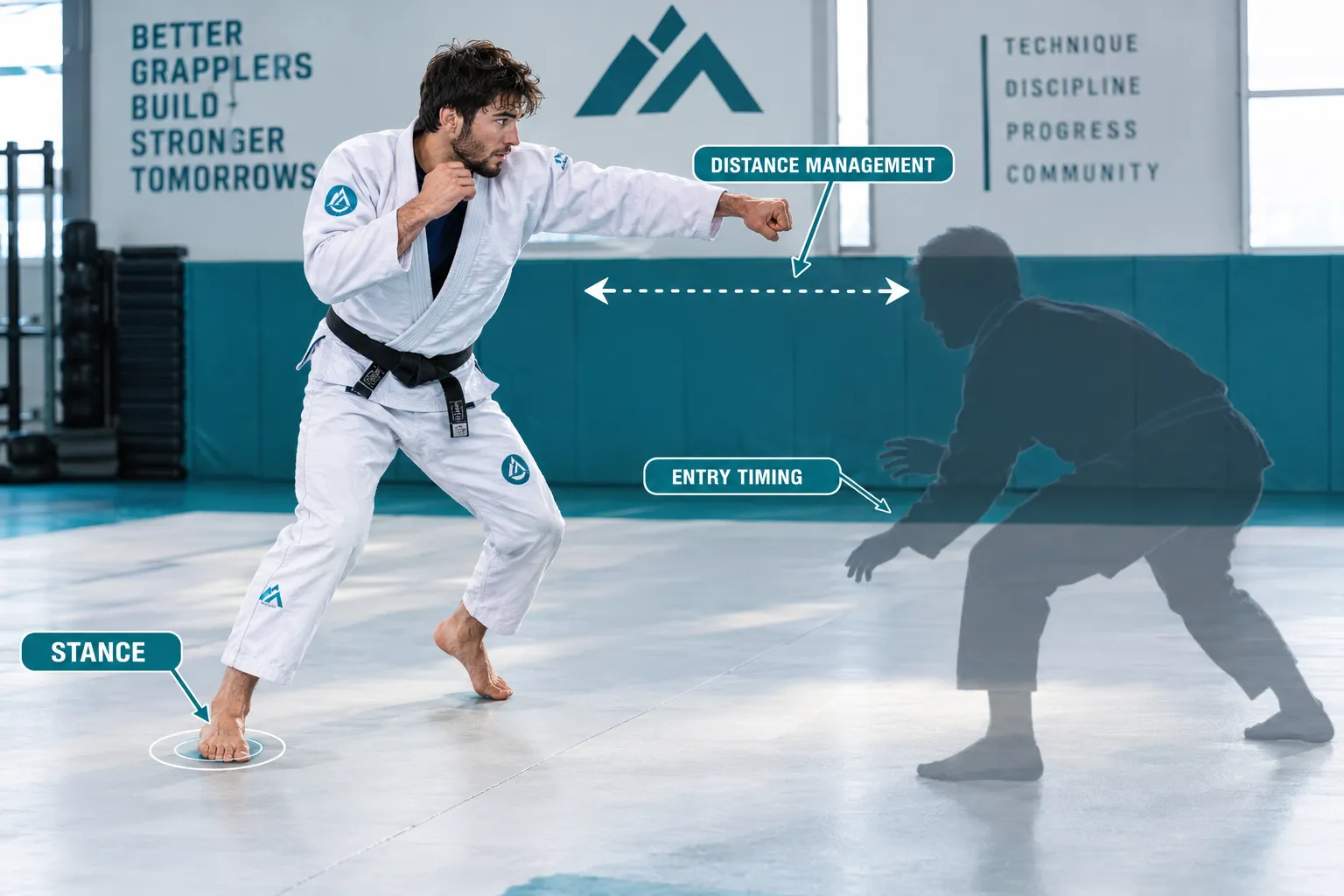
The practical gap shows up in four places: striking exposure, takedown entries against a resisting striker, cage-specific wrestling, and the physical toll of absorbing strikes while still trying to control position. Coaches now recommend grapplers spend a dedicated three to six month base block focused on either wrestling for control or Muay Thai for well-rounded striking before layering in the secondary discipline, with early emphasis placed on defensive awareness and safe entries from standing exchanges into grappling range.[1] That sequencing matters. A BJJ black belt who rushes straight into live sparring without this foundation is far more likely to eat strikes while hunting for a takedown they are not yet equipped to finish safely. If you want the broader context of where BJJ fits inside today’s combat sports landscape, our breakdown of what Brazilian Jiu-Jitsu actually is, from Gracie Academy to 10th Planet is a useful starting point. And for more on how individual grapplers are navigating this exact crossover, our community has been tracking Mikey Musumeci’s MMA ambitions closely.
How to Transition from BJJ to MMA: Build Your Striking Foundation First
Before you worry about combinations or power, you need to survive strikes without panicking. Modern MMA curricula break striking development into clear stages, and grapplers should move through them in order rather than skipping ahead because they feel confident on the ground.[7]
The staged approach looks like this:
- Beginner stage: Learn stance, distance management, and defensive reactions to strikes. The goal is composure, not offense.[7]
- Intermediate stage: Add jabs and short combinations while pairing them with basic takedown defense so you are not a one-dimensional striker or a one-dimensional grappler.[7]
- Advanced stage: Counter combinations, add specialty strikes, and defend takedowns under live pressure, all while your instincts are still screaming “pull guard.”[7]
Grapplers tend to underestimate how much mental rewiring this takes. Years of training to close distance and get to the ground work against you in year one of striking, where closing distance poorly means walking into a counter. This is also why pairing this phase with slam and takedown safety rules matters, if you are used to the control-focused rules of the mat, it is worth revisiting why you can’t slam in BJJ and how that differs from the live, violent dynamics of a cage exchange.
Wrestling for MMA: Takedowns, Clinch Control, and Chain Wrestling
Here is a fact that surprises a lot of grapplers: wrestling for MMA is its own discipline, separate from both folkstyle and freestyle wrestling. Analysts have pointed out that cage wrestling includes skills that simply do not exist in a wrestling room with no walls.[2]
Core cage wrestling skills every transitioning grappler should drill:
- Fence-assisted takedowns, using the cage to cut off an opponent’s sprawl space on single- and double-leg attempts.[2]
- Underhook battles in the clinch, the fight for underhooks often decides whether the exchange stays standing or hits the mat.[2]
- Chain wrestling, linking a stuffed single-leg into a high crotch attack, then into a front headlock, rather than abandoning the shot after the first stuff.[2]
- MMA-specific stand-ups, technical stand-ups, wrestling switches, and wall walks that let you escape the bottom position when strikes are coming.[2]
BJJ practitioners who come from a wrestling-adjacent background, or who have cross-trained against styles with heavy takedown pressure, often find this section of the transition less intimidating. If you have ever compared grappling systems outside pure sport BJJ, our piece on Hayastan wrestling versus BJJ is a good companion read for understanding how different grappling cultures approach control and takedowns.
Cage Skills Elite Grapplers Must Build: Fence Work, Wall Walks, and Stand-Ups
This is where how to transition from BJJ to MMA gets physical in a way mat training never prepares you for. The cage itself becomes a tool and a hazard. Grapplers who have only trained on open mats or in a gi often freeze the first time their back meets a fence instead of open space.
Practical fence and cage drills to add to training:
- Wall walks: Using the fence as leverage to stand up safely from bottom position without exposing your back to strikes.
- Technical stand-ups under pressure: Practicing the stand-up while a partner lightly taps strikes, so your instinct is built under realistic stress, not a sterile drill.
- Dirty boxing in the clinch: Short punches and elbows at close range while fighting for underhooks against the fence.
- Strike-to-takedown transition rounds: Updated technique guides recommend four rounds of three minutes dedicated purely to flowing from strikes into entries, with the focus on keeping balance, posture, and positional control throughout.[3]
A simple solo drill that shows up across current MMA training plans is a jab-cross combination flowing immediately into a shadow double-leg, repeated for volume until it feels automatic rather than deliberate.[3] This kind of repetition is what eventually lets a grappler feel at home against a fence the same way they feel at home in guard.
Damage Management: Conditioning and Durability for Strike-to-Grapple Exchanges
Submission grappling rewards patience. MMA punishes it, because every second you spend thinking is a second you might be getting hit. Sports science breakdowns of the two disciplines draw a clear line: grappling is more glycolytic and relies on isometric strength endurance in the grips, clinch, and sprawl, while striking is alactic-dominant, short, explosive one-to-three second bursts with aerobic recovery between combinations.
For a BJJ athlete, that means building conditioning you have never needed before:
- Explosive power for ground-and-pound and strikes, developed through rotational and vertical power work like medicine ball throws and cable rotations, typically three to five sets of three to six reps at maximal intent.[4][5]
- Positional endurance, trained through heavy-bag or partner-pad rounds of around five minutes with sixty to ninety seconds of rest, mirroring the pace of a real round.[4][5]
- Grip and posterior-chain strength, built with farmer’s carries, hip thrusts, and isometric holds that support top control and damage output once you’re on top.[4][5]
Broader strength programs for MMA also stress compound lower-body lifts like squats, unilateral work such as Bulgarian split squats for footwork and kicks, and pulling strength from pull-ups and rows to support clinch work. Periodized plans spread over roughly sixteen weeks typically separate hard strength sessions and sparring by at least 48 hours, and taper strength volume down during peak sparring weeks to protect the body for competition.[10] Even fighters who come from a striking-heavy background, like boxing standout Holly Holm’s MMA preparation model, still build explosive hip extension and fast sprawls for takedown defense and train the ability to shift from a thirty-second ground exchange straight back into high-output striking without a rest window, a two-way street every grappler moving the other direction has to learn as well.[8]
No-Gi BJJ vs Gi BJJ: Which Background Transitions Faster to MMA
Not every BJJ background transitions at the same speed. Athletes who have spent most of their careers in no-gi grappling generally have an easier adjustment, and the reasoning is straightforward: without a gi, there is no collar or sleeve to grip, and the positional control, scrambles, and grip fighting in no-gi already resemble what happens inside the cage.[6]
Key advantages no-gi specialists bring into MMA:
- Familiarity with underhooks and overhooks instead of collar-and-sleeve grips, which map directly onto clinch fighting.[6]
- Comfort with body locks rather than gi-dependent controls, since MMA gloves and bare skin remove the gi entirely.[6]
- Movement patterns already adapted to sweat, slipperiness, and rapid positional changes, which gi players often have to relearn from scratch.[6]
This does not mean gi players can’t make the jump, plenty have. Grapplers with strong leg lock systems or guard-passing pedigrees, the kind associated with athletes like Keenan Cornelius, often adapt their scrambling instincts quickly once they log enough no-gi and MMA-specific mat time. And it’s worth remembering that BJJ’s entire relationship with MMA started with gi-trained fighters, Royce Gracie proved jiu-jitsu’s value inside the cage long before “transition training” was a formal concept.
Sample Transition Timeline for Grapplers Moving Into MMA
Putting this all together, here’s a realistic framework many coaches now recommend for a grappler building toward their first MMA competition:
| Phase | Focus | Approx. Duration |
|---|---|---|
| Base Block | Striking defense or wrestling fundamentals (pick one primary focus) | 3-6 months [1] |
| Integration | Strike-to-takedown entries, clinch work, cage-specific drilling | 2-3 months [3][2] |
| Conditioning Layer | Mixed energy-system training, strength 2x/week, striking power 2x/week, positional rounds 2-3x/week | Ongoing [4][5] |
| Live Pressure | Controlled sparring combining strikes, wrestling, and ground transitions | Final 6-8 weeks before competition [10] |
Elite crossovers back this structure up. Grapplers who have announced full MMA pushes in 2026 have consistently paired this kind of staged preparation with weight adjustments and gym changes built specifically around MMA readiness, rather than trying to bolt striking onto an unchanged training schedule. The lesson for everyday grapplers is the same: treat the transition like its own discipline, not a side project.
Conclusion
Learning how to transition from BJJ to MMA is less about abandoning your jiu-jitsu and more about surrounding it with everything the cage demands: composed striking defense, real wrestling against a fence, the nerve to stand up under strikes, and conditioning built for two very different energy systems. Mikey Musumeci’s move into MMA is a reminder that even the most decorated grapplers start that process from close to zero on the feet, and that humility is exactly what makes the transition work.
If you’re a grappler eyeing this path yourself, start small and stay honest about the gaps: log striking-defense hours before offense, drill fence takedowns until they’re boring, and build the dual conditioning base long before you ever step into live rounds. Come back and check it with us here at Jiujitsu Central as we keep tracking the grapplers making this jump, and keep rolling into the heart of the sport with us. Oss!
References
[1] Mma Grappling Vs Striking Pylen Gaid – https://www.sport-zona.com/academy/article/mma-grappling-vs-striking-pylen-gaid [2] Best Wrestlers Ufc Wrestling Dominates Mma – https://taipeibjj.com/best-wrestlers-ufc-wrestling-dominates-mma/ [3] Mma Training Schedule Solo 2026 – https://www.titans-grip.com/blog/mma-training-schedule-solo-2026/ [4] Ground And Pound Training Strength Conditioning – https://theworkoutmag.com/training/ground-and-pound-training-strength-conditioning [5] Ground And Pound Training Strength Conditioning – https://theworkoutmag.com/training-guide/ground-and-pound-training-strength-conditioning [6] Transitioning From No Gi Bjj To Mma Key Advantages For Enhanced Combat Effectiveness 190p – https://dev.to/freddstar/transitioning-from-no-gi-bjj-to-mma-key-advantages-for-enhanced-combat-effectiveness-190p [7] Mma Curriculum – https://gymdesk.com/blog/mma-curriculum [8] Holly Holm Mma Fight Training Program – https://theworkoutmag.com/training/holly-holm-mma-fight-training-program [9] Bjj Wiz Bianca Basilios Bold Plan 6 Wins In 2026 Ufc Gold And Mackenzie Dern Dream Fight – https://www.mmafighting.com/womens-combat/478587/bjj-wiz-bianca-basilios-bold-plan-6-wins-in-2026-ufc-gold-and-mackenzie-dern-dream-fight [10] Mma Strength Conditioning – https://research.poin-t-go.com/en/sports/general/mma-strength-conditioning