
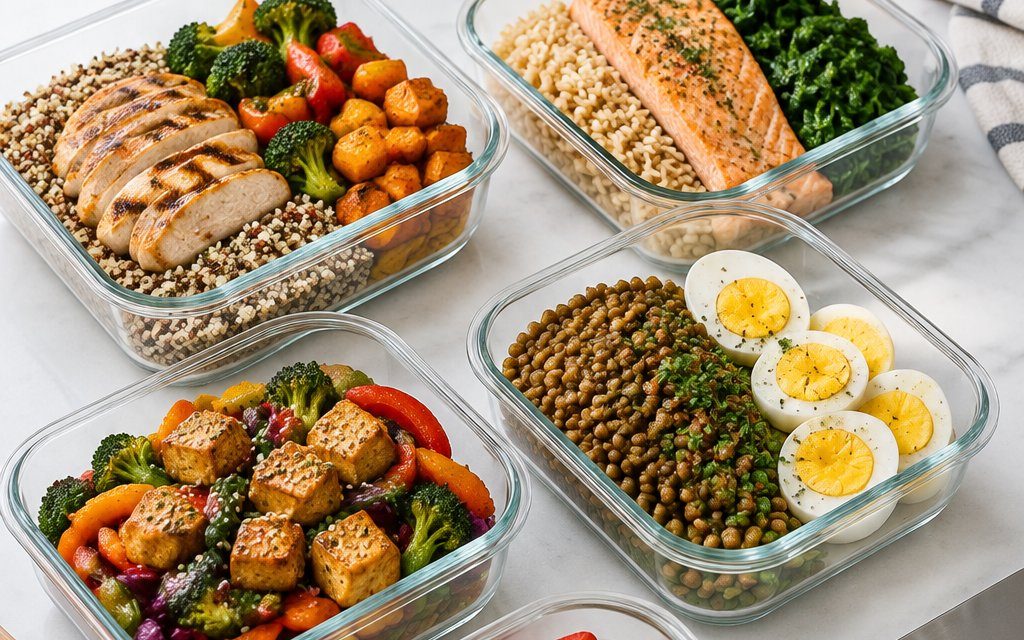
You can prep chicken burrito bowls, turkey meatballs, breakfast burritos, and the other protein-rich meals below on Sunday for ready-to-eat breakfasts, lunches, and dinners. Start with two recipes that share ingredients, then freeze your later-week portions so you have a safe, useful mix of refrigerated and frozen meals.
You’ll get the most from your prep time with meals that hold moisture, portion easily, and leave fresh toppings separate. Saucy meatballs and soups handle freezing well; seafood salads deserve an earlier spot on your weekly menu.
Your protein estimates below reflect the listed ingredients, including the sides and sauces. Check your package labels for closer tracking, especially when you use different pasta, tortillas, or dairy products.
1) Chicken Burrito Bowls With Brown Rice and Black Beans
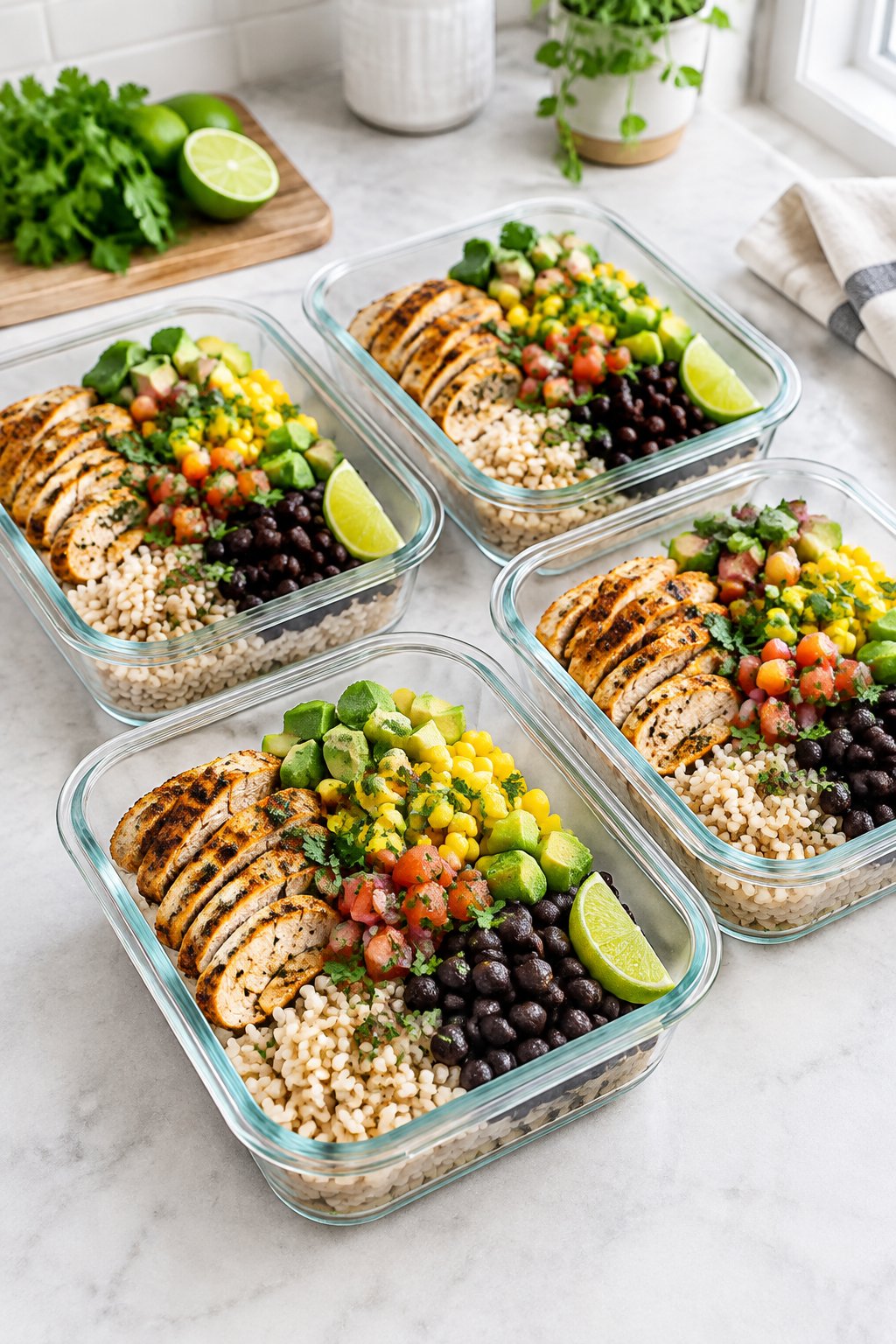
You get a sturdy lunch from seasoned chicken, brown rice, and black beans, with fresh toppings added after reheating.
Yield: 4 bowls
Estimated protein: 46 grams per bowl
Prep: 15 minutes | Cook: 15 minutes, using cooked rice
Ingredients
- 1½ pounds boneless, skinless chicken breasts, cut into 1-inch pieces
- 2 cups cooked brown rice
- 1 can (15 ounces) black beans, drained and rinsed
- 1 cup frozen corn
- 1 tablespoon olive oil
- 1 teaspoon each chili powder and ground cumin
- ½ teaspoon each garlic powder and salt
- 1 cup salsa
- 2 cups shredded romaine
- 1 avocado, sliced just before serving
- 1 lime, cut into wedges
Step By Step Instructions
- Toss your chicken with the oil, chili powder, cumin, garlic powder, and salt.
- Heat a large skillet over medium-high heat. Cook the chicken for 8–12 minutes, stirring, until the thickest pieces reach 165°F.
- Warm your beans and corn in a saucepan over medium heat for 3–5 minutes.
- Divide the rice, chicken, beans, and corn among four containers. Pack your salsa and romaine separately.
- Add avocado and a squeeze of lime when you serve.
Storage: Refrigerate for 3–4 days, or freeze the cooked base for up to 3 months for best quality. Keep the lettuce and avocado out of your freezer portions.
2) Sheet Pan Sesame Chicken and Vegetables
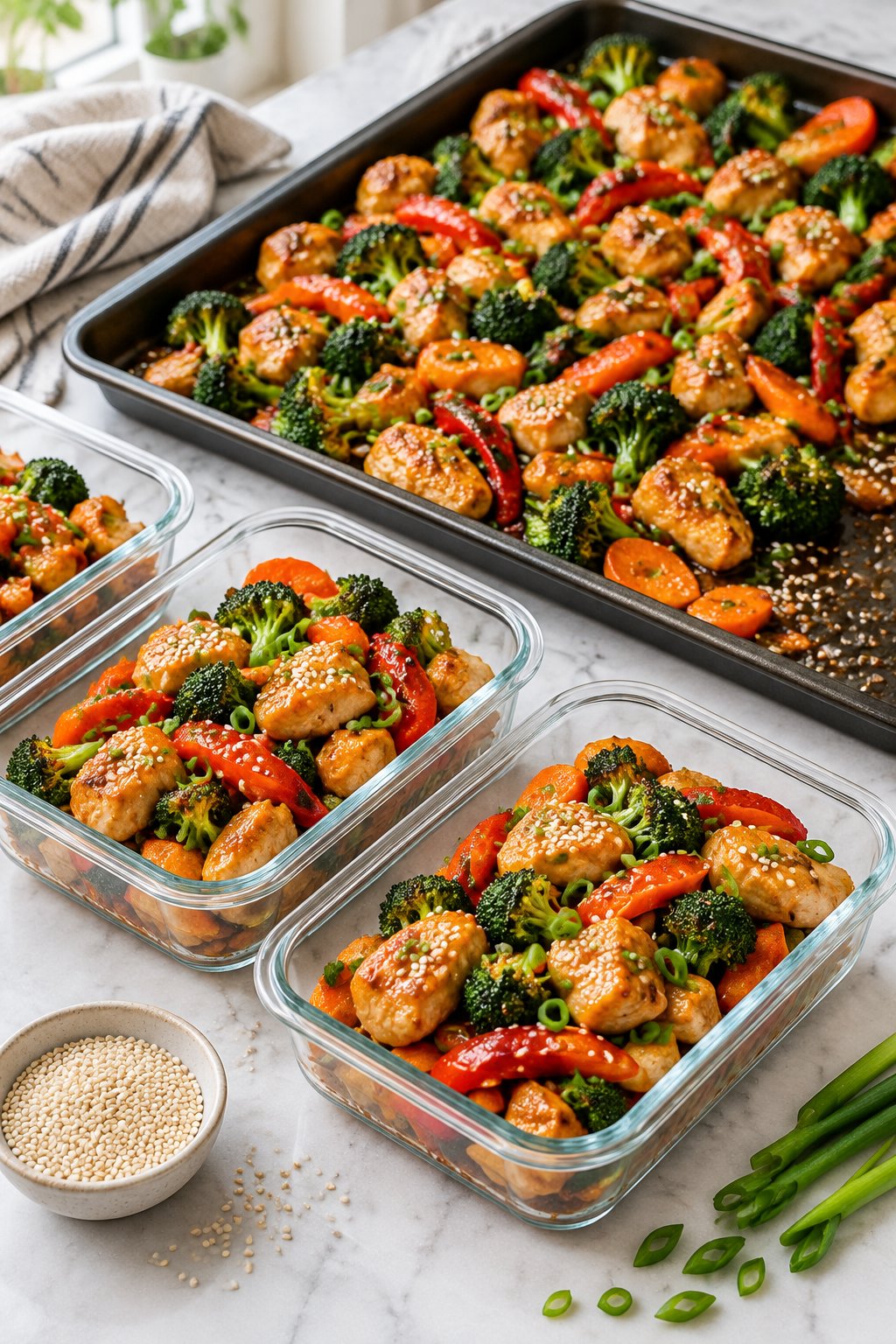
With one sheet pan, you get tender chicken and roasted vegetables ready for four rice bowls.
Yield: 4 servings
Estimated protein: 42 grams per serving
Prep: 15 minutes | Cook: 22–26 minutes
Ingredients
- 1½ pounds boneless, skinless chicken breasts, cut into 1-inch pieces
- 4 cups broccoli florets
- 1 bell pepper, cut into strips
- 2 medium carrots, thinly sliced
- 1 tablespoon neutral cooking oil
- 3 tablespoons reduced-sodium soy sauce
- 1 tablespoon each honey and rice vinegar
- 2 teaspoons toasted sesame oil
- 2 garlic cloves, minced
- 2 teaspoons grated fresh ginger
- 2 teaspoons sesame seeds
- 2 cups cooked brown rice
Step By Step Instructions
- Heat your oven to 425°F. Line a large rimmed sheet pan with parchment.
- Toss the broccoli, pepper, and carrots with the neutral oil. Spread them across the pan and roast for 8 minutes.
- Mix your soy sauce, honey, vinegar, sesame oil, garlic, and ginger. Toss the chicken with this mixture.
- Add the chicken and sauce to the pan, keeping everything in a single layer. Roast for 14–18 minutes, until your chicken reaches 165°F.
- Divide among four containers with the rice. Sprinkle with sesame seeds.
Storage: Refrigerate for 3–4 days or freeze for up to 3 months. For firmer broccoli, use large florets and stop roasting as soon as your chicken is safely cooked.
3) Turkey Ricotta Meatballs
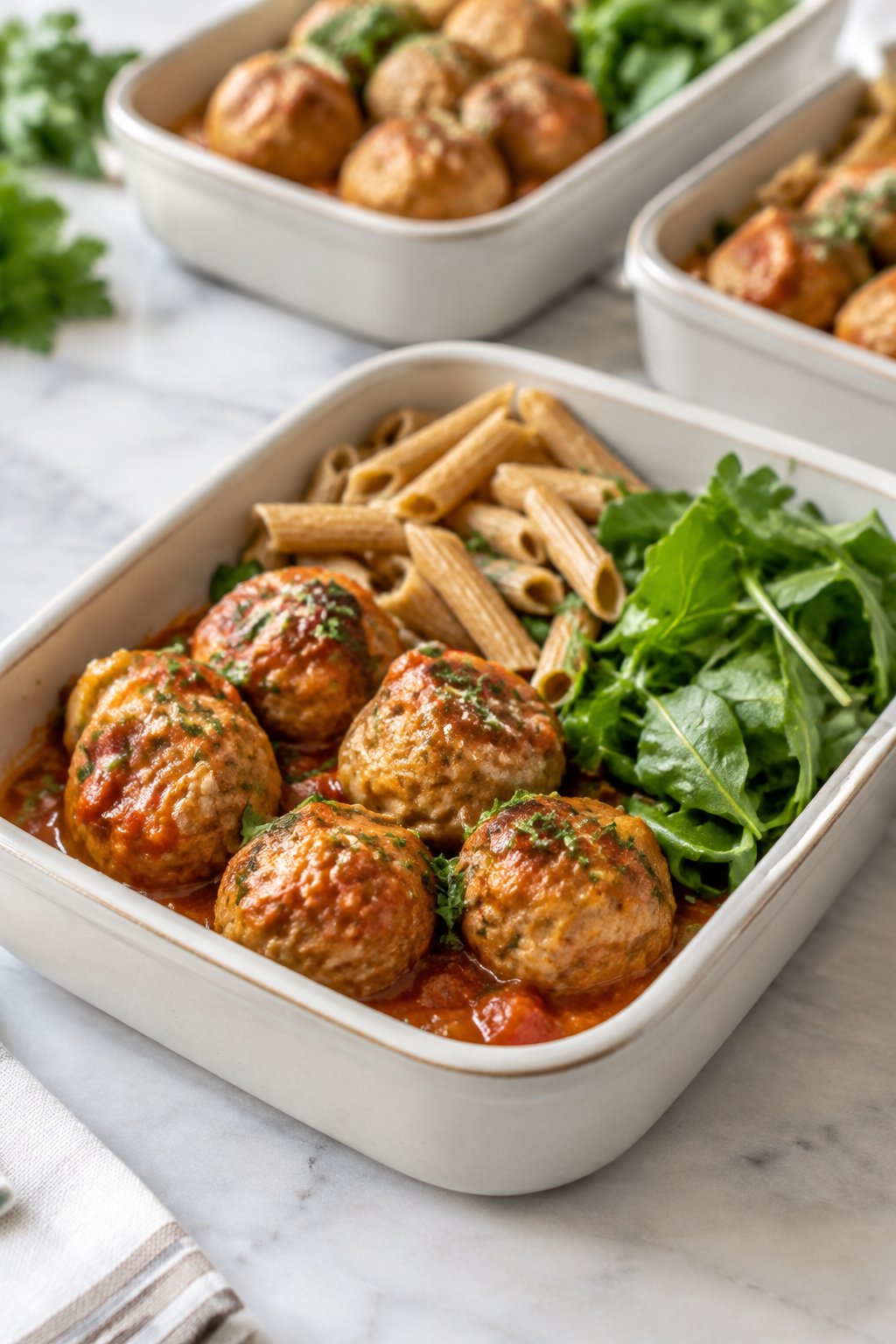
Ricotta helps your turkey meatballs stay tender through freezing and reheating.
Yield: 4 servings, 5 meatballs plus sides each
Estimated protein: 43 grams per serving
Prep: 20 minutes | Cook: 20–25 minutes
Ingredients
- 1 pound 93% lean ground turkey
- ½ cup part-skim ricotta
- 1 large egg
- ⅓ cup plain breadcrumbs
- ¼ cup grated Parmesan
- 2 garlic cloves, minced
- 1 teaspoon Italian seasoning
- ½ teaspoon salt
- 2 cups marinara sauce
- 8 ounces dry whole-wheat pasta
- 4 cups baby spinach
Step By Step Instructions
- Heat your oven to 400°F. Line a sheet pan with parchment.
- Gently combine your turkey, ricotta, egg, breadcrumbs, Parmesan, garlic, seasoning, and salt.
- Shape into 20 meatballs. Bake for 18–22 minutes, until the centers reach 165°F.
- Cook your pasta according to its package directions. Add the spinach during the last minute, then drain.
- Warm the marinara in a saucepan. Coat the meatballs with sauce and divide among four containers with the pasta and spinach.
Storage: Refrigerate for 3–4 days or freeze for up to 3 months. For flexible meals, freeze your meatballs in sauce separately from the pasta. Use zucchini noodles for a lower-carbohydrate side; your protein total will decrease slightly.
4) Balsamic-Glazed Mini Meatloaves
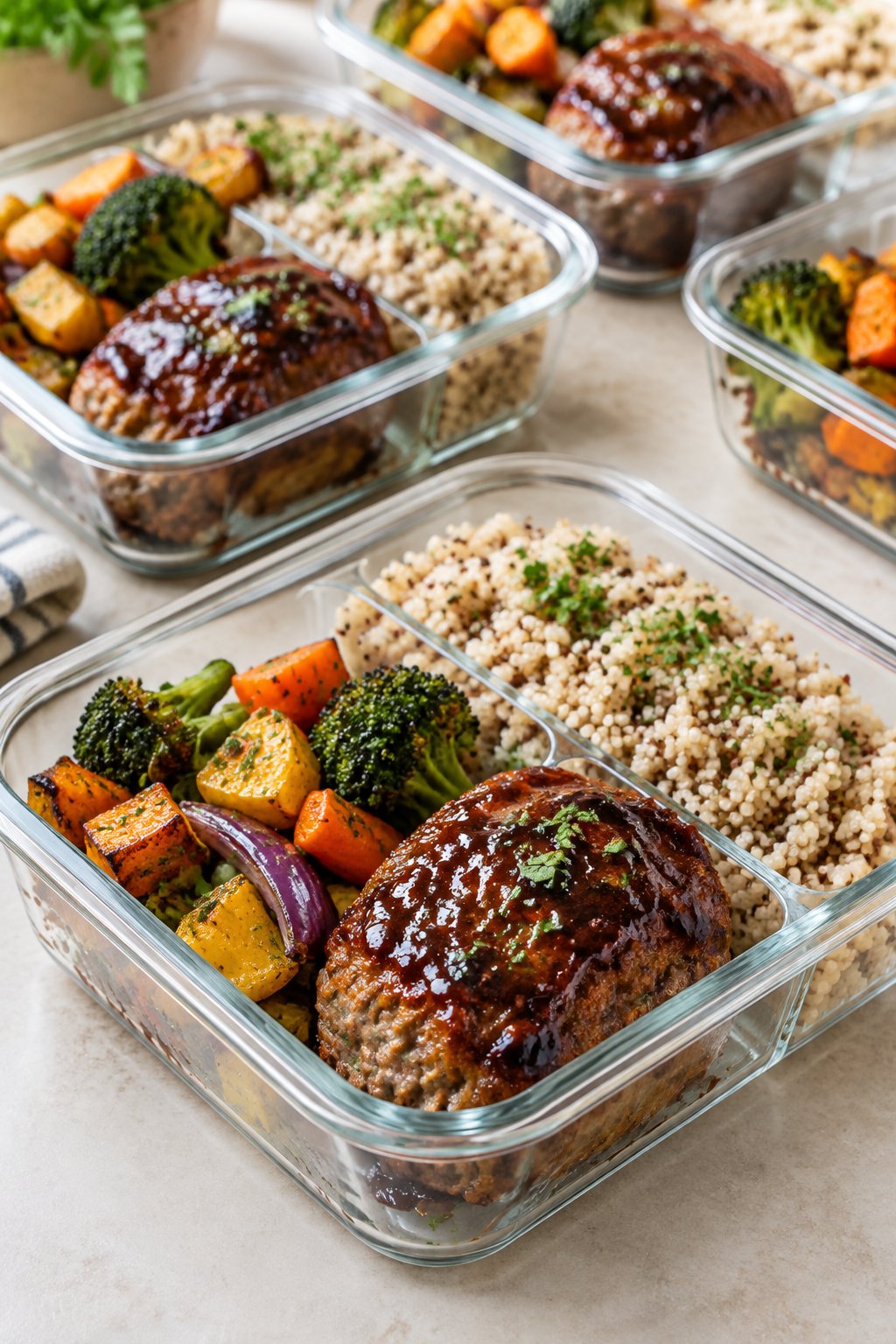
Individual meatloaves give you easy portions and cook faster than a full-size loaf.
Yield: 4 servings, 2 mini meatloaves plus sides each
Estimated protein: 37 grams per serving
Prep: 15 minutes | Cook: 25–30 minutes
Ingredients
- 1¼ pounds 93% lean ground beef
- 1 large egg
- ½ cup quick oats
- ⅓ cup milk
- ½ small onion, finely grated
- 1 teaspoon garlic powder
- ½ teaspoon each salt and black pepper
- ¼ cup ketchup
- 2 tablespoons balsamic vinegar
- 1 pound carrots, cut into thin sticks
- 1 tablespoon olive oil
- 2 cups cooked quinoa
Step By Step Instructions
- Heat your oven to 400°F. Line a large sheet pan with parchment.
- Mix your oats and milk; let stand for 5 minutes. Gently mix in the beef, egg, onion, garlic powder, salt, and pepper.
- Shape into eight small loaves and arrange on half the pan.
- Toss your carrots with olive oil and spread on the other half.
- Combine the ketchup and vinegar. Brush over the loaves.
- Bake for 25–30 minutes, until your beef reaches 160°F and the carrots are tender. Portion with the quinoa.
Storage: Refrigerate for 3–4 days or freeze for up to 3 months. Pack each pair of meatloaves with a spoonful of pan juices to help retain moisture.
5) Slow Cooker Chicken Pozole Verde
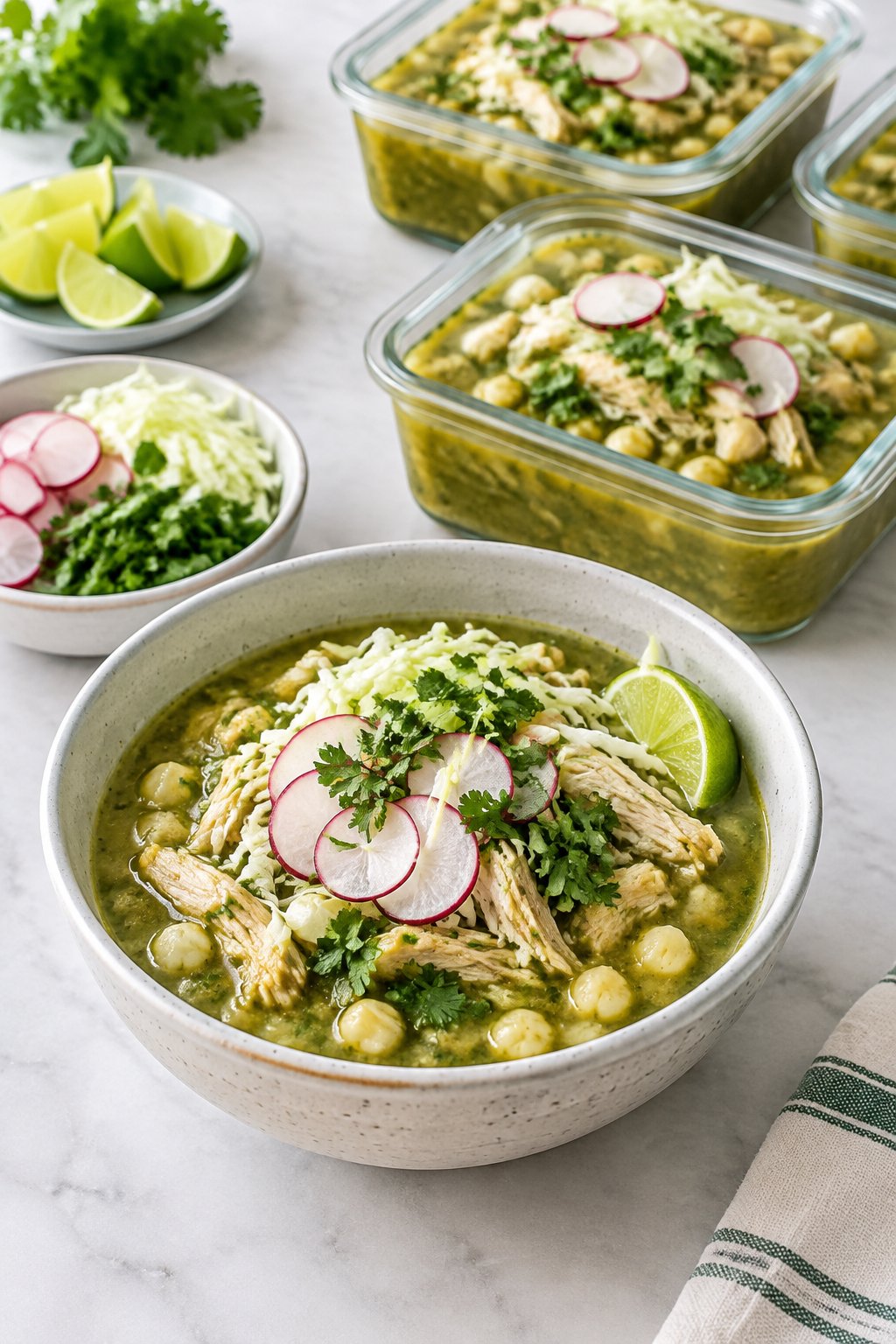
This salsa-verde shortcut gives you a brothy chicken pozole that freezes well in individual portions.
Yield: 6 servings, about 2 cups each
Estimated protein: 37 grams per serving
Prep: 15 minutes | Cook: 4–5 hours on high or 6–7 hours on low
Ingredients
- 2 pounds thawed boneless, skinless chicken breasts
- 2 cans (15 ounces each) white hominy, drained
- 1 jar (16 ounces) salsa verde
- 4 cups low-sodium chicken broth
- 1 medium onion, diced
- 3 garlic cloves, minced
- 2 teaspoons ground cumin
- 1 teaspoon dried oregano
- 2 cups shredded cabbage
- 4 radishes, thinly sliced
- ¼ cup chopped cilantro
- 2 limes, cut into wedges
Step By Step Instructions
- Place your chicken, hominy, salsa verde, broth, onion, garlic, cumin, and oregano in a 6-quart slow cooker.
- Cover and cook on high for 4–5 hours or low for 6–7 hours, until the chicken reaches 165°F and shreds easily.
- Transfer your chicken to a plate and shred with two forks. Return it to the broth.
- Divide into six portions. Pack the cabbage, radishes, cilantro, and lime separately.
- Add your cold toppings after reheating the soup.
Storage: Refrigerate for 3–4 days or freeze the soup base for up to 3 months. Choose mild salsa verde if you prefer gentle heat; taste before adding any salt.
6) Chickpea Pasta Salad With Edamame
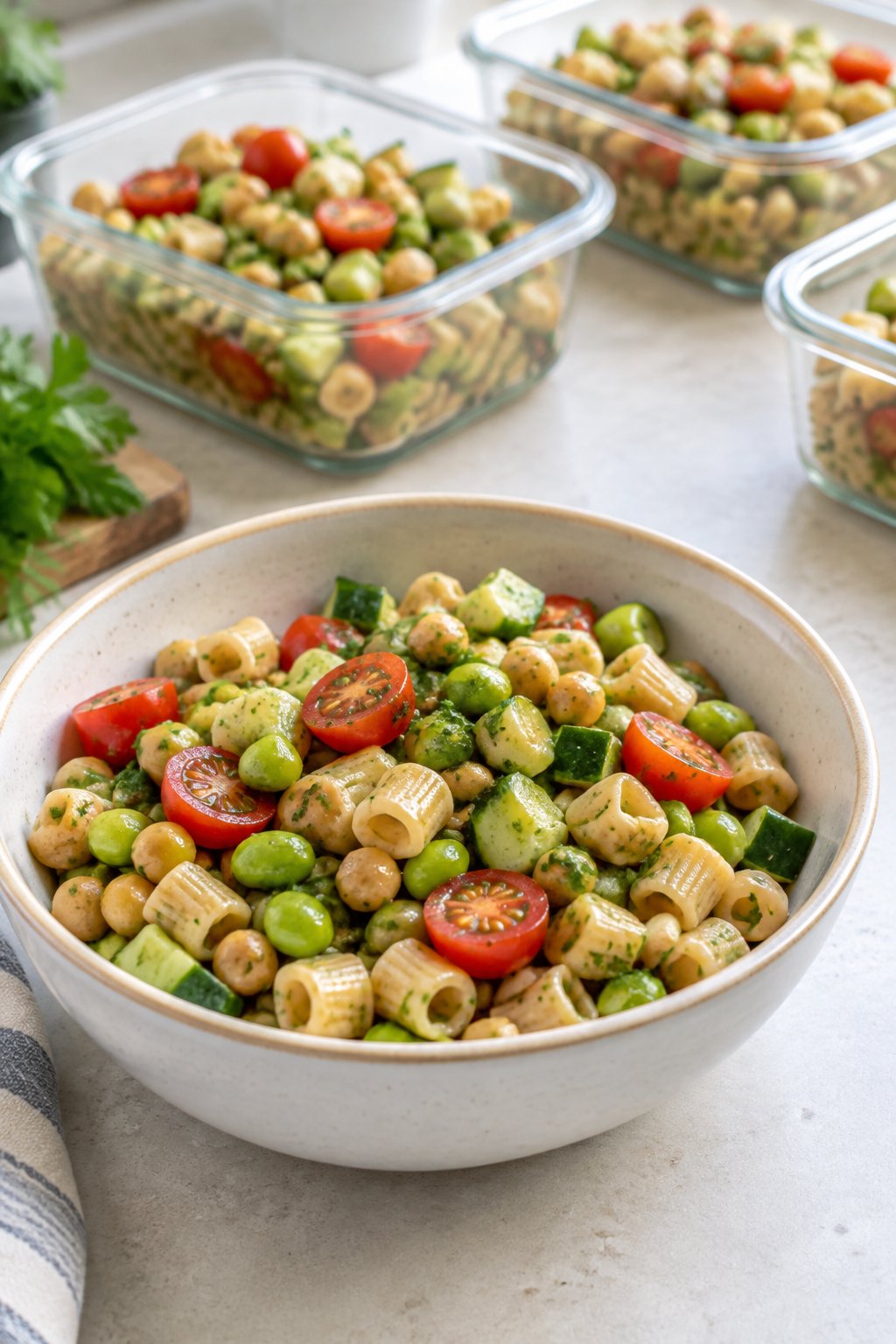
Adding edamame gives your chickpea pasta salad a meaningful protein boost while keeping the meal plant-based.
Yield: 4 servings, about 2 cups each
Estimated protein: 26 grams per serving
Prep: 15 minutes | Cook: 10 minutes
Ingredients
- 8 ounces dry chickpea pasta
- 3 cups frozen shelled edamame
- 1 pint cherry tomatoes, halved
- 1 English cucumber, diced
- ¼ cup finely diced red onion
- ¼ cup chopped parsley
- 3 tablespoons olive oil
- 3 tablespoons lemon juice
- 1 teaspoon Dijon mustard
- ½ teaspoon each dried oregano and salt
- ¼ teaspoon black pepper
Step By Step Instructions
- Cook your chickpea pasta according to its package directions. Check it early so it holds its shape.
- Cook the edamame according to its package directions. Drain both well and rinse with cool water.
- Whisk your olive oil, lemon juice, mustard, oregano, salt, and pepper in a large bowl.
- Add the pasta, edamame, tomatoes, cucumber, onion, and parsley. Toss gently.
- Divide among four containers and refrigerate promptly.
Storage: Refrigerate for 3–4 days. Freezing softens the cucumber and tomatoes, so reserve this recipe for your refrigerated lunches. If you want a freezer component, freeze cooked edamame separately and assemble your salad after thawing.
7) Paprika Chicken With Crispy Chickpeas and Tomatoes
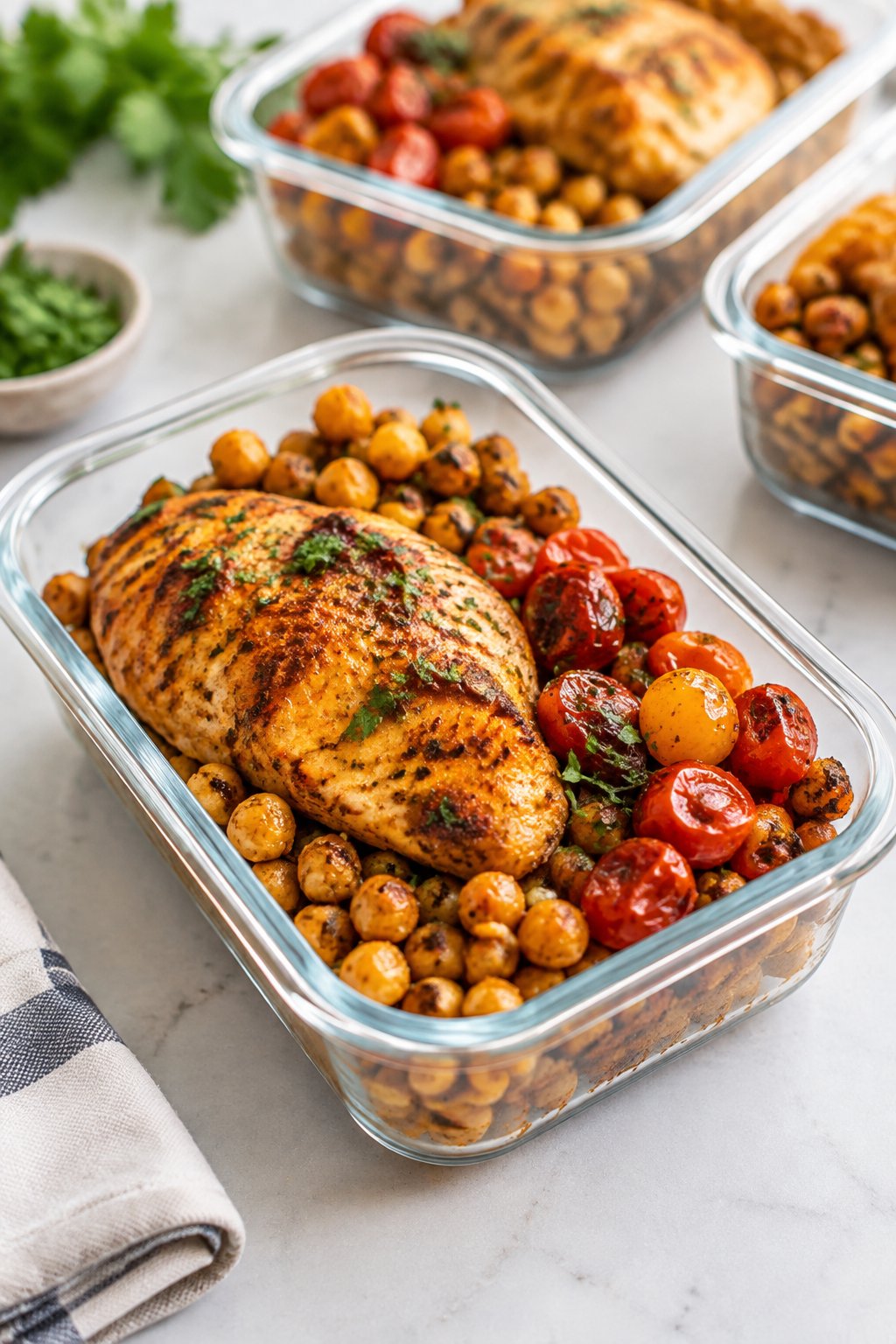
Smoked paprika gives your chicken a warm flavor, while roasted chickpeas add fiber and extra protein.
Yield: 4 servings
Estimated protein: 45 grams per serving
Prep: 15 minutes | Cook: 25–30 minutes
Ingredients
- 1½ pounds boneless, skinless chicken breasts, cut into 4 equal cutlets
- 1 can (15 ounces) chickpeas, drained, rinsed, and thoroughly dried
- 1 pint cherry tomatoes
- 2 tablespoons olive oil, divided
- 2 teaspoons smoked paprika
- 1 teaspoon garlic powder
- ¾ teaspoon salt, divided
- ¼ teaspoon black pepper
- ½ cup plain Greek yogurt
- 1 tablespoon lemon juice
Step By Step Instructions
- Heat your oven to 425°F. Set out two rimmed sheet pans.
- Toss your chickpeas with 1 tablespoon oil and ¼ teaspoon salt. Spread on one pan and roast for 25–30 minutes, shaking halfway through.
- Rub the chicken with the remaining oil, paprika, garlic powder, remaining salt, and pepper. Arrange on the second pan with the tomatoes.
- Roast your chicken and tomatoes for 18–25 minutes, until the chicken reaches 165°F.
- Mix the yogurt and lemon juice. Divide your chicken, chickpeas, and tomatoes among four containers; pack the sauce separately.
Storage: Refrigerate for 3–4 days or freeze the cooked components for up to 3 months. Your chickpeas soften in storage; reheat them separately in a 400°F air fryer for 4–6 minutes to restore some crunch.
8) Salmon Niçoise Salad
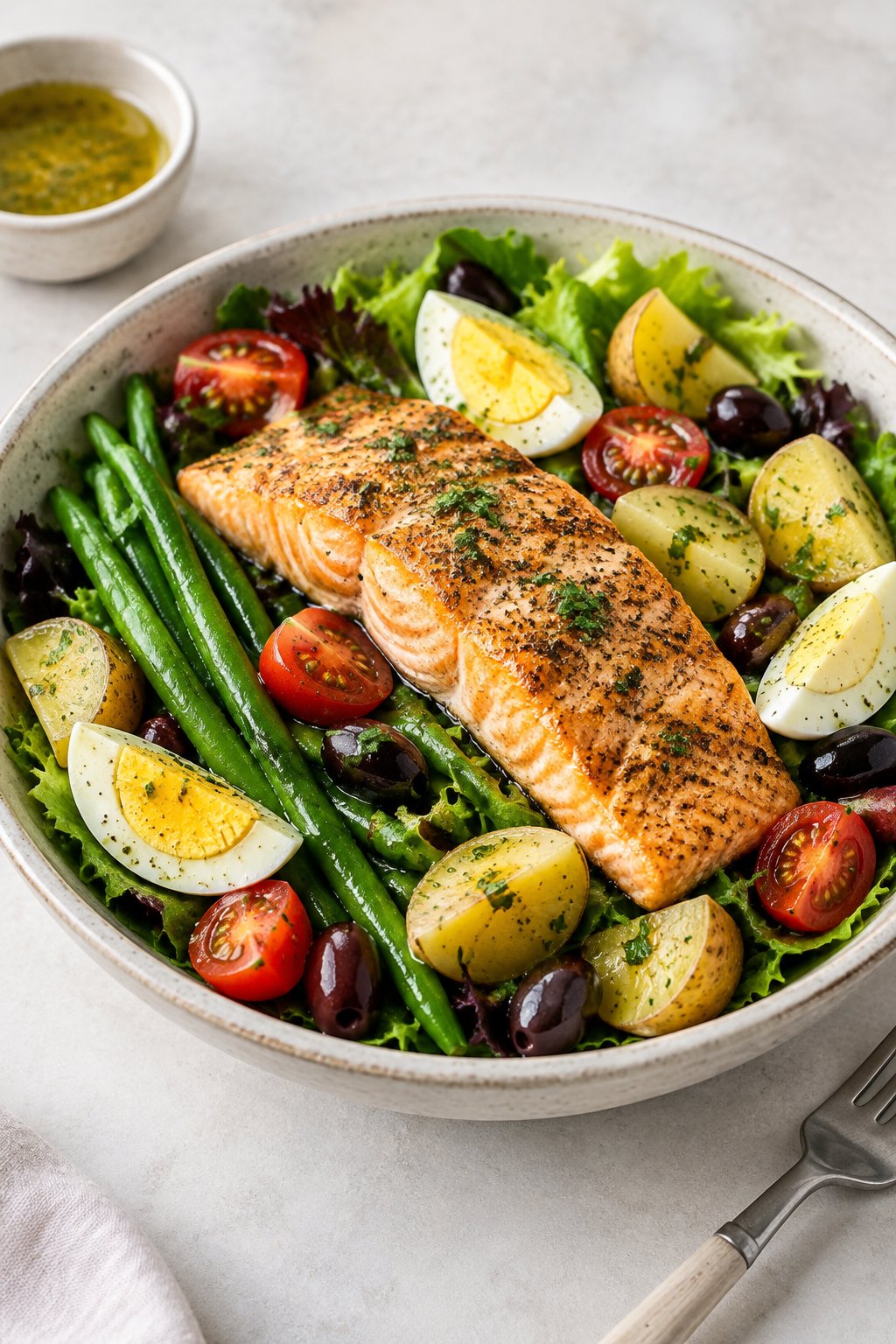
You get a substantial cold lunch from salmon and eggs, with potatoes and green beans adding texture.
Yield: 4 salads
Estimated protein: 39 grams per salad
Prep: 20 minutes | Cook: 20 minutes
Ingredients
- 4 salmon fillets, 5 ounces each
- 4 large eggs
- 1 pound baby potatoes, halved
- 12 ounces green beans, trimmed
- 6 cups mixed greens
- 1 pint cherry tomatoes
- ¼ cup pitted olives
- 3 tablespoons olive oil, divided
- 2 tablespoons lemon juice
- 2 teaspoons Dijon mustard
- ½ teaspoon salt
- ¼ teaspoon black pepper
Step By Step Instructions
- Heat your oven to 400°F. Brush the salmon with 1 tablespoon oil and season with the salt and pepper.
- Bake for 12–16 minutes, until your salmon reaches 145°F.
- Simmer the potatoes in water for 12–15 minutes, adding the green beans for the last 3 minutes. Drain and cool promptly.
- Cover your eggs with water in a separate saucepan. Bring to a boil, cover, turn off the heat, and let stand for 12 minutes. Transfer to ice water, then peel.
- Whisk the remaining oil with the lemon juice and mustard.
- Pack your greens, vegetables, olives, eggs, and salmon in four containers, with dressing separate.
Storage: Plan to eat within 2–3 days for best quality. Freeze only the cooked salmon for up to 2 months; assemble fresh salad ingredients after thawing.
9) Soba Noodle Salad With Shrimp and Ginger Vinaigrette
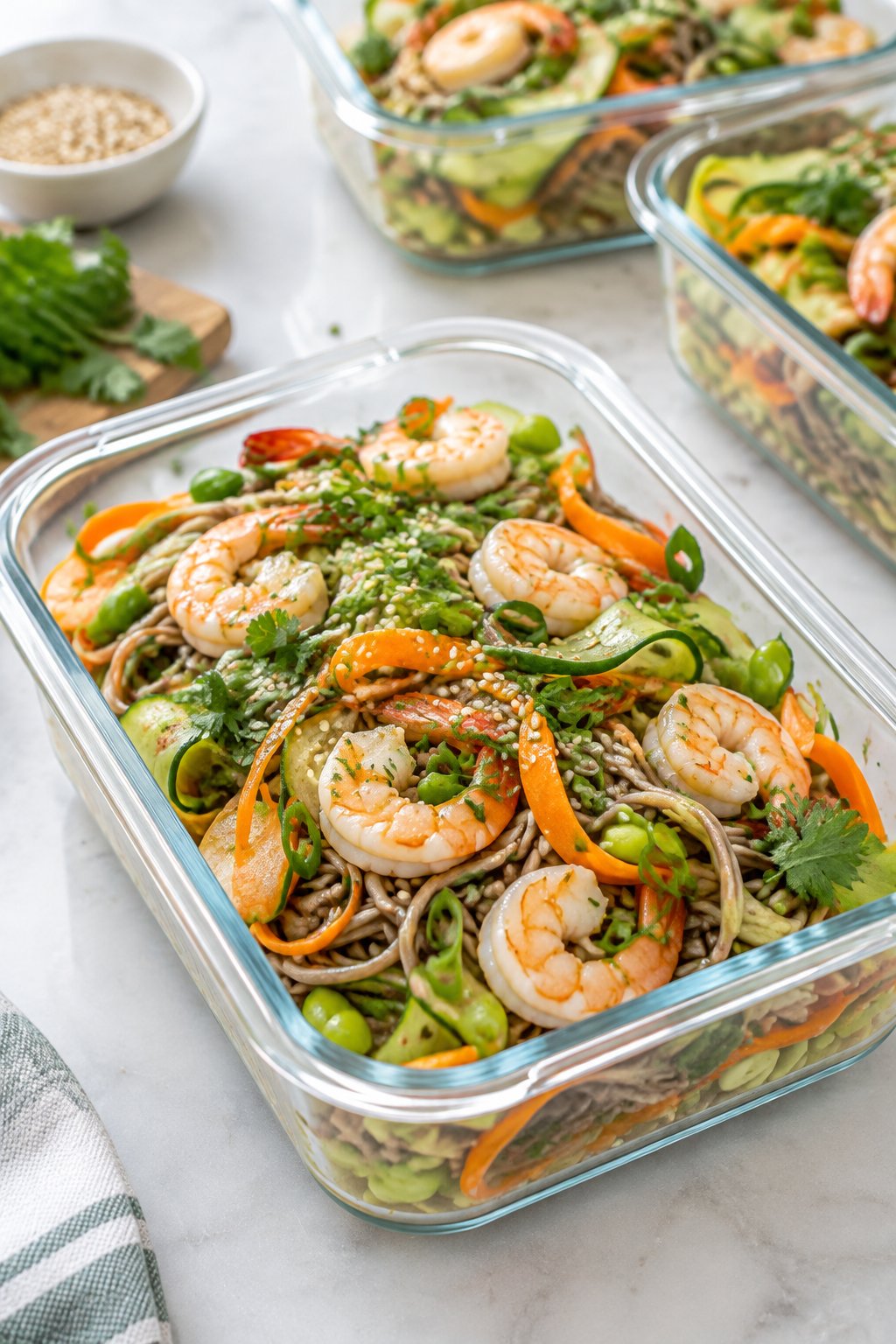
Quick-cooking shrimp and soba give you a chilled noodle lunch with a bright ginger dressing.
Yield: 4 servings
Estimated protein: 34 grams per serving
Prep: 20 minutes | Cook: 10 minutes
Ingredients
- 1¼ pounds raw peeled, deveined shrimp, thawed
- 8 ounces dry soba noodles
- 2 cups shredded red cabbage
- 1 cup shredded carrots
- 1 red bell pepper, thinly sliced
- 3 scallions, sliced
- 3 tablespoons reduced-sodium soy sauce
- 2 tablespoons rice vinegar
- 1 tablespoon each neutral oil and toasted sesame oil
- 2 teaspoons each honey and grated fresh ginger
- 1 tablespoon sesame seeds
Step By Step Instructions
- Cook your soba according to the package directions. Drain and rinse thoroughly under cool water.
- Bring a saucepan of water to a gentle simmer. Add your shrimp and cook for 2–4 minutes, until opaque and 145°F. Drain and cool promptly.
- Whisk the soy sauce, vinegar, oils, honey, and ginger.
- Toss your noodles with half the dressing. Divide among four containers with the shrimp, cabbage, carrots, pepper, and scallions.
- Add sesame seeds and pack the remaining dressing separately.
Storage: Schedule this lunch within 2–3 days for the best texture. Freeze cooked shrimp separately for up to 2 months; keep your assembled vegetable and noodle salad refrigerated. If you need gluten-free noodles, check for 100% buckwheat soba and use gluten-free tamari.
10) Sweet Potato, Egg, and Black Bean Breakfast Burritos
You can freeze these breakfast burritos individually and warm one whenever you need a filling morning meal.
Yield: 4 large burritos
Estimated protein: 26 grams per burrito
Prep: 20 minutes | Cook: 25 minutes
Ingredients
- 1 medium sweet potato, about 10 ounces, cut into ½-inch cubes
- 1 tablespoon olive oil
- ½ teaspoon each ground cumin and smoked paprika
- ¼ teaspoon salt
- 8 large eggs
- 1 can (15 ounces) black beans, drained and rinsed
- ½ cup shredded cheddar
- 4 large whole-wheat tortillas, about 10 inches
- ½ cup salsa, for serving
Step By Step Instructions
- Heat your oven to 425°F. Toss the sweet potato with the oil, spices, and salt. Roast on a sheet pan for 20–25 minutes, stirring halfway through.
- Whisk your eggs. Scramble in a nonstick skillet over medium-low heat for 5–7 minutes, until fully set and 160°F.
- Stir the beans into the eggs and heat through.
- Let your fillings stop steaming, then divide the egg mixture, sweet potato, and cheddar among the tortillas.
- Fold in the sides and roll tightly. Wrap each burrito in parchment and place in a freezer bag. Refrigerate or freeze promptly.
- Serve your salsa alongside after reheating.
Storage: Refrigerate for 3–4 days or freeze for up to 2 months. Keep wet salsa outside the wrap to help your tortilla hold together.
11) Spinach and Cottage Cheese Egg Muffins
Cottage cheese adds protein and moisture to your egg muffins, making them useful for quick breakfasts.
Yield: 12 muffins; 4 servings of 3 muffins
Estimated protein: 22 grams per serving
Prep: 15 minutes | Cook: 20–25 minutes
Ingredients
- 8 large eggs
- 1 cup low-fat cottage cheese
- ½ cup shredded cheddar
- 5 ounces frozen chopped spinach, thawed and squeezed dry
- ½ cup finely diced red bell pepper
- ¼ teaspoon each garlic powder, salt, and black pepper
- 1 teaspoon olive oil, for the muffin pan
Step By Step Instructions
- Heat your oven to 350°F. Thoroughly grease a 12-cup nonstick muffin pan with the oil.
- Whisk your eggs and cottage cheese until combined. For smoother muffins, blend these ingredients briefly.
- Stir in the cheddar, spinach, pepper, and seasonings.
- Divide evenly among the muffin cups, filling each about three-quarters full.
- Bake for 20–25 minutes, until the centers are set and reach 160°F.
- Rest for 5 minutes, then loosen the edges and transfer your muffins to a rack. Refrigerate promptly after portioning.
Storage: Refrigerate for 3–4 days or freeze for up to 2 months, with parchment between layers. Pair your serving with whole-grain toast or fruit when you want a larger breakfast.
12) High-Protein Lazy Lasagna
Short pasta gives you the familiar flavors of lasagna with easy stirring and portioning.
Yield: 6 servings
Estimated protein: 40 grams per serving
Prep: 15 minutes | Cook: 35 minutes
Ingredients
- 12 ounces dry whole-wheat rotini
- 1 pound 93% lean ground turkey
- 1 teaspoon olive oil
- 1 jar (24 ounces) marinara sauce
- 1½ cups low-fat cottage cheese
- 1½ cups shredded part-skim mozzarella
- ¼ cup grated Parmesan
- 5 ounces baby spinach
- 1 teaspoon Italian seasoning
- ½ teaspoon garlic powder
Step By Step Instructions
- Heat your oven to 375°F. Cook the pasta for 2 minutes less than its package directions, then drain.
- Heat your oil in a large skillet over medium-high heat. Add the turkey and cook for 7–10 minutes, breaking it apart, until it reaches 165°F.
- Stir in the marinara, spinach, Italian seasoning, and garlic powder. Simmer for 2 minutes.
- Fold in your pasta and cottage cheese. Transfer to a 9-by-13-inch baking dish.
- Scatter the mozzarella and Parmesan over the top.
- Bake for 20–25 minutes, until bubbling and 165°F in the center. Rest for 10 minutes before dividing into six portions.
Storage: Refrigerate for 3–4 days or freeze for up to 3 months. You’re using cottage cheese here as an explicit protein addition; blend it before mixing if you prefer a smooth sauce.
13) Low-Carb Beef Burger Bowls
You get the flavors of a cheeseburger in a bowl that keeps your cooked beef separate from crisp vegetables.
Yield: 4 bowls
Estimated protein: 39 grams per bowl
Prep: 15 minutes | Cook: 10–12 minutes
Ingredients
- 1¼ pounds 93% lean ground beef
- ½ teaspoon each garlic powder, salt, and black pepper
- 8 cups chopped romaine
- 1 pint cherry tomatoes, halved
- ½ cucumber, diced
- ½ cup sliced dill pickles
- ½ cup shredded cheddar
- ¾ cup plain nonfat Greek yogurt
- 2 tablespoons reduced-sugar ketchup
- 1 tablespoon yellow mustard
- 1 tablespoon pickle brine
Step By Step Instructions
- Heat a large skillet over medium-high heat. Add your beef and seasonings.
- Cook for 8–12 minutes, breaking up the meat, until it reaches 160°F. Drain excess liquid.
- Stir together your yogurt, ketchup, mustard, and pickle brine.
- Divide the romaine, tomatoes, cucumber, pickles, and cheddar among four containers.
- Portion your beef into separate microwave-safe containers and pack the sauce in small sealed cups.
- Warm the beef before serving, then spoon it over your vegetables and add the sauce.
Storage: Refrigerate the components for 3–4 days. Freeze only your cooked beef for up to 3 months. Dry the lettuce well before packing so your bowl stays crisp.
14) Air Fryer Falafel Bowls With Quinoa and Greek Yogurt Sauce
Quinoa and a generous Greek yogurt sauce raise the protein in these easy chickpea falafel bowls.
Yield: 4 bowls, 4 small falafel each
Estimated protein: 27 grams per bowl
Prep: 25 minutes, plus 20 minutes chilling | Cook: 12–15 minutes per batch
Ingredients
- 2 cans (15 ounces each) chickpeas, drained, rinsed, and dried
- ½ small onion, roughly chopped
- ½ cup parsley
- 2 garlic cloves
- 2 teaspoons ground cumin
- ½ teaspoon each ground coriander and salt
- ⅓ cup all-purpose flour
- 2 tablespoons olive oil, divided
- 2 cups cooked quinoa
- 2 cups plain nonfat Greek yogurt
- 2 tablespoons lemon juice
- 1 cucumber, diced
- 1 pint cherry tomatoes, halved
Step By Step Instructions
- Pulse your chickpeas, onion, parsley, garlic, spices, and salt in a food processor until finely chopped. Leave some texture.
- Pulse in the flour and 1 tablespoon oil. Chill for 20 minutes, then shape into 16 small, ½-inch-thick patties.
- Preheat your air fryer to 375°F. Brush the patties with the remaining oil.
- Air-fry in a single layer for 12–15 minutes, flipping halfway, until browned and firm.
- Mix your yogurt and lemon juice. Divide the falafel, quinoa, cucumber, and tomatoes among four bowls, keeping the sauce separate.
Storage: Refrigerate for 3–4 days. Freeze falafel and quinoa for up to 3 months; prepare fresh vegetables and sauce after thawing. This canned-chickpea adaptation gives you softer centers than traditional soaked-chickpea falafel.
15) Roasted Eggplant and Lentil Veggie Burgers
Roasted eggplant gives your lentil burgers a soft center, while oats help the patties hold their shape.
Yield: 4 burgers with buns and sauce
Estimated protein: 25 grams per serving
Prep: 25 minutes | Cook: 50–60 minutes
Ingredients
- 1 medium eggplant, about 1 pound, cut into 1-inch cubes
- 1 tablespoon olive oil
- 2 cups cooked lentils, drained very well
- 1 cup rolled oats
- ¼ cup chopped walnuts
- 1 large egg
- 1 teaspoon each smoked paprika and ground cumin
- ½ teaspoon salt
- 4 whole-wheat burger buns
- 1 cup plain nonfat Greek yogurt
- 1 tablespoon lemon juice
- ¼ teaspoon garlic powder
- 4 lettuce leaves and 4 tomato slices
Step By Step Instructions
- Heat your oven to 425°F. Toss the eggplant with oil and roast on a parchment-lined pan for 25–30 minutes, until tender.
- Reduce your oven to 400°F. Pulse the oats and walnuts in a food processor until coarsely ground.
- Add the lentils, eggplant, egg, paprika, cumin, and salt. Pulse until your mixture holds together, leaving some lentils whole.
- Shape into four patties on fresh parchment. Bake for 25–30 minutes, flipping carefully halfway, until firm and 160°F in the center.
- Mix your yogurt with lemon juice and garlic powder. Serve each patty on a bun with sauce, lettuce, and tomato.
Storage: Refrigerate patties for 3–4 days or freeze for up to 3 months. The yogurt sauce is your added protein boost; pack it separately from your buns and fresh toppings.
How to Plan an Efficient Sunday Prep Session
You’ll keep Sunday manageable by choosing two main recipes and using shared ingredients across them. Allow about 2 hours for a simple pairing; start your slow cooker earlier if pozole is on your menu.
Which Ingredients Can You Share Across Meals?
Choose recipes with overlapping groceries before you write your shopping list. Your burrito bowls and breakfast burritos share black beans, while quinoa works with both mini meatloaves and falafel.
Use one tub of Greek yogurt for burger sauce and a lemon dressing. Wash your produce together, then portion it for each recipe before handling raw meat.
Keep seasonings separate until you divide your ingredients. That lets you turn one package of chicken into smoky burrito filling and sesame chicken without giving both meals the same flavor.
What Should You Cook First?
Start your longest cooking task first, such as the slow cooker or brown rice. Heat the oven while you measure ingredients and chop sturdy vegetables.
Roast vegetables while you prepare your meatballs or egg mixture. If your recipes need different oven temperatures, cook them in sequence; use a food thermometer to confirm doneness.
Prepare cold sauces after your raw proteins are handled and your work surface is cleaned. Leave enough time at the end to portion food into shallow containers and refrigerate it promptly.
How Can You Keep Your Grocery Bill Down?
Build your menu around proteins you already have and your store’s current unit prices. Compare the price per pound for family-size chicken packages, then freeze any raw portions you won’t cook promptly.
Use frozen spinach in egg muffins and frozen edamame in pasta salad. Buy store-brand beans, oats, and rice, and measure only the dry amount your recipes need.
Choose one seafood meal for early in the week if salmon and shrimp stretch your budget. Use lentils or eggs for another meal, and buy delicate herbs only when you have several uses planned.
How to Store and Reheat Your Prepared Meals
You protect both food safety and texture by cooling meals promptly, separating wet toppings, and reheating only the portion you need. Label each container with its name and cooking date before it goes into storage.
Which Portions Should You Refrigerate or Freeze?
Set your refrigerator to 40°F or below and your freezer to 0°F. Keep the meals you’ll eat within 3–4 days refrigerated, using the shorter quality windows listed for seafood salads.
Freeze your designated later-week portions on prep day after prompt cooling. Use small containers so you can thaw one serving without warming an entire batch.
Keep lettuce and cucumber out of hot-meal freezer portions. Pack yogurt sauces separately, since freezing changes their texture, and add fresh avocado at serving time.
How Should You Cool and Pack Cooked Food?
Divide hot food into shallow containers and refrigerate within 2 hours of cooking. Shorten that window to 1 hour if your room or outdoor temperature is above 90°F.
Put hot food into the refrigerator in small portions without waiting for it to reach room temperature. For a large pot of pozole, divide it into smaller containers or use an ice-water bath before refrigerating promptly.
Leave space around warm containers so cold air circulates. Use clean utensils for packing, keep raw meat away from cooked food, and tighten lids once your portions are chilled.
How Can You Reheat Meals Without Drying Them Out?
Heat your leftovers to 165°F throughout, checking several spots with a food thermometer. Thaw frozen portions overnight in the refrigerator, or use your microwave’s defrost setting immediately before reheating.
Add 1–2 tablespoons of water or broth to rice bowls and pasta. Cover with a vented microwave-safe lid, heat in short intervals, and stir halfway through to reduce cold spots.
For meatloaves or lasagna, cover your portion and warm it in a 350°F oven until it reaches 165°F. Keep salad greens and cold sauces aside, then add them after heating.
Frequently Asked Questions
You can use these answers to match your portions and recipe choices to your schedule and eating goals.
Can I meal prep on Sunday for the whole week?
Yes, you can cover your full workweek by dividing your Sunday batch between the refrigerator and freezer. Follow the storage plan above, then move a frozen portion to your refrigerator the night before you need it.
How much protein should each meal prep portion contain?
You can use roughly 20–40 grams of protein per meal as a practical starting point, then adjust for your daily needs and meal size. Your age, activity level, and health conditions affect your target; a registered dietitian can help you set a personal amount.
Which of these meals freeze best?
Choose turkey ricotta meatballs, chicken pozole, breakfast burritos, or lazy lasagna when freezer quality is your priority. Freeze the meatballs in sauce, portion your soup individually, and leave fresh garnishes outside the freezer containers.
Which meals are easiest to adapt for weight loss?
Start with burger bowls, paprika chicken, or egg muffins when you want easy control over portion size and added fats. Keep your protein serving steady, add vegetables, and measure oil or cheese; your calorie balance over time drives weight change.
Which meals work best for a low-carb diet?
Choose burger bowls or spinach and cottage cheese egg muffins for the lowest-carbohydrate starting points here. Serve your turkey meatballs with zucchini noodles for another option, and check sauce labels for added sugar.
What are the cheapest protein sources for Sunday meal prep?
Start your price comparison with dry lentils, beans, eggs, and large tubs of cottage cheese or Greek yogurt. Compare unit prices with sale-priced chicken and ground turkey, then choose two proteins that you can use across several portions.


