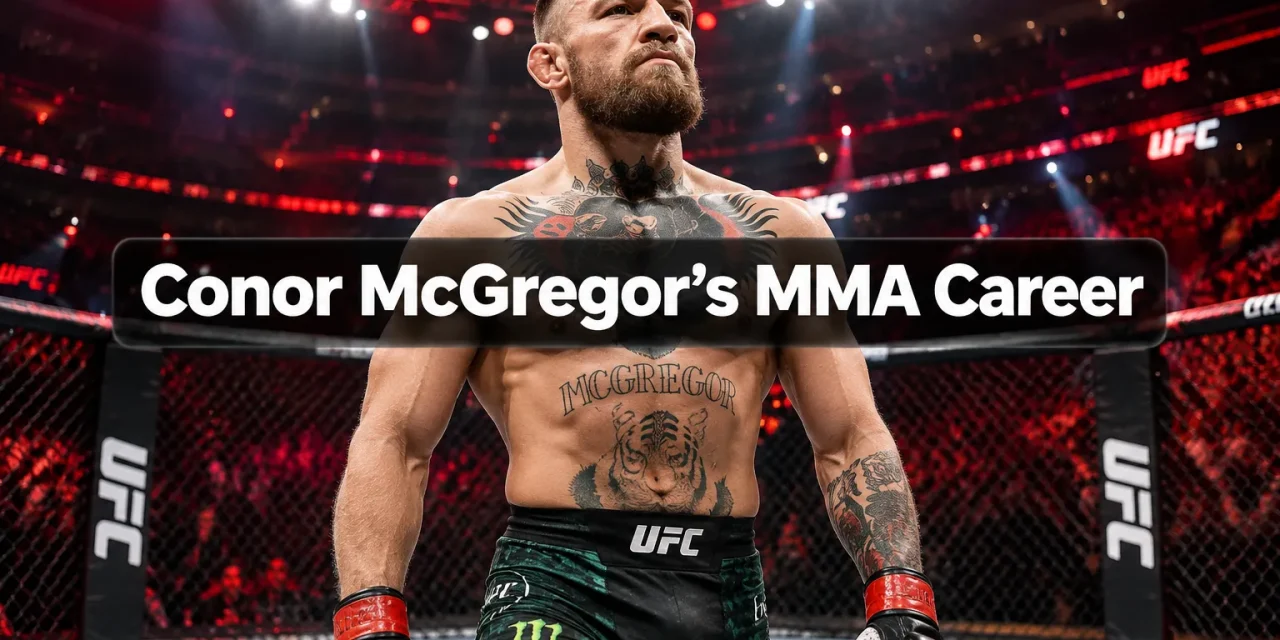
Sixty-nine seconds. That’s how long it took for Conor McGregor’s most anticipated comeback to unravel at UFC 329, when a knee injury on an opening kick ended his return before most fans had settled into their seats.[4][5][9] For a grappler, that number stings a little differently, it’s roughly the time it takes to pass a stubborn half guard. But for McGregor, it was the latest chapter in a career that has always moved at two speeds: electric highlight-reel violence, and long, injury-interrupted silence.
This breakdown of Conor McGregor’s MMA career: striking system, biggest fights, injuries, and legacy isn’t another highlight reel. You’re going to roll into the heart of how his southpaw counter-striking actually worked, why his takedown defense mattered as much as his left hand, and what his late-career injuries mean for how history will remember him.
Key Takeaways
- McGregor’s striking identity was built on southpaw timing, distance traps, and a counter left hand rather than pure volume or aggression.
- His biggest career-defining wins, Aldo, Alvarez, Cerrone, came from reading opponents’ rhythm before they could read his.
- A tibia fracture against Dustin Poirier in 2021 and a knee injury against Max Holloway at UFC 329 in 2026 are the two defining physical setbacks of his later career.[4][5][9]
- McGregor has one fight left on his UFC contract and has floated a mid-2027 target, alongside a growing ownership stake in Bare Knuckle Fighting Championship (BKFC).[3][5][9]
- His legacy now sits at the crossroads of historic two-division champion status and serious questions about durability, timing, and off-cage controversy.[3][9][10]
The Southpaw Blueprint Behind Conor McGregor’s MMA Career Striking System
Most casual fans remember the knockouts. What they skip past is the engineering behind them. McGregor fights from a southpaw stance, which on its own creates a lead-hand advantage against the majority of orthodox opponents. But the real weapon was never just the stance, it was what he did inside it.
His system relied on three habits repeated fight after fight:
- Range-finding jabs and lead hooks used less to hurt and more to measure exact distance before committing.
- Baiting opponents forward with slight retreats, then exploding with a counter left straight down the centerline.
- Switch-stance feints that disguised which hand was about to fire, buying a half-second most opponents never recovered from.
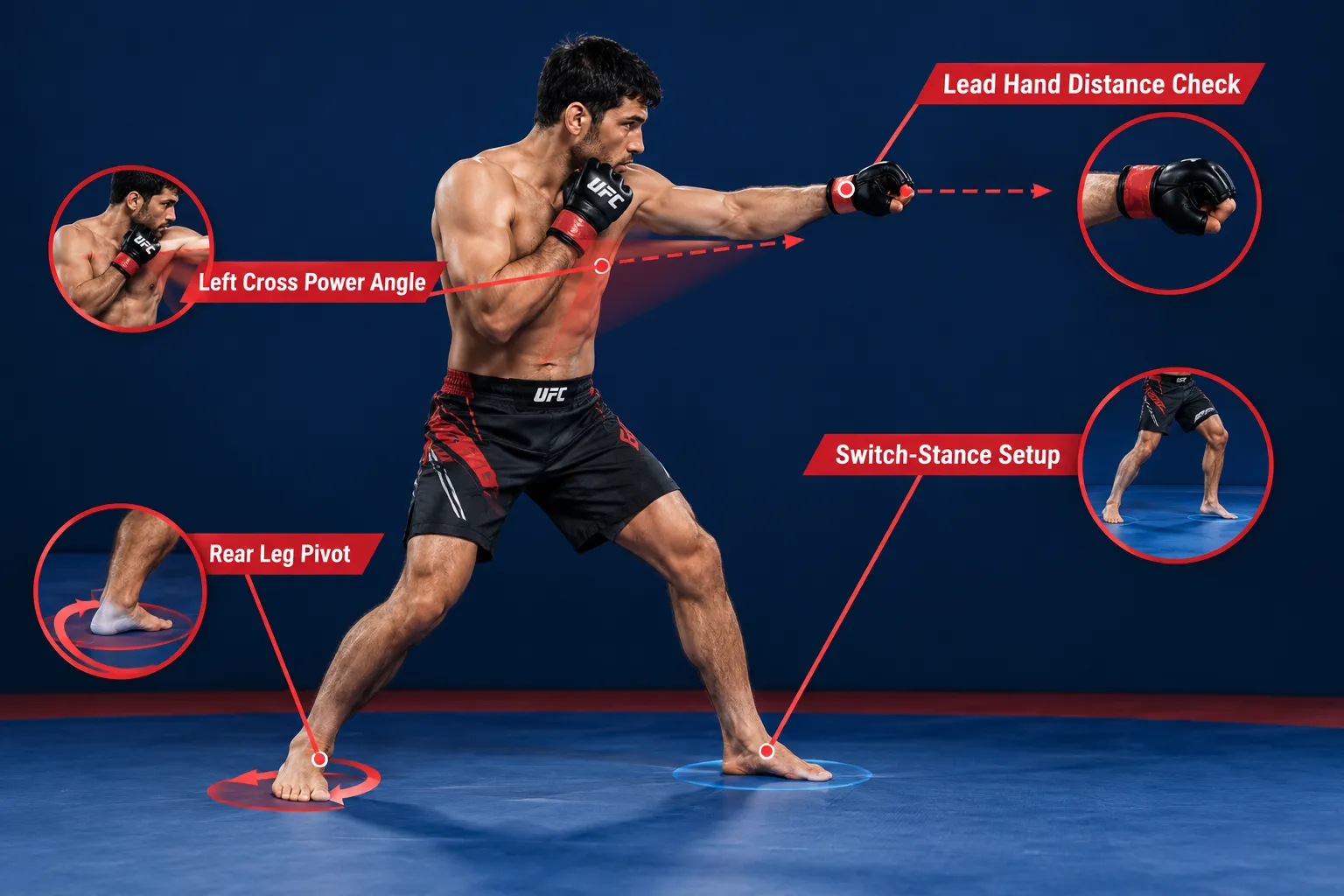
If you’ve spent any time studying distance management on the mats, the same principle that governs a good guard top attack in BJJ, where positioning before the submission attempt is everything, you already understand the logic. McGregor rarely threw his best shot first. He threw it second, after the opponent had already committed to a bad angle.
Why the Left Hand Worked So Often
The counter left wasn’t raw power alone. It worked because McGregor paired it with precise footwork that kept him just outside punching range until the exact moment he wanted contact. Analysts and fans alike still describe him as arguably the biggest superstar combat sports has produced, and that reputation was built on fights where this timing-based system clicked perfectly.[10][3]
Distance Traps, Left-Hand Setups, and Takedown Defense in Conor McGregor’s MMA Career
Striking only tells half the story. A southpaw counter-puncher is only as good as his ability to stay standing, and this is where McGregor’s grappling instincts, often underrated by fans who only watch for knockouts, mattered just as much.
Distance traps worked like this: McGregor would deliberately give up a small amount of ground, inviting an opponent to close in with a predictable entry, usually a jab or a level change. The moment that entry telegraphed, he’d pivot off the centerline and fire.
Takedown defense was the quieter skill behind the loud knockouts. Wrestlers who tried to change levels against him often found themselves stuffed at the hip, because his base and sprawl timing denied the clean shot before it ever got going. That’s a skill set familiar to anyone who has trained against a strong wrestling background, the kind of pressure explored in our breakdown of a college wrestler testing a jiu-jitsu purple belt, where timing and hip positioning decide the exchange long before any submission comes into play.
“Precision beats power when power doesn’t know where it’s going.” It’s a line that sums up McGregor’s best years better than any highlight reel.
Biggest Fights That Shaped Conor McGregor’s MMA Career
No discussion of Conor McGregor’s MMA career: striking system, biggest fights, injuries, and legacy is complete without the wins that built his legend. These weren’t just knockouts, they were case studies in his counter-striking system working exactly as designed.
Jose Aldo (UFC 194): A 13-second finish that remains one of the most replayed knockouts in UFC history. Aldo rushed the centerline; McGregor’s counter left was already waiting.
Eddie Alvarez (UFC 205): A two-division title night built on distance control, with Alvarez repeatedly walking into the exact range McGregor wanted.
Donald Cerrone (UFC 246): A 40-second finish that showed McGregor’s timing hadn’t disappeared, even after time away from the Octagon.
Not every famous fight was a win, and that matters for a complete picture. Losses to Nate Diaz, Khabib Nurmagomedov, and Dustin Poirier each exposed different gaps, chin durability against volume pressure, grappling control against elite wrestlers, and late-fight composure. Fighters who can finish from unexpected positions remind us why grappling IQ matters even in a striker’s sport, a theme covered well in our look at the best MMA comebacks built on jiu-jitsu submissions.
Quick Reference: Career-Defining Moments
| Fight | Outcome | What It Revealed |
|---|---|---|
| Jose Aldo, UFC 194 | Win (KO) | Counter-left timing at its sharpest |
| Eddie Alvarez, UFC 205 | Win (TKO) | Two-division title run, distance mastery |
| Khabib Nurmagomedov, UFC 229 | Loss (Submission) | Vulnerability against elite control grapplers |
| Dustin Poirier, UFC 264 | Loss (Injury) | Catastrophic tibia fracture |
| Max Holloway, UFC 329 | Loss (TKO, injury) | Knee injury ended the comeback in seconds[4][5][9] |
The Injury Toll: From a Broken Tibia to the UFC 329 Knee Tear
This is the part of Conor McGregor’s MMA career: striking system, biggest fights, injuries, and legacy that fans wish didn’t need its own section, but it does, because it now defines his late-career trajectory more than any single win.
At UFC 264 in 2021, McGregor suffered a broken tibia against Dustin Poirier, requiring surgeons to insert a titanium rod from knee to ankle. He used a mobility scooter during the recovery and later described the rebuilt shin as “unbreakable”, a phrase that became almost mythical among fans tracking his comeback timeline.
Then came UFC 329 on July 11, 2026, at T-Mobile Arena in Las Vegas, his first fight in more than five years, against Max Holloway at welterweight.[1][6][10] Roughly 69 seconds in, McGregor threw an opening roundhouse kick and suffered a knee injury that led to an immediate stoppage and a TKO loss.[4][5][9] Follow-up scans confirmed tears of the ACL and meniscus in his right knee, with some reporting noting the damage echoed issues from his earlier fights with Holloway.[5][9]
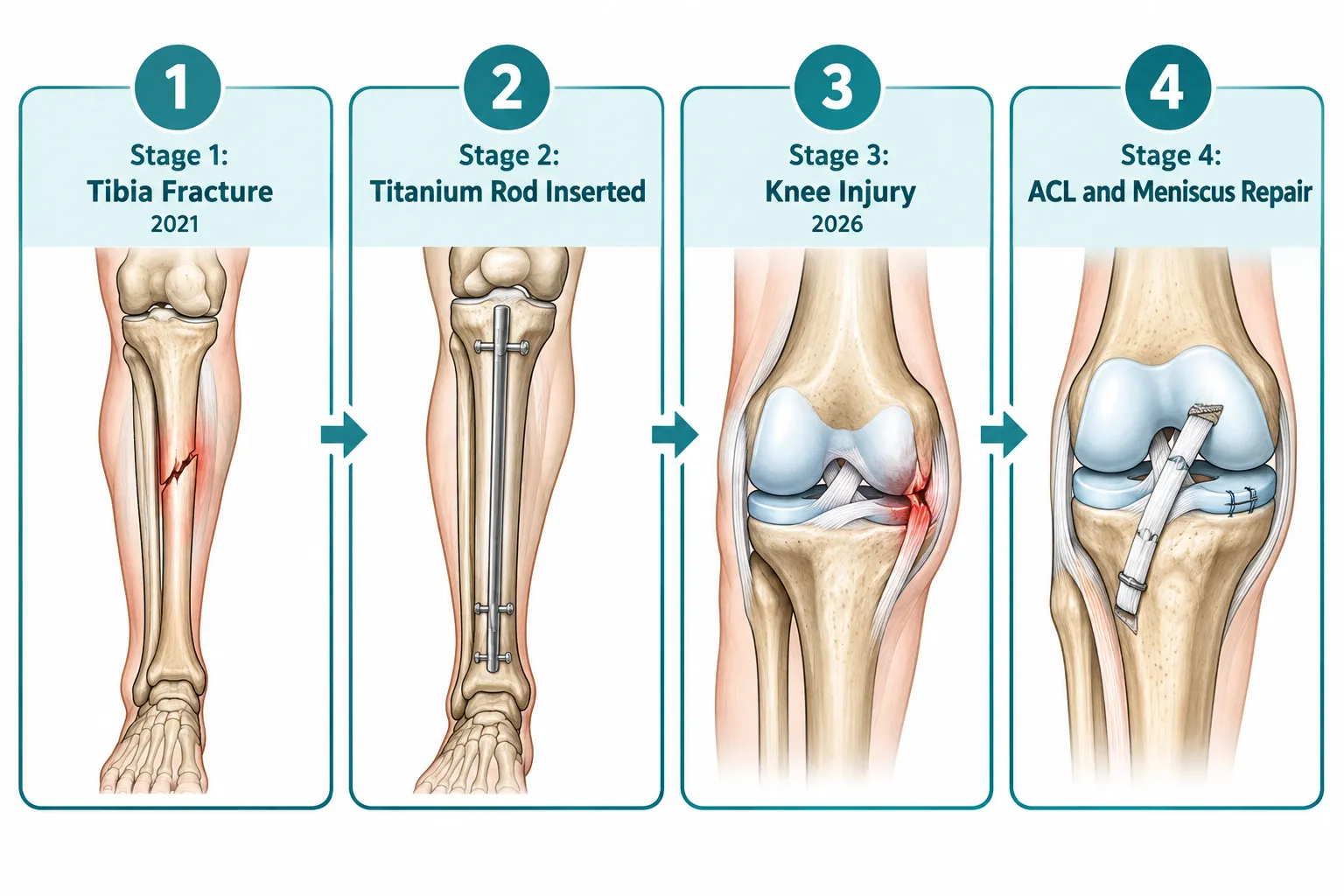
McGregor underwent reconstructive knee surgery and publicly announced the operation had “repaired” his knee, vowing another comeback.[5] He laid out his path forward in a now widely quoted five-step plan:
- Surgery
- Prehab
- Return to martial arts practice
- Go again
- Final fight of the contract[4][7][8]
Questions about ring longevity after serious leg trauma aren’t unique to striking sports, similar durability concerns come up anywhere repeated joint stress is part of the job, including the kind of physical toll discussed in our piece on whether steroids really improve jiu-jitsu performance, where recovery and tissue health are just as important as raw output.
UFC 329 and the Road Ahead for Conor McGregor’s MMA Career
McGregor has one fight remaining on his current UFC contract, though no official bout or date has been confirmed by the promotion.[3][7] He has called for a potential “Last Dance” rematch with Holloway, framing it as the closing chapter of his UFC story, though this remains an aspiration rather than a locked booking.[6][9]
On October 11, 2026, McGregor broke a stretch of relative silence with a cryptic social media post urging followers to “back yourself” and “do the work”, widely read as a motivational signal tied to his comeback ambitions.[2] He has also publicly demanded the UFC 329 result be overturned to a “no contest,” promising fans a definitive update on his knee injury once scans were complete.[8]
Beyond the Octagon, McGregor became a part-owner and partner of Bare Knuckle Fighting Championship (BKFC) in 2024.[3] BKFC founder David Feldman has said he would “bet everything” that McGregor competes in bare-knuckle once his UFC deal expires, and McGregor has also helped launch a “World’s Baddest Man” elimination tournament series with an eight-figure prize pool, positioning him as a promoter as much as a fighter going forward.[5]
Key open questions heading toward 2027:
- Will the UFC officially book the Holloway rematch, or a different opponent for the final contracted fight?
- Can McGregor’s reconstructed shin and repaired knee support his old stance and kicking mechanics?
- Does his BKFC ownership stake eventually turn into an active bare-knuckle run?
The broader shift of UFC talent crossing into grappling-adjacent events and live series is worth watching too, our coverage of the UFC’s new BJJ-focused live series shows how MMA’s biggest promotion keeps expanding its footprint into grappling culture, even as stars like McGregor plot their own next move.
Legacy: What Conor McGregor’s MMA Career Means for the Sport
Media coverage increasingly frames his comeback story with real skepticism. Australian outlets described the aborted UFC 329 return as a “horrible” reality check for fans, pointing to his age, long layoffs, and accumulated injuries.[10] Analysts question whether a fighter approaching 40, coming off ACL and meniscus surgery, can realistically rebuild the explosiveness his counter-striking system depends on.[9]
Yet respect for his peak skill set hasn’t evaporated. Mainstream outlets still describe him as arguably the biggest superstar combat sports has ever produced, a status built on genuine two-division champion credentials and fights that reshaped how striking distance and counter-timing get taught at every level of MMA.[10][3]
McGregor’s legacy, in balance:
- ✅ Historic simultaneous two-division UFC championship run
- ✅ A southpaw counter-striking system still studied by coaches and fighters
- ⚠️ Two serious leg injuries (2021 tibia, 2026 knee) clouding his physical peak years
- ⚠️ Off-cage controversies that observers say are now inseparable from any fair evaluation of his career[10]
Questions about PED testing and fighter accountability have also shadowed much of modern MMA discourse, a topic covered in our look at UFC and PED testing ahead of major grappling events, which touches on how much scrutiny today’s top athletes face compared to prior eras.
Conclusion
McGregor’s story is still being written, but the shape of it is clearer than fans might want to admit. Conor McGregor’s MMA career: striking system, biggest fights, injuries, and legacy is a genuine study in timing-based counter-striking and distance control, a system that produced some of the most replayed knockouts in UFC history. It’s also, increasingly, a story about what repeated leg trauma does to a fighter’s explosiveness, and how a legacy settles when the comeback narrative keeps getting pushed another year down the road.
Whatever happens with a potential Holloway rematch or a future BKFC run, the lessons in his distance traps and setup-based left hand remain worth studying for any striker, and any grappler who wants to understand why position always comes before the finish. Come back and check it as his final UFC chapter and BKFC plans take shape, there’s a lot more to break down once the next booking is official.
Oss!
References
[1] Mcgregor Confident For Rematch With Holloway – https://www.lewistownsentinel.com/sports/local-sports/2026/07/mcgregor-confident-for-rematch-with-holloway/ [2] Conor Mcgregor Breaks Silence Back Yourself Do The Work – https://ground.news/article/conor-mcgregor-breaks-silence-back-yourself-do-the-work [3] Conor Mcgregor Bkfc Fight Bare Knuckle Ufc Deal Expires – https://www.espn.com/ufc/story/_/id/49973843/conor-mcgregor-bkfc-fight-bare-knuckle-ufc-deal-expires [4] Mcgregor Lays Out Plan For Surgery Rehab – https://www.ironmountaindailynews.com/uncategorized/2026/07/mcgregor-lays-out-plan-for-surgery-rehab/ [5] foxnews – https://www.foxnews.com/category/sports/ufc [6] Conor Mcgregor – https://www.irishtimes.com/tags/conor-mcgregor/ [7] Is Conor Mcgregor Retiring Ufc Star Makes Big Announcement – https://www.usmagazine.com/sports/news/is-conor-mcgregor-retiring-ufc-star-makes-big-announcement/ [8] 877506da4c89568e36b4a4a3c5a1cb55 – https://www.foxsports.com.au/ufc/ufc-2026-conor-mcgregor-calls-for-ufc-329-loss-to-max-holloway-to-be-overturned-latest-update-on-injury/news-story/877506da4c89568e36b4a4a3c5a1cb55 [9] Ufc News Conor Mcgregor Return Plans Knee Injury Acl Meniscus Social Media Post Next Fight Opponents Contract Analysis – https://www.nine.com.au/sport/combat-sports/ufc-news-conor-mcgregor-return-plans-knee-injury-acl-meniscus-social-media-post-next-fight-opponents-contract-analysis-20260720-p60gwk.html [10] News 2026 Conor Mcgregor Return Max Holloway Fight Career Controversies Fan Reaction – https://www.nine.com.au/sport/combat-sports/news-2026-conor-mcgregor-return-max-holloway-fight-career-controversies-fan-reaction-20260707-p60d9c.html
Conor McGregor, UFC history, southpaw striking, MMA injuries, UFC 329, Max Holloway, Dustin Poirier, BKFC, MMA legacy, counter-striking, fighter comeback, combat sports analysis