Ten years ago, a white belt attacking a heel hook in a local tournament would have drawn gasps, maybe even a disqualification. Today, that same white belt might learn the outside heel hook in their first six months of no-gi training, and nobody blinks. That shift did not happen by accident. Leg lock literacy and outside heel hooks: how ADCC 2026 normalized advanced lower-body attacks is the story of a rule set that refused to flinch from the lower body, and a sport that grew up because of it.
ADCC has kept its “all leg locks legal” stance for its championship divisions heading into the 2026 event[1][2], and that single policy decision has rippled through every gym that aspires to compete at the highest level. This article breaks down how we got here, what the numbers say, and what it means for your own game on the mats.
Key Takeaways
- ADCC 2026 keeps heel hooks fully legal at the championship level, continuing the organization’s long-standing permissive leg lock policy[1][2].
- Leg locks, mostly heel hooks, made up roughly one-third of all submissions at ADCC 2022, cementing the position as a core offensive category rather than a novelty[3].
- Heel hook finish rates have declined in recent years at the elite level, but experts read that as better defense and deeper leg lock literacy, not a retreat from the position[4][5].
- ADCC remains more permissive than IBJJF, which still restricts heel hooks and knee reaping in most divisions, making ADCC the proving ground for the full leg lock system[6][7][8].
- Outside heel hooks have gone from “special move” to baseline skill, taught earlier and drilled more broadly across styles including 10th Planet, traditional BJJ, and wrestling-based no-gi programs.
What “All Leg Locks Legal” Actually Means at ADCC
ADCC’s rule book has always stood apart. While many federations ban or heavily restrict heel hooks, ADCC’s senior and championship divisions allow the full menu: straight ankle locks, kneebars, toe holds, and both inside and outside heel hooks[2][7]. The 2026 World Championship announcement confirmed this permissive structure stays intact for the top level of competition[1].
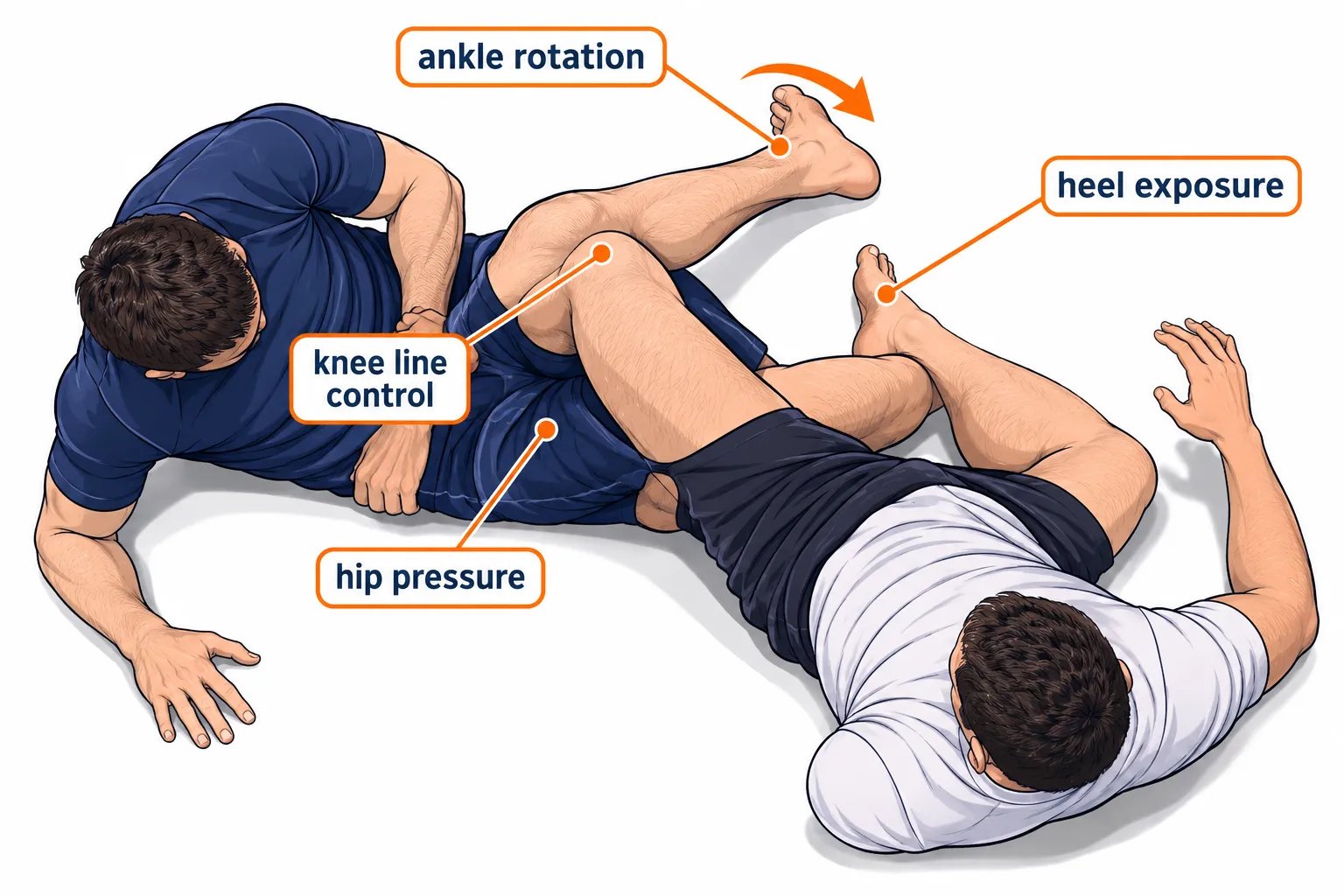
That said, it’s not a free-for-all everywhere in the bracket. Some amateur and Open qualifier divisions under the ADCC umbrella do carry age-based or experience-based restrictions on heel hooks[9]. The pro stage, though, is where the full system lives, and that’s exactly why it has become the reference point for serious leg lock study. If you’re building out your own understanding of these attacks and how to survive them, our leg lock defense resources are a good place to start rounding out that side of the game.
Leg Lock Literacy and Outside Heel Hooks: How ADCC 2026 Normalized Advanced Lower-Body Attacks at the Grassroots
Here’s the part that matters to everyday practitioners: rules at the top filter down. When ADCC athletes showcase outside heel hooks on the biggest stage in grappling, academies everywhere start teaching the fundamentals earlier. Instructors who once treated leg entanglements as an “advanced belts only” topic now walk white belts through safe entries and, just as importantly, safe escapes.
This grassroots spread is what “literacy” really means, not just knowing how to finish the submission, but understanding the entire conversation: entries, controls, defenses, and escapes. It mirrors how guard players had to learn guard bottom attack sequences decades ago, building a shared vocabulary that the whole sport now speaks fluently.
The Numbers Behind the Normalization
Statistics don’t lie, and the leg lock data tells a clear story of a technique category that matured rather than faded.
- At ADCC 2022, leg locks, primarily heel hooks, accounted for approximately one-third of all submissions, making them one of the most productive finishing categories in the entire event[3].
- Broader meta-analyses of ADCC history show heel hooks peaked as the second most common submission before settling into a smaller, more stable share of finishes[3][5].
- Overall leg lock statistics across competitive no-gi grappling confirm heel hooks remain one of the most impactful submission families in the modern game, even as defensive awareness has grown[5].
The key insight experts keep circling back to: declining heel hook finish rates don’t mean declining heel hook relevance[4]. It means the athletes on the business end of the attack know how to defend it, which forces attackers to get sharper. That’s evolution, not extinction, the same pattern you see when a dominant guard pass gets studied and countered, only for passers to come back with tighter details.
“The leg lock game didn’t shrink, the whole sport just got smarter about it.”, a sentiment echoed across modern grappling analysis[4]
How ADCC Compares to IBJJF and Other Rule Sets
Jiu-Jitsu has never had one universal rulebook, and nowhere is that more visible than leg locks.
| Rule Set | Heel Hooks | Knee Reaping | Typical Setting |
|---|---|---|---|
| ADCC Pro Divisions | Fully legal[1][2] | Allowed | Elite no-gi competition |
| ADCC Opens/Amateur | Often restricted[9] | Varies by age/belt | Regional qualifiers |
| IBJJF | Banned at most belts | Penalized | Gi and no-gi IBJJF events |
| 10th Planet / EBI-style | Legal | Allowed | No-gi submission-focused events |
This contrast matters because it shapes how practitioners train depending on which competitions they chase. A competitor preparing primarily for IBJJF events may barely touch heel hooks, while someone gearing toward ADCC or EBI-style formats needs the full system in their toolbox from day one[6][8]. If you’ve ever wondered why certain gyms, Gracie-lineage schools, Machado academies, or 10th Planet black belt programs, emphasize leg entanglements so differently, the rule set they compete under is usually the answer.
Why Outside Heel Hooks Became the Default, Not the Exception
The outside heel hook specifically deserves its own mention. For years, grapplers treated it as a specialty move tied to a handful of “leg lock wizards.” ADCC’s consistent permissiveness changed that perception entirely[9]. Inside ADCC’s framework, there’s no asterisk next to the outside heel hook, it sits in the same legal category as a rear naked choke or an armbar.
That equal footing changed how coaches sequence their curriculum. Many programs now teach leg entanglement passing, entries, and escapes alongside, not after, traditional top-game staples like half guard top pass systems or back control escapes from back bottom escape positions. Leg locks aren’t a side quest anymore; they’re part of the main curriculum, right alongside building out guard top defense and north south control.
What This Means for Your Training
Whether you’re a white belt curious about leg locks or a brown belt sharpening your competition game, here’s how the ADCC-driven normalization should shape your mat time:
- Learn the defense first. Before you chase a finish, understand how to protect your knee and ankle when caught. Browsing our leg lock defense coverage is a smart starting point.
- Drill entries slowly. Outside heel hooks reward precision over speed. Go light, tap early, and build the position before adding resistance.
- Know your competition’s rule set. If you’re entering an IBJJF event, your leg lock game needs to look different than if you’re prepping for an ADCC-style no-gi bracket[7][8].
- Respect the position. Leg entanglements can injure training partners quickly if ego gets involved. Control beats speed, every time.
- Study the full system, not just finishes. True literacy means knowing entries, controls, escapes, and counters, the same way you’d study a complete guard system rather than one isolated sweep.
Looking Ahead to ADCC 2026
As the 2026 World Championship approaches, expect the permissive ruleset to keep pushing leg lock sophistication forward[1][10]. This is speculative, but reasonable: with heel hook finish rates already showing a more technical, defense-aware trend, the next generation of competitors will likely enter the event with even deeper leg lock literacy than their predecessors. Watching how athletes navigate entanglements, not just whether they finish them, may become one of the most telling storylines of the entire tournament.
Conclusion
ADCC didn’t invent the heel hook, but its willingness to keep leg locks fully legal at the championship level gave the grappling world permission to study them seriously[1][2][3]. The result is a sport-wide leap in literacy, white belts drilling outside heel hook entries, instructors building dedicated curriculum around leg entanglements, and competitors treating the lower body with the same respect once reserved for the back or the mount.
Next time you roll, take a few extra minutes on leg lock fundamentals, both attacking and defending. Come back and check it with us as ADCC 2026 unfolds; the leg lock conversation is only getting richer. Oss!
References
- Adcc World Championship 2026 Announced. adcombat.com.
- Adcc Rules. open-bjj.com.
- Adcc Statistics. aibjj.com.
- Are Leg Locks Taking Over Jiu Jitsu. thejiujitsumindset.com.
- Leg Lock Statistics by Technique. thejiujitsumindset.com.
- Are Heel Hooks Legal at White Belt. open-bjj.com.
- Adcc Rules. grapplerhq.com.
- Adcc Rules. smoothcomp.com.
- Adcc. kingskungfu.com.
- Adcc News. adcombat.com.