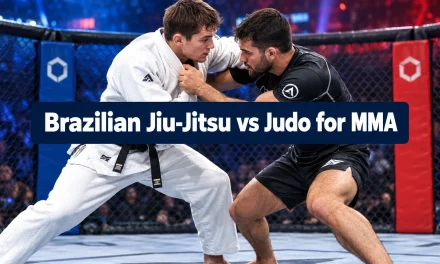
At ADCC 2024, only 4 heel hook finishes came out of 53 total submissions across the entire event.[3][5] Back in 2017 and 2019, the heel hook was the second most common way to end a match. That drop alone tells you something big is happening in submission grappling, and it’s not a small tweak, it’s a full shift in how the best grapplers on Earth are training to win.
ADCC-era grappling trends: heel hooks, wrestling-first takedowns, and the decline of pure guard players have become the defining story of the sport heading into 2026. The leg lock boom that reshaped no-gi a decade ago hasn’t disappeared, but it has matured into something harder to finish. Meanwhile, wrestling has quietly become the backbone of winning game plans, and the days of a grappler surviving purely off a dangerous guard are fading fast. Let’s roll into the heart of what’s actually changing on the mats, and why it matters for every competitor chasing a spot at the next ADCC Trials.
Key Takeaways
- Heel hook finishes are down, falling from a peak as ADCC’s #2 submission in 2017-2019 to just 4 of 53 finishes in 2024, with lower-limb submissions overall dropping from roughly 28-30% to 22% of finishes.[1][3]
- Chokes and arm attacks now dominate, making up 65% and 20% of ADCC 2024 submissions respectively, while rear naked chokes, armbars, guillotines, heel hooks, and triangles together account for 85% of all finishes.[2][3]
- Defense has caught up to offense, elite competitors have drilled saddle and cross-ashi escapes so thoroughly that a position once considered near-automatic now requires a layered attack chain to finish.[1]
- Wrestling-first takedowns are structurally rewarded by ADCC scoring, with clean takedowns worth 4 points and guard pulling carrying a built-in penalty once scoring is live.[6][9]
- Pure guard specialists are losing ground to well-rounded athletes who can wrestle, pass, and finish, as the 2024 adult male division alone produced 62 successful takedowns, more than every category combined in 2022.[3]
The Heel Hook Cooldown: A Core ADCC-Era Grappling Trend
For years, the heel hook was the scariest weapon in no-gi. John Danaher’s leg lock systems turned ankle locks into a feared finishing tool, and for a while it looked like nobody could escape a well-set inside heel hook.[8] That era hasn’t vanished, but the numbers from ADCC 2024 tell a clear story: heel hooks dropped to just 4 finishes, continuing a slide from 5 heel hooks in 2022 and a much higher share back in 2017 and 2019.[3][5] Lower-limb submissions as a whole, heel hooks, toe holds, kneebars, and the rest, fell from close to 30% of all finishes in the 2016-2022 cycle down to about 22% in 2024.[1][3]
So what happened? Defense caught up. By 2026, nearly every serious competitor has drilled saddle and cross-ashi escapes until they’re second nature.[1] A position that used to be a near-automatic tap in 2017-2019 is now something athletes survive routinely, which means one-note leg hunters get exposed fast. The grapplers still winning with leg attacks aren’t throwing a single heel hook and hoping, they’re chaining inside and outside attacks, using the leg entanglement to set up a sweep or a back take, and then climbing to an upper-body finish.[1]
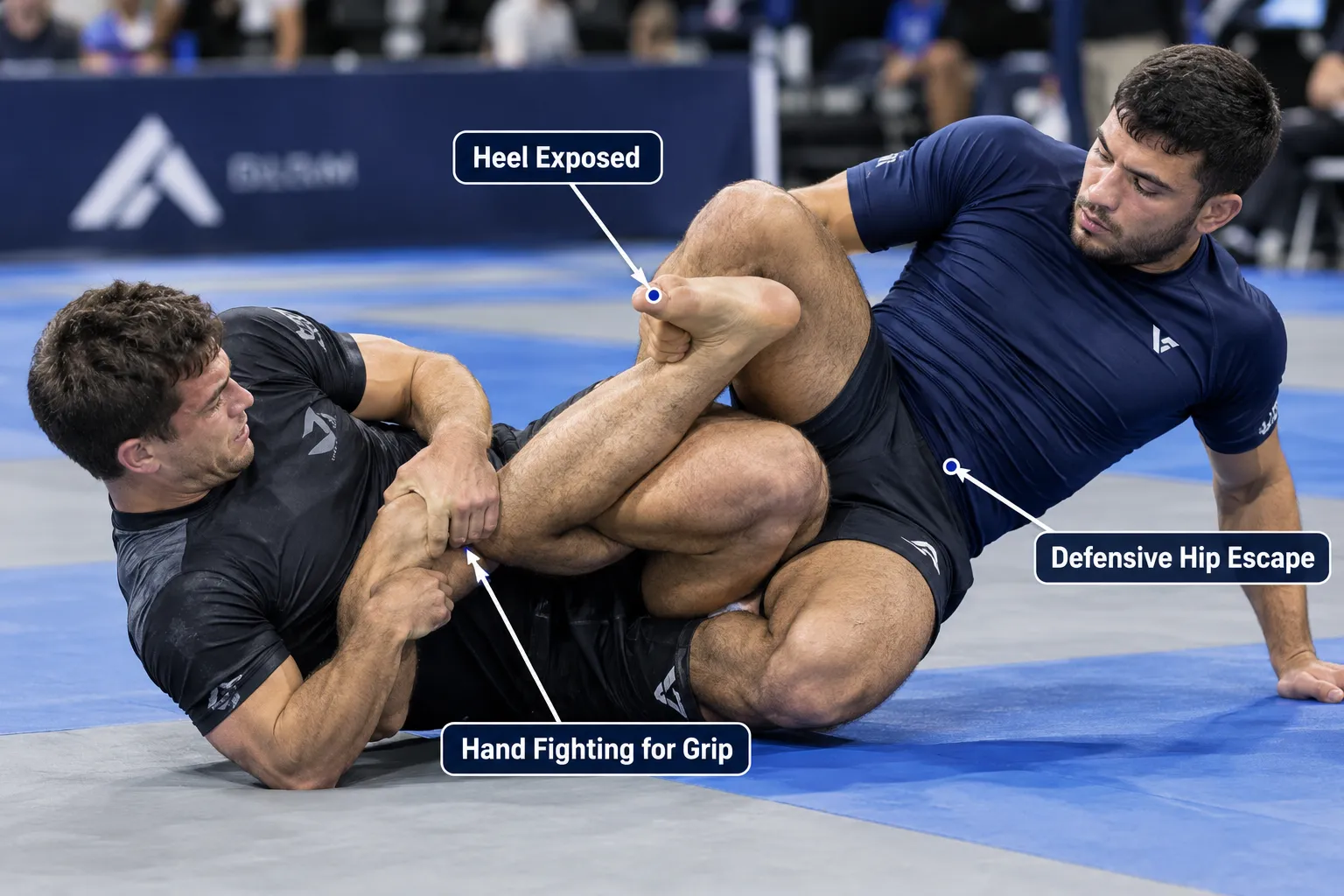
That doesn’t mean leg locks are going away. Independent breakdowns of ADCC 2024 still list the heel hook among the top five submissions in the event, tied with the triangle and just behind the guillotine.[2][3] And the women’s division saw a historic milestone when Helena Crevar landed the first-ever heel hook finish in ADCC women’s competition during her run to a silver medal.[3][5] One finish out of four total in the whole tournament is a small number, but it’s a reminder that the weapon is still loaded, opponents just expect it now and train accordingly.
The ADCC ruleset keeps leg locks structurally important even as raw finish counts drop. Heel hooks and all leg attacks remain legal at every single ADCC level in 2026, a sharp contrast to formats like IBJJF, which restricts heel hooks to no-gi brown and black belts and bans them outright in the gi.[6][9] That permissive environment means no competitor can afford to ignore leg lock offense or defense, even grapplers who build their whole identity around upper-body submissions, like those in the Electric Chair Submission family of attacks, still need a working leg lock defense to survive deep ADCC brackets.
“The leg lock game didn’t die, it grew up. The one-dimensional heel hunters are the ones getting left behind.” 🦵
Wrestling-First Takedowns Reshape the ADCC-Era Grappling Meta
If heel hooks defined the last cycle, wrestling defines this one. ADCC’s scoring system is built to reward athletes who can actually take someone down. A clean takedown that lands past the guard scores a full 4 points, while a takedown that ends in guard or half guard still earns 2 points.[6][9] Compare that to guard pulling, which carries negative points once scoring kicks in, unless the athlete has genuinely attempted a takedown for at least 3 seconds first, in which case the penalty doesn’t apply.[6] That single rule nuance is doing a lot of quiet work: it rewards engaging on the feet and punishes grapplers who just drop straight to bottom.
The result shows up clearly in the data. In the adult male division at ADCC 2024, competitors landed 62 successful takedowns, more than every category combined from the entire 2022 event.[3] Wrestling has become the single largest category of successful actions leading to match advancement.[3] Analysts following the event also pointed to a shift in style: instead of big, high-amplitude throws that risk giving up a scramble, athletes are leaning into low-risk entries like foot sweeps and Harai Goshi, trading flash for reliability.[2][3]
This isn’t a brand-new idea in grappling, wrestling-base competitors have been making waves in BJJ for years. Think of Rodolfo Vieira, whose judo and wrestling pedigree translated directly into dominant top position in jiu-jitsu, or the classic cautionary tale told in College Wrestler Against Jiu Jitsu Purple Belt, where raw takedown ability alone can humble a mat veteran. ADCC’s rules simply formalized what good coaches already knew: control the feet, and you control the match.
Guard Pulling Still Happens, But It Costs Something
Here’s the tension worth noting: guard pulling hasn’t disappeared, it’s just expensive now. ADCC 2024’s male division still saw 63 guard pulls despite the built-in penalties for voluntary drops to guard, plus additional penalties for repeated pulling and stalling.[3][6] ADCC was designed from day one as a submission wrestling format, and the penalty structure exists specifically to keep stand-up exchanges and passing at the center of the action rather than letting matches turn into stalling contests from bottom.[7][9]
The Decline of Pure Guard Players in ADCC-Era Grappling
This is where the three trends connect. Fewer heel hook finishes, heavier wrestling emphasis, and penalties for guard pulling all point in the same direction: the pure guard player is becoming a harder archetype to succeed with at the highest level.
Ruleset analyses from 2025 and 2026 consistently describe ADCC as the leading proving ground for “complete” no-gi games, athletes who can threaten from standing, pass with real pressure, take the back, and finish, rather than relying on guard work alone.[7][9] The scoring backs this up directly: passing earns 3 points and taking the back earns 4, numbers that stack the deck against a grappler whose whole game plan is surviving on bottom.[6][7][9] A competitor who can’t wrestle up off their back, can’t initiate a pass, or treats guard as a permanent home rather than a temporary stop is at a structural disadvantage against a well-rounded opponent.
That said, “decline of pure guard players” doesn’t mean guard is dead, it means the guard itself has to do more work. Modern leg lockers are now expected to use leg entries to create sweeps and back takes, not just to hunt a single finish.[1] If you want to sharpen your own guard retention and sweep timing against this new breed of pressure passer, our breakdown of the 5 biggest guard passing mistakes is worth a look from both sides of the position, knowing how passers get beat is just as useful as knowing how to pass.
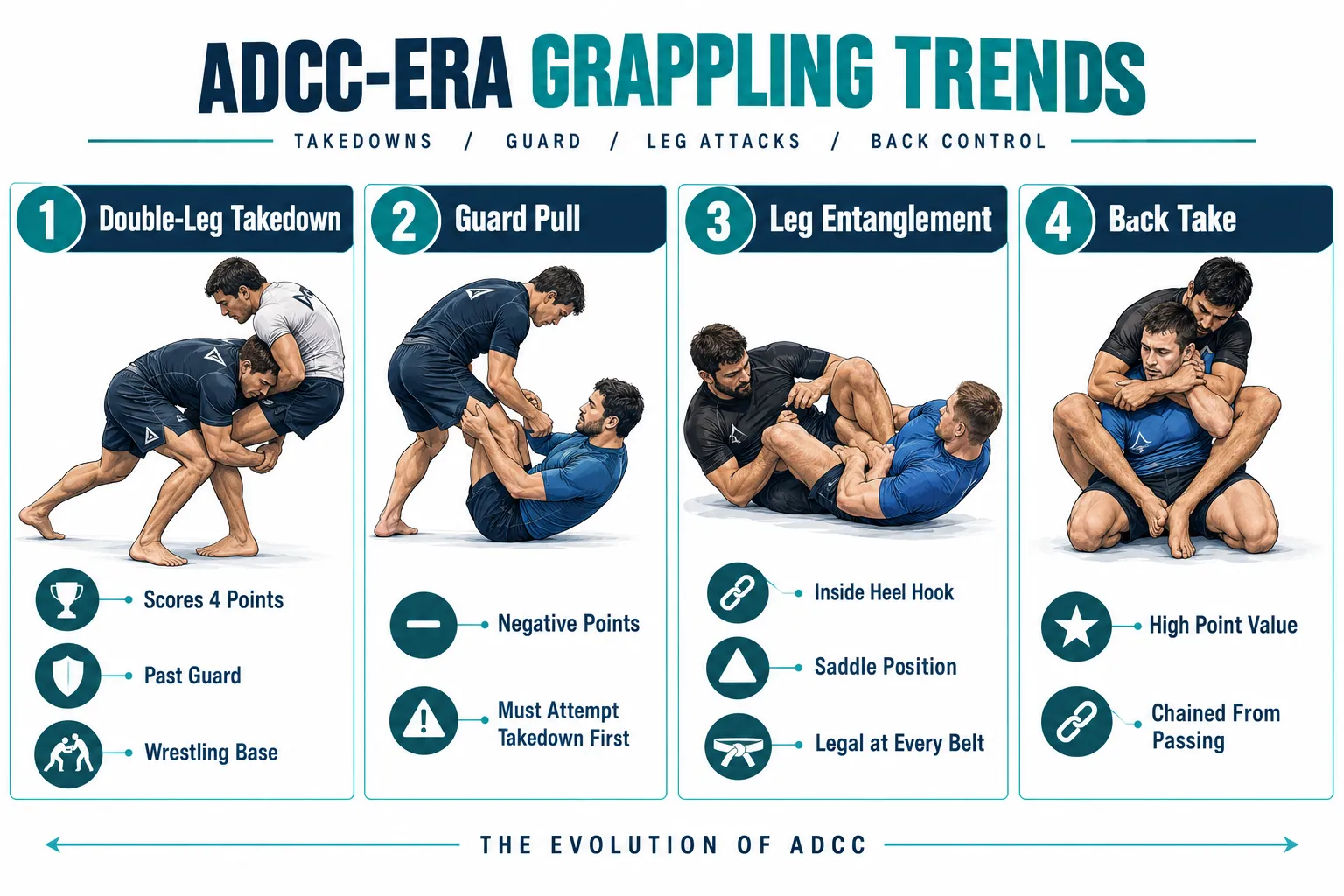
Here’s a simple snapshot of how the scoring incentives stack up in 2026:
| Action | Scoring Impact | Strategic Signal |
|---|---|---|
| Takedown past guard | 4 points | Rewards wrestling-first approach [6][9] |
| Takedown to guard/half guard | 2 points | Still favors initiative over passivity [6][9] |
| Guard pull (no takedown attempt) | Negative points | Penalizes pure bottom-game reliance [6] |
| Guard pass | 3 points | Rewards pressure passing over stalling [7][9] |
| Back take | 4 points | Rewards finishing chains, not static guard [6][7][9] |
Grapplers who built careers around dynamic bottom play, like the style showcased in AJ Agazarm vs. Paulo Miyao sparring, still have plenty to offer, but even those games are evolving to include more offensive sweeps, back exposures, and scramble awareness rather than pure retention. The athletes thriving right now blend disciplines: a wrestling base, a sharp top game built on principles you’ll find in categories like half guard top pass and north-south bottom attack, and a leg lock system that threatens without becoming a one-trick pony.
Regional Trials in 2026: New Leg Lock Entry Systems
If you want a preview of where this is heading, look at the Trials circuit. Recent ADCC European Trials coverage from 2026 highlighted a dominant pattern of inside heel hooks built off False Reap entries, a refined setup that gets competitors into the saddle through a specific leg-trapping sequence rather than a scramble.[4][10] North American Trials showed a different regional flavor, straight ankle locks transitioning into outside heel hooks were more common there.[4][10] Same foundation, different regional dialects, proof that leg lock innovation is still very much alive even as finish rates cool off.
This matters for coaches and competitors prepping for the next cycle, including names making headlines right now like Gabi Pessanha stepping in for Rafaela Guedes at ADCC Worlds 2026. The athletes earning invites aren’t winning on one dimension. Look at competitors like the one profiled in Nicky Rod: ADCC Medalist vs. CrossFit Champ, strength, conditioning, wrestling, and submission chains all stacked together, because that’s what the current meta demands.
What This Means for Competitors and Coaches
So what should you actually take from all this if you’re training for your next tournament, gi or no-gi?
- Drill your leg lock defense, not just your offense. Saddle and cross-ashi escapes are no longer optional extras, they’re survival skills.[1]
- Invest real mat time in takedowns. Even a conservative single-leg or a simple foot sweep can be the difference-maker under ADCC-style scoring.[2][3]
- Stop treating guard as a finish line. Use it to create sweeps, back takes, and submission chains rather than a place to park and stall.[1][6][7]
- Study regional entry systems. Techniques like the False Reap show that leg lock innovation hasn’t stopped, it’s just gotten more specific.[4][10]
- Build a complete game. The grapplers advancing through Trials brackets wrestle, pass, and finish, they don’t rely on a single tool.[1][7][9]
Conclusion
The ADCC-era grappling trends: heel hooks, wrestling-first takedowns, and the decline of pure guard players aren’t a single event, they’re a system shift. Heel hooks are harder to finish because the whole sport learned to defend them. Wrestling matters more because the scoring was built to reward it. And pure guard play, while far from dead, now has to earn its keep through sweeps, back takes, and submission threats rather than survival alone.
If you’re serious about leveling up, start where the meta is actually pointing: get comfortable in bad positions on the legs, get your hands dirty on the feet, and stop thinking of guard as a hiding spot. Come back and check it with us as the 2026 Trials season unfolds, this story is still being written on the mats. Oss!
References
[1] State Of No Gi 2026 – https://ingrappling.com/meta/state-of-no-gi-2026/ [2] Adcc 2024 Aftermath And Analysis – https://savagezen.substack.com/p/adcc-2024-aftermath-and-analysis [3] Adcc 2024 After Math Data Compilation And Analysis – https://www.bjjheroes.com/editorial/adcc-2024-after-math-data-compilation-and-analysis [4] News 20240219 Guide Adcc European Trials 2 Recap – https://letsbjj.com/en/news/news-20240219-guide-adcc-european-trials-2-recap [5] Adcc 2024 Results Fornarino First Aussie Gold Mica Earns Super Grand Slam And Kaynan The Double – https://www.bjjheroes.com/bjj-news/adcc-2024-results-fornarino-first-aussie-gold-mica-earns-super-grand-slam-and-kaynan-the-double [6] Adcc Rules – https://www.grapplerhq.com/grappling/adcc-rules/ [7] Competition Rulesets – https://ingrappling.com/standards/competition-rulesets/ [8] John Danaher – https://rashguardguy.com/tag/john-danaher/ [9] Adcc – https://digitsu.com/rulesets/adcc [10] 12730447 The Top 10 Leg Lockers To Watch At Adcc 2024 – https://www.flograppling.com/articles/12730447-the-top-10-leg-lockers-to-watch-at-adcc-2024